
Enclosure Size and Layout Requirements

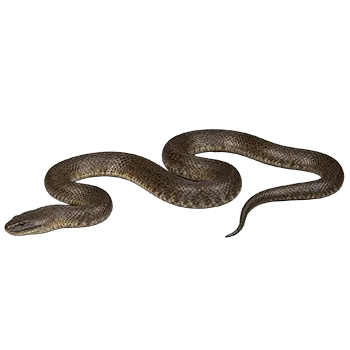
Housing a Dog-Faced Water Snake correctly means building a paludarium rather than buying a terrarium. Cerberus rynchops divides its time between open water, submerged root tangles, and soft intertidal mud, and an enclosure that offers only one of those three environments will produce a chronically stressed animal regardless of how well the other parameters are managed. The minimum practical footprint for a single adult is a forty-gallon breeder configuration measuring approximately thirty-six by eighteen inches, though a forty-eight by twenty-four inch base is markedly better and allows a genuine gradient of depth, temperature, and cover to be established across the enclosure.

The water-to-land ratio should favor water substantially. A distribution of roughly sixty to seventy percent water surface to thirty to forty percent accessible land or emergent structure reflects the way this species actually uses its habitat. Water depth of six to ten inches across the main basin gives an adult room to swim, submerge, and rest with only the dorsally placed nostrils and eyes breaking the surface, which is the posture this snake naturally adopts. A gently graded shallow margin is equally important, because the animal spends considerable time in water only an inch or two deep, hunting along the interface where fish become concentrated.

Height requirements are more modest than for arboreal species but should not be dismissed. Cerberus regularly climbs into low mangrove prop roots and overhanging branches, particularly at night and during periods of high water, and an enclosure of at least eighteen inches of interior height above the waterline allows for meaningful vertical furnishing. Front-opening glass enclosures designed for reptiles work well provided the door seals are genuinely watertight to the intended fill line, which many are not. Keepers frequently solve this by using a purpose-built aquarium as the water vessel and constructing the land section internally rather than relying on a terrarium to hold standing water.

Single housing is the correct default. There is no evidence that this species derives benefit from cohabitation, and there is a well-documented pattern across semi-aquatic snakes in which shared enclosures produce competition at feeding, elevated stress markers, and occasional injury. Feeding response in a fish-eating snake is triggered by movement and vibration in water, which makes accidental strikes on a conspecific a genuine hazard rather than a theoretical one. Keepers maintaining multiple animals should plan on a separate, fully equipped system for each, and should account for that cost before acquisition rather than after.

Water Systems, Salinity, and Filtration

Salinity management is the defining technical challenge of housing this species, and it is where most failures originate. Cerberus rynchops is fundamentally an estuarine animal, occupying the fluctuating zone where river outflow meets tidal seawater, and long-term maintenance in pure freshwater is associated with persistent skin problems, blister disease, and secondary bacterial infection in many wild-collected individuals. Most experienced keepers target a low brackish range, commonly expressed as a specific gravity of roughly 1.005 to 1.010, prepared using a genuine marine aquarium salt mix rather than table salt, aquarium tonic salt, or rock salt. A refractometer or a quality hydrometer is required to verify the result; mixing by volume alone is not reliable.

Critically, brackish housing does not replace the need for fresh drinking water. Field studies of Cerberus and related homalopsids indicate that these snakes do not maintain water balance by drinking saline water and instead exploit low-salinity rainfall lenses at the surface. A shallow, separate dish of fresh dechlorinated water positioned on the land section, refreshed daily, is therefore a mandatory fixture and not an optional refinement. Keepers who omit it frequently report gradual dehydration, dysecdysis, and urate accumulation in animals whose other parameters appear correct on paper.

Filtration must handle a bioload that is unusually heavy for the water volume involved. A fish-eating snake defecates in and around the water, uneaten prey decomposes rapidly, and shed skin fragments accumulate. A canister filter rated well above the actual water volume, fitted with mechanical, biological, and chemical stages, is the standard solution, with the return plumbed to produce gentle circulation rather than a strong current. Sponge filters driven by an air pump work adequately in smaller systems and have the advantage of posing no entrapment risk. Whatever the choice, intakes must be screened or guarded, because a curious snake can and will investigate an open intake and can be injured or trapped by it.

Water chemistry requires the same routine testing an aquarist would apply to a fish system. Ammonia and nitrite must read zero, nitrate should be kept low through regular partial water changes, and pH in a brackish system typically stabilizes in the mildly alkaline range of roughly 7.5 to 8.2, buffered by the marine salt mix. Partial water changes of twenty to thirty percent weekly, using pre-mixed replacement water matched for both temperature and salinity, are a reasonable baseline and should increase after any feeding that fouls the water. Replacement water must be dechlorinated before it ever enters the system, since chloramine is directly damaging to both the snake's skin and the beneficial bacterial colony in the filter.

Substrate and Land Area Construction

The land section of a Cerberus enclosure should replicate the soft, saturated margin of a mangrove flat rather than the dry hide-and-aspen arrangement familiar from colubrid keeping. A construction of egg-crate light diffuser panel supported on PVC risers, topped with fine filter foam and then a substrate layer, produces a stable emergent platform that drains freely back into the water basin. This approach keeps the land area humid and yielding underfoot without allowing standing stagnant water to accumulate in the substrate, which is the condition under which anaerobic decomposition and pathogenic bacteria proliferate.

Substrate selection favors materials that tolerate constant moisture and brackish exposure without breaking down. Fine play sand rinsed thoroughly, aragonite sand, or a sand and coco-fiber blend all perform well and permit the shallow burrowing and mud-nosing behavior this species exhibits. Avoid untreated softwood shavings, aspen, and any bark chip product that will float, disintegrate, foul the water, and clog filtration within days. Some keepers run the water portion bare-bottomed for ease of cleaning and concentrate all substrate on the land shelf, which is a defensible tradeoff between naturalism and hygiene.

Live plants substantially improve both the appearance and the biological stability of the enclosure. Red mangrove propagules are the thematically obvious choice and will root and grow in brackish conditions, though they are slow. Java fern, anubias, and salt-tolerant crypts perform reliably in the water column, while pothos and other hardy climbers can be rooted at the waterline with foliage trained up the back wall. Plants provide meaningful nitrate export, break up sightlines to reduce stress, and create the tangled cover this snake seeks out. Keepers who prefer a lower-maintenance setup can substitute high-quality artificial plants without harm, provided edges are smooth and no small components can detach.

Hardscape should emphasize horizontal complexity at and just below the waterline. Cured driftwood, mangrove root, cork bark rounds, slate caves, and stacked flat stones create the overhung, semi-enclosed spaces this snake retreats into during daylight hours. Every piece must be stable and either bonded or seated so that it cannot shift and pin an animal that burrows beneath it, and every surface must be free of sharp edges that could abrade skin during rapid escape movements. All wood and stone should be boiled, baked, or thoroughly cured before introduction, and materials collected from natural settings should be avoided entirely in favor of aquarium-grade products with known provenance.

Heating and Thermal Gradients

This is a tropical species from a warm coastal climate, and both the water and the air require deliberate thermal management. Target water temperature in the range of seventy-eight to eighty-four degrees Fahrenheit, with the land and emergent basking area allowed to reach roughly eighty-five to eighty-eight degrees at its warmest point. Ambient air temperature in the enclosure should settle around seventy-eight to eighty-two degrees, with a nighttime drop of a few degrees being acceptable and arguably beneficial. Sustained temperatures below the low seventies suppress digestion and immune function, and sustained temperatures above the low nineties cause dangerous heat stress in an animal that cannot easily escape a heated water body.

Water heating is best accomplished with a fully submersible aquarium heater fitted with a protective guard, since a snake resting directly against an unguarded heating element can sustain serious thermal burns. Titanium heaters paired with an external controller are preferred by many keepers over glass models, as titanium will not shatter if the water level drops or the animal collides with it. Whatever heater is selected, it must be controlled by an independent external thermostat rather than relying solely on its internal thermostat, which is a single point of failure with a documented tendency to stick in the on position.

Air and land heating typically comes from above. A low-wattage ceramic heat emitter or a deep heat projector mounted over the land section, positioned outside the enclosure or behind a secure guard, produces a gentle radiant gradient without emitting light that would disturb a nocturnal species. Under-tank heat mats applied to the base of a paludarium are generally a poor fit here, because the thermal mass of the water blunts their effect and because they can create dangerous hot spots against the glass in the shallow margins. Whatever the heat source, the animal must be able to move away from it freely.

Gradient verification is not optional and should be treated as a recurring maintenance task rather than a one-time setup step. Measure water temperature at several depths and locations, surface temperature on the land shelf directly beneath the heat source and at the cool end, and ambient air at mid-height. An infrared thermometer makes surface readings straightforward, while a probe thermometer is needed for accurate water and internal readings. Record the results periodically so that gradual drift, which is how most thermal problems actually develop, becomes visible before it affects the animal. Seasonal changes in room temperature will alter the enclosure's internal gradient and warrant rechecking at least quarterly.

Humidity, Ventilation, and Air Quality

A large water surface in a mostly enclosed glass box generates high humidity as a matter of physics, and for this species that is a desirable starting point. Relative humidity in the seventy to ninety percent range corresponds well to the mangrove environments Cerberus inhabits and supports clean, complete sheds. The management problem is therefore rarely one of raising humidity and almost always one of preventing the enclosure from becoming a stagnant, saturated chamber in which pathogenic bacteria and fungi flourish. Humidity and ventilation must be tuned together, never independently.

Cross-ventilation is the mechanism that makes high humidity safe. An enclosure with a low intake vent on one side and a screened outlet high on the opposite side, or across the top, establishes a slow convective exchange that continuously refreshes the air without collapsing humidity. Fully screened tops, common on aquariums, often vent too aggressively and are frequently partially covered with acrylic or glass to strike the right balance. The correct configuration is the one that maintains target humidity while leaving no persistent condensation film on the glass and no musty odor when the enclosure is opened.

Air movement within the enclosure matters as much as exchange with the room. Small, low-velocity computer-style fans mounted to circulate air gently across the land section prevent the dead pockets where mold colonizes, particularly in densely planted setups with substantial hardscape. The airflow should be barely perceptible; a snake should never be subjected to a directed draft, which causes both dehydration and behavioral avoidance of otherwise suitable areas. Fans running on a timer for short intervals several times daily are usually sufficient.

Air quality problems in a brackish paludarium announce themselves through the nose before they show up on any instrument. A healthy system smells faintly of clean water and earth. A sulfurous or sour odor signals anaerobic pockets in the substrate, a decomposing prey item that was missed, or a filter media bed that has gone too long without service. Salt creep, the crystalline residue that accumulates on glass, hardware, and lid edges as brackish water evaporates, should be wiped away regularly with fresh water rather than allowed to build, since it corrodes metal fittings and electrical contacts and can seize hinges and latches. Because evaporation removes water but leaves salt behind, top-offs must always be made with fresh dechlorinated water rather than premixed brackish water, or salinity will climb steadily over the weeks.

Security, Lids, and Escape Prevention

The Dog-Faced Water Snake is a determined and capable escape artist, and this should be assumed rather than tested. It is a slender, muscular, semi-aquatic animal that routinely negotiates root tangles and narrow crevices, and it is strongly nocturnal, meaning escape attempts occur when the household is asleep. An escaped Cerberus faces a rapidly deteriorating situation: it will dehydrate quickly outside its humid environment, it is small enough to be difficult to locate, and it is rear-fanged, which makes recovery by an unprepared household member undesirable. Enclosure security is a welfare issue and a safety issue simultaneously.

Lid design should assume the animal will push, probe, and lever at every seam. A rigid framed lid that seats positively and is secured with clips or locks at multiple points along its perimeter is the baseline. Sliding glass front doors on commercial terrariums must be fitted with a physical lock rather than relying on friction, and the track should be checked for salt creep that could prevent the door from closing fully. Any gap large enough to admit the snake's head is large enough to admit the snake, and a slender juvenile can pass through openings that look implausibly small.

Every penetration through the enclosure wall is a potential escape route and deserves individual attention. Cord ports for heaters, filters, pumps, and probes should be sealed around the cable with aquarium-grade silicone or a purpose-made bulkhead grommet. Filter plumbing, overflow standpipes, and drain fittings must be screened at both ends. Ventilation panels should use mesh with an aperture small enough to exclude a neonate, and the mesh must be mechanically fastened rather than merely glued, since silicone bonds to plastic and painted metal less reliably than keepers expect.

A weekly security walkthrough is the practical habit that prevents most escapes. Check that latches engage and hold, that silicone seals have not lifted or degraded, that mesh panels remain taut and intact, that cord port seals have not been undermined by salt creep or humidity, and that no piece of hardscape has shifted into a position that gives the snake leverage against the lid. Keepers should also be candid about interior access: this species will bite when cornered during routine maintenance, and a well-designed enclosure allows the keeper to reach the water, land, and equipment without having to reach past or over a startled animal.

Cleaning, Maintenance, and Long-Term Enclosure Management

A brackish paludarium is a living system with an established microbial community, and effective maintenance means supporting that system rather than sterilizing it. The core weekly routine consists of a twenty to thirty percent water change with pre-mixed, temperature-matched and salinity-matched replacement water, removal of visible waste and debris from the water and land surfaces, a rinse of mechanical filter media in the removed tank water rather than in tap water, and a wipe-down of glass and salt creep. Biological media should be disturbed as little as possible, since rinsing it under chlorinated tap water destroys the nitrifying bacteria that keep ammonia at zero.

Daily attention is limited but non-negotiable. Refresh the fresh drinking water dish, remove any uneaten prey items before they decompose, spot-clean obvious waste, and confirm that heaters, filters, and controllers are operating. Fish waste and uneaten prey degrade far more rapidly than mammalian feces and can drive an ammonia spike within a single day in a modestly sized system. A keeper who feeds in the evening and checks the enclosure the following morning will catch nearly every problem of this kind before it becomes consequential.

Deeper interventions belong on a monthly and quarterly cadence. Monthly, service the filter fully, inspect and clean intake guards, test the full water chemistry panel rather than just the parameters of immediate concern, and verify salinity against a calibrated instrument. Quarterly, remove and scrub hardscape, turn and inspect the land substrate for anaerobic pockets, replace chemical filtration media, verify all thermal gradients, and inspect every silicone seal and cord port. Substrate on the land shelf generally warrants complete replacement every three to six months depending on the animal's habits and the density of planting.

Disinfection, when required, must be reptile-safe and thoroughly rinsed. Products based on benzalkonium-free veterinary disinfectants formulated for reptile use, or a dilute chlorhexidine solution, are appropriate for hardscape and enclosure surfaces and should be followed by rinsing until no residue or odor remains. Bleach is effective but requires extremely thorough rinsing and complete drying, and it should never be used on anything that will return to a system containing established biological filtration without a full neutralization and rinse cycle. Full enclosure breakdowns are warranted after any confirmed infectious disease, after a parasite diagnosis, and whenever a persistent odor or water quality problem cannot be traced to an obvious cause. Between those events, consistency of routine does more to protect the animal than any single deep clean.

Always consult a qualified professional before making any health-related decisions. This content is provided for informational reference only and should not replace professional guidance specific to your animal.