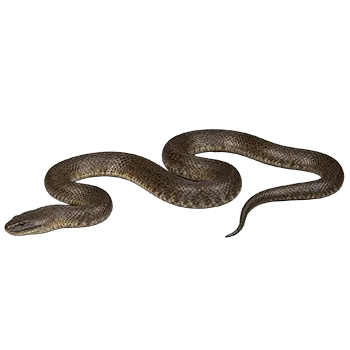

Nutritional Needs of a Piscivorous Water Snake

The Dog-Faced Water Snake occupies a dietary niche almost entirely unlike that of the boas, pythons, and ratsnakes that dominate the pet trade. Cerberus rynchops is a specialist fish-eater that forages across tidal mudflats and mangrove root systems, taking gobies, mudskippers, and other small estuarine fishes, supplemented opportunistically with shrimp and small crabs. Its skull is built for gripping slick, struggling, thin-bodied prey rather than for engulfing bulky mammals, and its digestive physiology is tuned to processing many small meals rather than a single enormous one. Every nutritional decision a keeper makes for this species should begin from that premise: this is a snake that eats fish, frequently, in small portions.

The macronutrient consequences of a fish-based diet are significant. Whole small fish are considerably higher in moisture and generally lower in fat than laboratory rodents of comparable mass, which means the caloric density of each meal is lower and the feeding interval must be correspondingly shorter. Whole fish do, however, deliver an excellent mineral profile. The intact skeleton supplies calcium and phosphorus in a favorable ratio, the viscera contribute fat-soluble vitamins and trace elements, and the muscle tissue provides complete protein with a full amino acid complement. A varied rotation of appropriately sized whole fish is nutritionally complete for this species in a way that fillets and processed seafood can never be.

Metabolic demand in Cerberus rynchops is governed by ambient temperature and by the animal's small adult mass. A healthy adult in the twenty-four to thirty-six inch range, maintained at appropriate tropical temperatures, will typically process a meal within three to five days and will show renewed foraging behavior shortly thereafter. Because the species does not undergo a true temperate brumation, there is no extended winter fast to plan around, though many individuals display mild seasonal fluctuation in appetite that tracks the wet and dry cycles of their native range. Keepers should assess body condition by feel along the dorsum and by the profile of the tail base rather than by weight alone.

Hydration deserves particular emphasis for this species, and it is the single most misunderstood aspect of its care. Although the Dog-Faced Water Snake inhabits brackish and occasionally near-marine environments, it does not possess the highly developed cranial salt glands found in true sea snakes. Field research on Cerberus and related homalopsids has demonstrated that these snakes dehydrate when confined to full-strength saline water and that they exploit low-salinity surface lenses formed by rainfall to drink. The practical implication for keepers is direct and non-negotiable: even in a brackish enclosure, a separate source of fresh, dechlorinated drinking water must always be available. A chronically dehydrated snake digests fish inefficiently, sheds poorly, and accumulates urate deposits that can progress to renal compromise.

Choosing the Right Fish and Prey Items

Live feeder fish remain the entry point for most Dog-Faced Water Snakes, particularly wild-caught imports that have never encountered a dead prey item presented on tongs. The best feeder species for this snake are those that tolerate brackish water, because they will remain alive and swimming in the enclosure long enough for a nocturnal ambush predator to locate them. Mollies are the standout choice here; they are naturally euryhaline, thrive across a wide salinity range, and can be acclimated to the same specific gravity as the snake's water feature. Guppies, endlers, and platies are serviceable for smaller animals and juveniles, though they are less robust in higher salinity than mollies are.

Prey sizing for a fish-eating snake follows the same logical principle as for any other serpent, adapted to a different body plan. Offer fish whose maximum body depth does not exceed the widest point of the snake's own body, and err toward smaller items presented in multiples rather than a single large fish. A typical adult might take three to six small mollies in a single feeding session, working through them one at a time over the course of an evening. This multiple-small-item pattern mirrors natural foraging far more closely than a single oversized offering and substantially reduces the risk of regurgitation in a species whose esophagus is not built for extreme distension.

Crustaceans provide legitimate dietary variety and reflect the documented wild diet of the genus. Ghost shrimp and small, thin-shelled freshwater or brackish shrimp are accepted by many individuals and introduce a different mineral and chitin profile than fish alone. These should be treated as a rotational supplement rather than a staple, comprising perhaps ten to twenty percent of total intake. Heavily armored crabs and large-shelled crustaceans are not appropriate for captive feeding; the shell fragments offer no digestive benefit and present a genuine impaction and perforation risk in a snake of this size.

Sourcing discipline separates keepers who succeed with this species from those who lose animals in the first year. Feeder fish should come from a clean aquaculture source, never from a bait shop with mixed wild stock and never from a local pond or drainage ditch. Wild-caught bait fish are a reliable vector for trematodes, cestodes, nematodes, and bacterial pathogens, and they may carry accumulated agricultural runoff. Purchased feeders should be quarantined in a dedicated holding tank for a minimum of one to two weeks, observed for disease, and conditioned on a quality flake or pellet food so that the nutritional value of their gut contents transfers to the snake. This gut-loading step is genuinely meaningful with small fish, where the digestive tract represents a substantial fraction of total body mass.

Frozen and Prepared Prey Options

Converting a Dog-Faced Water Snake from live fish to frozen-thawed prey is one of the most valuable husbandry milestones a keeper can achieve. Frozen prey eliminates the parasite transmission risk that accompanies live feeders, removes the ongoing logistical burden of maintaining a feeder fish holding system, and allows the keeper to control prey species selection precisely rather than accepting whatever the local aquarium shop has in stock. Many individuals, particularly captive-born animals and long-established imports, transition readily. Others resist for months, and a small number never convert fully, requiring at least an occasional live item to maintain feeding response.

The frozen prey market offers several appropriate options for this species. Whole frozen silversides are widely available through aquarium and reptile suppliers and are well sized for adult Cerberus, though their thiaminase content requires the management strategy described later on this page. Whole small tilapia, tilapia fry, and trout fingerlings are excellent thiaminase-free choices where a supplier can be found. Frozen whole shrimp, sold shell-on and unseasoned, serve as a rotational item. Strips of raw salmon or trout flesh are sometimes used to bridge a feeding strike but should never become a staple, because boneless flesh lacks the calcium that whole prey supplies.

Thawing and presentation technique matters more with a piscivore than with a rodent-feeder, because the feeding trigger for this species is heavily movement-dependent. Thaw prey fully in cool water, then bring it up to slightly above the enclosure's water temperature in a separate container of warm water rather than in a microwave, which cooks tissue unevenly and destroys texture. Present the item on long, blunt-tipped tongs in the water feature during evening hours under dim light, imparting a lifelike darting and pausing motion just above the substrate. A snake that ignores a static offering will frequently strike the same item once it is animated convincingly.

Storage practice protects the nutritional value you paid for. Fish are far more prone to lipid oxidation than mammalian prey because of their high polyunsaturated fatty acid content, and rancid fat is both nutritionally degraded and directly implicated in inflammatory fat tissue disease. Keep frozen fish at or below zero degrees Fahrenheit, in sealed airtight packaging that excludes as much air as possible, and rotate stock on a six-month cycle rather than the twelve months often quoted for frozen rodents. Discard any fish showing freezer burn, yellowed or chalky fat deposits, or a sharp rancid odor on thawing, and never refreeze a thawed item.

Thiaminase, Supplements, and Vitamin Support

No topic in piscivore nutrition matters more than thiaminase, and no topic is more commonly overlooked by keepers migrating from rodent-eating species. Thiaminase is an enzyme present in the tissues of many fish species that cleaves and destroys thiamine, or vitamin B1. When a snake is fed exclusively on thiaminase-rich fish over weeks and months, systemic thiamine depletion follows, producing a recognizable neurological syndrome: loss of appetite, poor coordination, tremors, abnormal head posture and stargazing, and eventually seizures and death. The condition is entirely preventable and, if caught early, largely reversible, which makes keeper awareness the decisive variable.

The practical management strategy begins with species selection. Fish generally regarded as thiaminase-rich include goldfish, common carp, fathead and rosy red minnows, smelt, herring, and shad. Fish generally regarded as thiaminase-free or negligible include tilapia, trout, salmon, mollies, guppies, and most killifish. A diet built primarily on thiaminase-free species requires no routine intervention. A diet that incorporates silversides or other thiaminase-containing fish as a meaningful proportion of intake requires either dilution with safe species or active thiamine supplementation, and the safest approach for most keepers is to do both.

Where supplementation is indicated, a reptile-appropriate thiamine hydrochloride product can be applied to prey before offering, following the dosing guidance of a veterinarian experienced with piscivorous reptiles rather than a generic label instruction written for a different taxon. Brief immersion of thawed fish in near-boiling water for several seconds is sometimes cited as a means of denaturing thiaminase, and it does reduce enzyme activity in surface tissue, but it also partially cooks the prey and degrades other nutrients. Direct supplementation is the more controlled approach. Vitamin E warrants parallel attention: diets high in oily, polyunsaturated fish deplete vitamin E reserves and predispose the animal to steatitis, an intensely painful inflammatory condition of the fat tissue.

Calcium supplementation is rarely necessary for a snake fed whole fish, since the intact skeleton supplies the mineral in a bioavailable form. Supplementation becomes relevant when a keeper has been relying on boneless fillets, when an animal is recovering from illness or a prolonged fast, or when a female is gravid and drawing heavily on mineral reserves to support developing young. In those circumstances a phosphorus-free reptile calcium powder lightly dusted onto prey is appropriate. Broad-spectrum multivitamin products should be used sparingly and only under veterinary direction, because the fat-soluble vitamins A, D, and E accumulate in tissue and reach toxic concentrations more readily in a small-bodied snake than many keepers appreciate.

Foods to Avoid

Goldfish and rosy red minnows are the most common and most damaging feeding error made with this species, and they should be excluded from the diet entirely rather than merely limited. Beyond their substantial thiaminase content, both are high in fat relative to their nutritional value, are typically produced under crowded conditions with heavy pathogen loads, and are frequently treated with copper-based medications whose residues are poorly tolerated by reptiles. They are also poorly suited to brackish water and will die and foul the enclosure quickly. There is no scenario in which a goldfish is the best available option for a Dog-Faced Water Snake.

Rodent prey occupies an ambiguous but ultimately unsuitable position. A hungry Cerberus will occasionally accept a scented pink mouse, and some keepers have used this as a bridge during a feeding strike. As a dietary staple, however, rodents are inappropriate. The fat and protein profile of a mammal differs substantially from that of a fish, and a piscivore maintained long-term on rodents commonly develops obesity and hepatic lipidosis. The digestive tract and metabolic machinery of this species evolved around estuarine fish, and a diet that ignores that fact produces animals that look adequate for two years and then decline rapidly.

Wild-caught prey of any kind should be rejected on principle. Minnows netted from a creek, shrimp taken from a tidal flat, and small fish from a bait bucket all carry parasitic loads that captive-bred feeders do not. Digenean trematodes, nematode larvae, and cestode cysts are endemic in wild estuarine and freshwater fish populations, and the mangrove ecosystem that Cerberus inhabits is precisely the environment where such life cycles are most active. Wild fish additionally accumulate heavy metals, agricultural runoff, and industrial contaminants that concentrate further as they move up the food chain into the snake.

Processed and prepared seafood intended for human consumption is unsuitable across the board. Seasoned, brined, smoked, or breaded fish products introduce sodium loads, preservatives, and oils that no reptile digestive system is equipped to handle. Canned fish packed in oil or brine falls into the same category. Boneless fillets, even when raw and unseasoned, lack the skeleton that makes whole prey nutritionally complete and will produce calcium deficiency over time if used as a staple. Finally, grossly oversized prey items should be avoided; a fish too deep-bodied for the snake to swallow comfortably invites regurgitation, and a regurgitation event in an animal this small carries real risk of esophageal damage, dehydration, and secondary infection.

Feeding Tools and Equipment

Long feeding tongs are the foundational tool for this species, and the specification matters. Choose tongs of at least twelve to fifteen inches with blunt, rounded, or silicone-coated tips rather than the sharp stainless points sold for aquarium plant work. The Dog-Faced Water Snake is a rear-fanged animal with a fast, committed feeding strike, and the combination of a defensive disposition and an underwater strike trajectory means a keeper's hand should never be in the strike zone. Blunt tips also protect the snake itself, since a hard strike against a sharp instrument can damage teeth and oral tissue and open the door to infectious stomatitis.

The question of where to feed deserves a specific answer for a semi-aquatic species. The conventional advice to move a snake to a separate feeding container originates with terrestrial rodent-feeders and transfers poorly here. Relocating an aquatic snake immediately before feeding imposes handling stress on an animal that is already inclined toward feeding strikes, and it removes the water medium that triggers the natural foraging sequence. Most experienced keepers of this genus feed in the enclosure, using a shallow feeding tray or a defined section of the water feature to contain debris, and simply remove uneaten prey and particulate matter promptly afterward.

A dedicated feeder fish holding system is effectively mandatory for keepers using live prey. A modest aquarium of ten to twenty gallons with a sponge filter, a heater, and gentle aeration will keep mollies healthy indefinitely and allows the keeper to acclimate feeders to the salinity of the snake's water before transfer. Matching salinity between the holding tank and the enclosure prevents osmotic shock, which would otherwise kill feeders within minutes of introduction and defeat the entire purpose of live feeding. The holding tank doubles as the quarantine space for newly purchased stock.

Supporting equipment rounds out the feeding station. A thermometer for verifying that thawed prey has reached an appropriate presentation temperature, a set of dedicated thawing containers that never touch human food preparation surfaces, a fine aquarium net for removing uneaten items, and a small snake hook for redirecting an over-enthusiastic animal all belong within arm's reach. A written or digital feeding log recording date, prey species, quantity, whether the item was accepted, and any regurgitation or refusal builds the longitudinal record that makes early detection of a health problem possible. With a species this uncommon in captivity, that record is also a genuine contribution to collective husbandry knowledge.

Feeding Schedules Across Life Stages

Neonatal Dog-Faced Water Snakes arrive by live birth rather than from eggs, as the species is viviparous, with litters commonly ranging from roughly eight to more than twenty young. Neonates emerge at approximately six to eight inches and are miniature versions of the adult in both form and dietary preference. They require very small prey, typically livebearer fry, newly hatched guppies, or comparably sized items, offered every three to four days. Establishing a reliable feeding response in the first weeks is the critical hurdle; neonates that fail to initiate feeding decline quickly given their limited energy reserves and high surface-area-to-volume ratio.

Juveniles and sub-adults, spanning roughly the first eighteen months of life, should be fed every four to five days on prey scaled continuously to their growing body diameter. This is the period of most rapid growth and the period during which dietary variety pays the greatest long-term dividends, because feeding preferences established young tend to persist. A keeper who rotates mollies, guppies, small tilapia, and occasional shrimp during this window produces an adult that accepts a broad range of items. A keeper who feeds a single prey species exclusively often produces an adult that refuses anything else.

Adults settle into a five-to-seven-day feeding interval, adjusted according to body condition rather than the calendar. A well-conditioned adult shows a rounded but not distended body, firm musculature along the spine, and no visible vertebral ridging or prominent rib outlines. Animals feeding at a longer interval than a week without loss of condition are simply operating at a lower metabolic set point and need no intervention. Because this is a tropical species with no obligate brumation, a keeper should not deliberately withhold food seasonally, though a mild appetite reduction during the drier months is within normal variation.

Several predictable circumstances warrant schedule adjustment. Gravid females have elevated energy and mineral demands and often benefit from slightly more frequent, slightly smaller meals during gestation, followed by a period of reduced intake immediately before parturition as the developing young occupy coelomic space. Snakes entering ecdysis frequently refuse food from the point the eyes cloud until several days after the shed is complete, and this refusal is entirely normal and should not prompt escalating attempts to force a feeding. Newly acquired animals, particularly wild-caught imports, may refuse food for several weeks while acclimating; the correct response is to stabilize temperature, salinity, humidity, and security first, then offer live prey in dim conditions, and to involve a reptile veterinarian if a refusal extends past a month with measurable weight loss.

Always consult a qualified professional before making any health-related decisions. This content is provided for informational reference only and should not replace professional guidance specific to your animal.