
Enclosure Types and Sizing

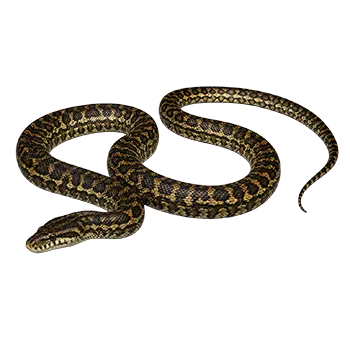
Housing a Coastal Carpet Python properly requires an enclosure that respects both the animal's adult size and its semi-arboreal nature. This subspecies is among the largest carpet pythons, with adults commonly reaching seven to nine feet and occasional individuals exceeding ten feet, and it is considerably more active than many comparably sized snake species. The enclosure must provide sufficient floor space for ground-level movement, adequate vertical height for climbing, and secure closures that can contain an animal that is both strong and inquisitive. Skimping on enclosure size is one of the most common mistakes made with this subspecies, and it produces stressed, sedentary animals with poor muscle tone and behavioral problems.

Hatchlings and small juveniles do best in modestly sized enclosures that provide security without overwhelming the animal. A plastic tub or small terrarium measuring approximately twenty-four inches long by twelve inches wide by twelve inches tall is adequate for neonates up to roughly eighteen inches in length. As the snake grows through its first year, a step up to a thirty-six-inch enclosure accommodates the juvenile phase. The key principle during this stage is that the enclosure should be large enough to establish a proper thermal gradient but small enough that the young snake does not feel exposed and insecure, which can lead to chronic stress, feeding refusal, and defensive behavior.

Sub-adults in the three-to-five-foot range require an intermediate enclosure, typically in the range of four feet long by two feet deep by two feet tall. This size allows the keeper to establish distinct warm and cool zones, install meaningful climbing furniture, and provide multiple hides without overcrowding the interior. Many keepers find that PVC enclosures in this size range offer the best combination of thermal efficiency, humidity retention, lightweight construction, and ease of cleaning. Front-opening doors are strongly preferred over top-opening designs for carpet pythons, as approaching the snake from above triggers a defensive response rooted in the animal's instinctive wariness of aerial predators.

Adult Coastal Carpet Pythons require a permanent enclosure measuring at least six feet long by two feet deep by three to four feet tall. The vertical dimension is particularly important for this subspecies because of its strong arboreal tendencies — a Coastal Carpet Python that is denied climbing opportunities will not exhibit its full behavioral repertoire and is more likely to develop obesity due to reduced activity. Custom-built PVC or wood-framed enclosures with sealed interiors are the most popular choice among experienced keepers of large carpet pythons, though high-quality commercial glass terrariums with front-opening doors are also suitable provided they can maintain appropriate humidity levels. Screen-topped aquariums are poorly suited for this species because they hemorrhage both heat and humidity.

For keepers who maintain multiple carpet pythons, rack systems offer space-efficient housing during the juvenile and sub-adult phases. Rack tubs with appropriately sized ventilation and belly heat provided by heat tape or heat cable can house growing carpet pythons effectively, though the limited vertical space in most rack systems means that the semi-arboreal enrichment opportunities are reduced. Most dedicated carpet python keepers transition their animals to individual display enclosures once they reach adult size, reserving rack systems for the growth phase and for breeding projects where managing large numbers of animals is a practical necessity.

Substrate Options

Substrate selection for a Coastal Carpet Python balances humidity retention, ease of cleaning, aesthetic appeal, and safety. The ideal substrate maintains moderate humidity without becoming waterlogged, does not produce excessive dust, is free of sharp particles or toxic compounds, and allows the keeper to spot-clean waste efficiently between full substrate changes. No single substrate is perfect for every keeper or every enclosure configuration, but several options have proven track records with this subspecies.

Coconut coir, sold in compressed bricks or loose bags, is one of the most widely used substrates for carpet pythons. It retains moisture well, supporting the elevated humidity levels this subspecies requires, and it has a natural resistance to mold when maintained at appropriate moisture levels. Coir produces minimal dust when properly hydrated, and its dark color provides an attractive backdrop that enhances the visual impact of the snake's patterning. Spot-cleaning is straightforward — waste and soiled coir can be scooped out and replaced with fresh material — and full substrate changes are typically performed every four to six weeks depending on the enclosure size and the snake's feeding schedule.

Cypress mulch is another excellent option that shares many of coconut coir's advantages. It holds humidity well, resists mold growth due to natural antifungal properties in the wood, and provides a naturalistic appearance. Cypress mulch is slightly bulkier than coir, which some keepers prefer because it allows the snake to burrow partially and create its own microhabitats within the substrate layer. The mulch should be free of added dyes, chemicals, or mixed wood species — pure cypress is the requirement, as cedar and pine contain aromatic oils that are toxic to reptiles and must be strictly avoided.

Paper-based substrates including unprinted newspaper, paper towels, and commercial paper bedding products prioritize hygiene and simplicity over aesthetics. These options are ideal for quarantine enclosures, hospital setups for sick or injured animals, and keepers who prefer maximum visibility of the snake's waste output for health monitoring. Paper substrates do not retain humidity well and require supplemental misting or a larger water bowl to maintain appropriate ambient moisture levels. They are also less visually appealing in display enclosures, which may be a consideration for keepers who value the aesthetic dimension of their setups.

Substrates to avoid include cedar and pine shavings, which release volatile aromatic compounds that cause respiratory irritation and neurological damage in reptiles. Sand is inappropriate for Coastal Carpet Pythons — it does not retain humidity, it can be ingested during feeding and cause gastrointestinal impaction, and it provides no benefit that other substrates do not deliver more safely. Potting soil and garden soil should be avoided due to the risk of pesticide contamination, fertilizer residues, and introduced parasites or invertebrates. Any substrate with artificial fragrances, dyes, or chemical treatments is unsuitable for reptile housing.

Heating and Thermal Gradient

Establishing a proper thermal gradient is the single most important environmental parameter in a Coastal Carpet Python enclosure. As ectotherms, carpet pythons depend entirely on external heat sources to regulate their body temperature, and they do so behaviorally by moving between warmer and cooler zones within their habitat. A well-designed thermal gradient allows the snake to thermoregulate precisely, selecting the temperature that best supports its current physiological need — higher temperatures for digestion, moderate temperatures for routine activity, and cooler temperatures for rest.

The warm end of the enclosure should maintain an ambient air temperature of approximately eighty-six to eighty-eight degrees Fahrenheit, with a basking surface temperature of ninety to ninety-two degrees. The cool end should sit in the range of seventy-six to eighty degrees, creating a differential of roughly ten degrees across the length of the enclosure. This gradient is most reliably achieved in enclosures that are at least four feet long for sub-adults and six feet long for adults, as shorter enclosures compress the gradient and make it difficult for the snake to find meaningfully different temperature zones. Nighttime temperatures can safely drop to seventy-two to seventy-five degrees across the entire enclosure, mimicking the natural cooling that occurs in the snake's subtropical and tropical home range.

Heating equipment options include radiant heat panels, ceramic heat emitters, deep heat projectors, and under-tank heating pads or heat tape. Radiant heat panels mounted inside the top of the enclosure are the most popular choice among carpet python keepers because they produce gentle, even heat distribution, have no light output that would disrupt the photoperiod, and are extremely long-lasting. Ceramic heat emitters threaded into dome fixtures are a more affordable alternative that performs similarly, though they produce more concentrated heat and must be positioned to avoid creating dangerously hot spots on climbing branches near the fixture. Under-tank heat pads provide belly heat from below and are useful as a supplementary heat source but generally cannot serve as the sole heat source for a large enclosure because they do not raise ambient air temperatures sufficiently.

Every heating device in a Coastal Carpet Python enclosure must be controlled by a thermostat. This is not optional. Unregulated heat sources can produce surface temperatures exceeding one hundred and twenty degrees Fahrenheit, which will cause severe thermal burns. Proportional or dimming thermostats are preferred over simple on-off models because they maintain more stable temperatures by adjusting power output continuously rather than cycling the heat source on and off. The thermostat probe should be positioned at the basking surface or at the height where the snake most frequently rests on the warm side, and its placement should be verified against an independent digital thermometer to ensure accuracy.

Heat rocks and heat caves, still sold in some pet stores, should never be used with any snake species. These devices have a long history of malfunctioning and producing uneven, dangerously high surface temperatures that cause contact burns. A snake resting on a malfunctioning heat rock cannot perceive the danger quickly enough to move away because reptilian heat sensation is slower than mammalian pain response, and the result is often deep tissue burns that require veterinary treatment and leave permanent scarring. Overhead radiant heat and properly thermostatted under-tank heating are the only safe options.

Lighting and Photoperiod

Lighting in a Coastal Carpet Python enclosure serves two primary functions: establishing a consistent day-night cycle that supports the animal's circadian rhythm, and providing visual illumination that allows the keeper to observe and enjoy the snake. Unlike many lizard species, carpet pythons do not have an absolute physiological requirement for ultraviolet-B radiation to synthesize vitamin D3, as they obtain sufficient vitamin D from whole-prey items in their diet. However, a growing body of herpetological research suggests that low-level UVB exposure may confer subtle benefits including improved immune function, more natural behavior patterns, and enhanced coloration, and many experienced keepers now include UVB as a component of their lighting strategy.

A basic lighting setup for a Coastal Carpet Python enclosure consists of a daylight-spectrum LED or fluorescent fixture running on a timer to provide ten to twelve hours of light during the warmer months. During winter cooling periods, the photoperiod can be reduced to eight to ten hours to simulate the shorter days the snake would experience in its natural range. Consistency is more important than precision — the timer ensures that the light cycle is regular and predictable, which supports stable behavioral rhythms including activity patterns, feeding responses, and seasonal cycling for breeding.

If the keeper chooses to provide UVB, a low-output linear fluorescent tube in the T5 format with a UV index of two to three at the basking distance is appropriate. The UVB fixture should be positioned so that the snake can access the UV zone voluntarily by climbing to an elevated perch but can also retreat entirely into UV-free shade. This replicates the dappled forest-canopy conditions that Coastal Carpet Pythons experience in the wild, where UV exposure is filtered through vegetation and available in patches rather than uniformly. The UVB tube should be replaced according to the manufacturer's recommended schedule, typically every six to twelve months, as UV output degrades over time even though the visible light output remains unchanged.

Red and blue nighttime bulbs, once widely recommended for nocturnal observation, have largely fallen out of favor among reptile keepers. Research indicates that reptiles can perceive red and blue wavelengths, and constant nighttime illumination disrupts the dark phase that is essential for proper rest and hormonal cycling. If nighttime observation is desired, a very dim, true infrared heat emitter that produces no visible light is a better option. Alternatively, brief observation with a low-intensity flashlight causes minimal disturbance. The overarching principle is that the enclosure should be dark at night — complete darkness during the scotophase is a simple but meaningful contribution to the snake's long-term physiological health.

Humidity Management

Coastal Carpet Pythons originate from the humid subtropical and tropical regions of eastern Australia, and replicating appropriate humidity levels in captivity is essential for respiratory health, skin condition, and successful shedding. The target ambient humidity range for this subspecies is fifty to sixty-five percent during normal conditions, with temporary increases to seventy to eighty percent during the pre-shed period when the snake's eyes turn opaque and the skin takes on a dull, milky appearance. Chronic humidity below forty percent leads to dehydration, retained sheds, and increased susceptibility to respiratory infections, while sustained humidity above eighty percent promotes bacterial and fungal growth in the substrate and on enclosure surfaces.

The enclosure's construction material has the greatest impact on humidity retention. PVC enclosures with minimal ventilation openings retain moisture far more effectively than screen-topped glass terrariums, which lose humidity rapidly through the mesh. If using a glass enclosure, covering sixty to eighty percent of the screen top with a sheet of acrylic, aluminum foil, or a custom-cut PVC panel dramatically improves humidity retention. The remaining open screen area maintains adequate air exchange to prevent stagnation, which is itself a respiratory hazard. Front-ventilated enclosures with solid tops offer an ideal balance between humidity retention and airflow.

Misting and water management are the primary tools for maintaining target humidity. A large water bowl positioned on the cool side of the enclosure contributes passive humidity through evaporation, and the evaporative effect is enhanced if the bowl is placed near a mild heat source. Manual misting with a handheld spray bottle once or twice daily is sufficient for most setups, though automated misting systems connected to timers or humidity controllers offer convenience and consistency for keepers who are away from the enclosure during the day. The substrate itself plays a role — moisture-retaining substrates like coconut coir and cypress mulch can be lightly dampened during substrate changes to provide a humidity reservoir that slowly releases moisture over days.

Monitoring humidity with a reliable digital hygrometer is essential. Analog dial hygrometers, still included with many starter reptile kits, are notoriously inaccurate and should be replaced with a digital unit that has been calibrated or spot-checked against a known reference. Placing two hygrometers — one on the warm side and one on the cool side — gives the keeper a more complete picture of the enclosure's humidity profile, since evaporation rates differ across the thermal gradient. Humidity will naturally be slightly lower on the warm end and slightly higher on the cool end, and this variation is acceptable and even beneficial as it gives the snake microhabitat choices.

During the shedding cycle, a dedicated humidity retreat can be provided by placing a damp sphagnum moss box inside the enclosure. This is a ventilated hide box filled with moistened sphagnum moss that creates a localized high-humidity microenvironment where the snake can retreat to facilitate the loosening of old skin. The moss should be damp but not dripping, and it should be replaced or dried out after the shed is complete to prevent mold growth. A snake that sheds cleanly in one complete piece is a snake whose humidity needs are being met consistently.

Interior Furnishing and Layout

The interior of a Coastal Carpet Python enclosure should be designed to support the full range of the animal's natural behaviors: climbing, hiding, thermoregulating, soaking, and exploring. An enclosure that is appropriately sized but sparsely furnished fails the snake just as surely as one that is too small, because environmental complexity drives physical activity, mental stimulation, and behavioral health. The goal is a habitat that offers choices — the snake should be able to select between high and low positions, warm and cool zones, open and concealed spaces, and dry and humid microhabitats.

Climbing furniture is the most important enrichment category for this semi-arboreal subspecies. Sturdy branches, both horizontal and diagonal, should span the enclosure at multiple heights, creating a three-dimensional network that the snake can navigate. The branches must be securely anchored and capable of supporting the full weight of the animal — an adult Coastal Carpet Python can weigh over ten pounds, and a branch that shifts or falls while the snake is climbing can cause injury and erode the animal's confidence in using elevated positions. Cork bark tubes, grapewood, and manzanita branches are popular choices that combine structural strength with visual appeal and textural variety.

Hide boxes are essential at both the warm and cool ends of the enclosure. A proper hide fits the snake snugly, with walls that contact the animal's body on at least two sides when the snake is coiled inside. A hide that is too large fails to provide the sense of security that the snake is seeking, and the animal may avoid it in favor of wedging itself behind water bowls or equipment. Commercial reptile hides in half-log, cave, and dome styles are widely available in sizes appropriate for carpet pythons, and natural cork bark flats or rounds make attractive and functional alternatives. As the snake grows, hides must be upgraded to match its increasing body size.

The water bowl serves double duty as both a hydration source and a humidity contributor. It should be heavy or anchored to prevent tipping — a full-size Coastal Carpet Python climbing across an unsecured water bowl will flip it immediately, soaking the substrate and requiring cleanup. Ceramic crocks and heavy-gauge stainless steel bowls are the most practical options. The bowl should be large enough for the snake to submerge a significant portion of its body, as carpet pythons frequently soak prior to shedding and occasionally bathe after feeding. Water should be changed every one to two days and immediately after any contamination.

Background panels and visual barriers along the rear and side walls of the enclosure reduce the snake's sense of exposure and create a more naturalistic aesthetic. Cork bark panels, foam rock backgrounds, and printed habitat inserts are all effective options. For glass enclosures, covering the rear and one or both side panels reduces the snake's visibility to room activity from multiple directions, which decreases stress-related behaviors such as persistent glass-surfing and nose-rubbing. The front glass should remain clear for observation, and the enclosure should be positioned in a location where foot traffic passes primarily in front rather than surrounding the enclosure on all sides.

Always consult a qualified professional before making any health-related decisions. This content is provided for informational reference only and should not replace professional guidance specific to your animal.