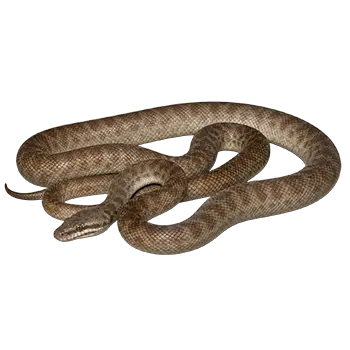

Behavioral Drives & Activity Patterns

Understanding how Children's Pythons interact with their environment is essential before investing in enrichment products. Unlike mammals, snakes do not play with objects in a recreational sense. They do not fetch, chew for pleasure, or engage in social play. Instead, enrichment for snakes focuses on encouraging the expression of natural behaviors such as exploring, climbing, hiding, and hunting. When a Children's Python investigates a new branch, wedges itself into a tight crevice, or moves through varied terrain, it is engaging in the same behavioral repertoire it would use in the wild.

Children's Pythons are crepuscular to nocturnal, meaning most of their active behavior occurs during the evening and nighttime hours. Keepers who only observe their snake during the day may mistakenly believe it is inactive or uninterested in its environment. Setting up a low-light camera or simply checking the enclosure after dark often reveals a surprisingly active animal that explores, climbs, and investigates its habitat once the lights go down.

This species is semi-arboreal in the wild, frequently found in rocky outcrops, cave entrances, and low tree branches where they ambush small prey. Their natural habitat is structurally complex, with multiple hiding spots, textured surfaces, and varied elevations. Replicating this complexity in captivity is the foundation of effective enrichment. A bare enclosure with a single hide and a water bowl meets the snake's survival needs but does nothing to stimulate the exploratory and hunting behaviors that contribute to psychological well-being.

Research in reptile cognition has demonstrated that snakes are capable of spatial learning and environmental mapping. They remember the layout of their enclosure, learn the locations of hides and water sources, and can navigate novel obstacles. This capacity for learning means that static environments eventually become fully mapped and lose their enrichment value, which is why periodic rearrangement of enclosure furnishings is an important part of long-term husbandry.

Climbing & Exploration Structures

Branches and climbing structures are among the most valuable enrichment items for Children's Pythons. This species readily uses elevated perches, and providing sturdy branches at various angles and heights encourages natural climbing behavior. Look for branches with rough bark texture that provides grip, and ensure they are securely anchored so they do not shift or collapse under the snake's weight. Grapevine, cork branches, and hardwood driftwood are all popular choices that offer interesting textures and visual appeal.

The diameter of climbing branches matters for comfort and usability. Ideally, branches should be roughly the same diameter as the snake's body or slightly larger. Branches that are too thin are difficult for the snake to grip securely, while those that are too thick do not allow the snake to wrap and hold on effectively. Offering a variety of diameters within the enclosure lets the snake choose surfaces that suit its current size and activity.

Rock formations and stacked stone arrangements create a naturalistic landscape that provides both climbing surfaces and tight crevices for hiding. In the wild, Children's Pythons are frequently associated with rocky habitats, and replicating this environment with reptile-safe rocks or resin rock formations gives the snake opportunities to wedge itself into narrow spaces, which appears to be a self-soothing behavior that reduces stress. Ensure all rock structures are stable and cannot topple, as even a small rock falling on a snake can cause serious injury.

Cork bark tubes and flats serve double duty as both climbing surfaces and hiding spots. These natural products are lightweight, rot-resistant, and can be arranged horizontally as ground-level hides or vertically as climbing walls. Their irregular surfaces and natural crevices provide tactile stimulation, and they retain minimal moisture, making them well-suited to the moderate humidity levels preferred by this species.

Hides & Shelter Options

Hides are the single most important furnishing in a Children's Python enclosure, and providing at least two hides, one on the warm end and one on the cool end, is considered a minimum standard of care. Without hides on both ends of the thermal gradient, the snake is forced to choose between feeling secure and thermoregulating properly. A snake that has only a warm-side hide may sit in it constantly even when it needs to cool down, leading to chronic overheating and stress.

The ideal hide is just large enough for the snake to fit inside with its body touching the walls and ceiling. Snakes feel secure through contact with surrounding surfaces, a behavior called thigmotaxis. An oversized hide defeats its purpose because the snake cannot make contact with the enclosure walls and does not experience the tight, enclosed feeling that provides a sense of safety. As the snake grows, hides should be upgraded to maintain this snug fit.

Material options for hides range from simple plastic containers with entry holes cut in the side to elaborate resin caves that mimic natural rock formations. Both extremes work perfectly well from the snake's perspective. What matters is the size, darkness of the interior, and stability of the hide, not its visual appeal to the keeper. That said, naturalistic hides made from resin, cork bark, or ceramic contribute to the overall aesthetic of a display enclosure and can be chosen without compromising function.

Consider adding a humid hide as a semi-permanent fixture rather than only providing one during shedding. A humid hide filled with damp sphagnum moss gives the snake an additional microenvironment option and allows it to self-regulate its hydration and shedding needs without intervention from the keeper. Place the humid hide in the middle of the enclosure or on the warm side where the moisture will create gentle humidity within the hide without raising ambient levels throughout the entire setup.

Environmental Variety & Rearrangement

One of the most effective and least expensive forms of enrichment is periodic rearrangement of the enclosure layout. Moving hides, shifting branches, and changing the position of the water bowl forces the snake to re-explore and remap its environment, stimulating the spatial learning behaviors that contribute to cognitive health. This does not need to be done frequently — once every four to six weeks is sufficient — and changes should be moderate rather than a complete overhaul, which can cause unnecessary stress.

Introducing novel objects temporarily is another approach to environmental enrichment. A new piece of cork bark, a different style of hide, or a branch with a different texture gives the snake something to investigate. Observe the snake's behavior after introducing a new item: increased tongue-flicking, exploratory movement along the new surface, and attempts to climb or hide in the new object are all signs that the snake is engaging with the enrichment. Remove items that the snake consistently avoids or seems stressed by.

Substrate variety within the enclosure can provide tactile enrichment that encourages exploration. Using a primary substrate like aspen shavings across most of the floor while adding a small section of leaf litter, flat stones, or a patch of coconut fiber creates textural variation that the snake encounters as it moves through the habitat. This mimics the varied terrain a snake would cross in the wild and adds sensory complexity without significant additional cost or maintenance.

Scent-based enrichment is an emerging area of interest in reptile husbandry. Some keepers introduce novel scents by placing shed skin from other snake species, a clean feather, or a small amount of substrate from an outdoor environment into the enclosure temporarily. The Children's Python uses its tongue to sample chemical information from its environment, and novel scents trigger investigative behavior. This type of enrichment should be used sparingly and with clean, parasite-free materials only.

Handling as Enrichment

Regular, gentle handling provides a form of enrichment that no enclosure furnishing can replicate. When a Children's Python is taken out of its enclosure and allowed to explore a person's hands, arms, and the surrounding environment, it encounters a vast array of novel textures, temperatures, and scents that stimulate its sensory systems. Children's Pythons are generally among the most handleable python species, and most individuals tolerate and even seem to seek out the warmth and contact of regular handling sessions.

Handling sessions should last fifteen to thirty minutes and occur no more than three or four times per week. Avoid handling for forty-eight hours after feeding to prevent regurgitation, and skip handling sessions when the snake is in blue, the pre-shed phase where the eyes become cloudy and the snake's vision is temporarily impaired. Snakes in shed are more defensive because they cannot see clearly, and handling during this time creates negative associations that can make the snake more difficult to handle long-term.

The way you handle a Children's Python matters as much as how often. Support the snake's body fully at all times, avoid gripping or restraining it tightly, and allow it to move through your hands at its own pace. A snake that is constantly grabbed and repositioned will become stressed and defensive, while one that is allowed to explore freely while being gently guided develops confidence and calm behavior over time. Think of your hands as a moving surface for the snake to travel across rather than a restraining device.

Some keepers allow their Children's Pythons supervised exploration time outside the enclosure in a snake-safe room. This provides a dramatically different environment with new surfaces, scents, and spatial challenges. Ensure the room is secure, with no gaps under doors, no accessible electrical cords, and no other pets present. Supervised floor time on a carpeted or towel-covered surface allows the snake to exercise muscles and explore at a larger scale than its enclosure permits.

DIY & Budget Enrichment Ideas

Effective snake enrichment does not need to be expensive. Many of the best enrichment items can be made from household materials or collected from nature at no cost. Cardboard tubes from paper towel and toilet paper rolls make excellent temporary hides and tunnels that the snake can explore, crush, and push through. Replace them when they become soiled or flattened, and avoid tubes with any ink, glue, or adhesive residue that could be harmful.

Natural branches and rocks collected from outdoors provide free climbing structures and landscape features, but they must be properly sanitized before introduction to the enclosure. Bake branches in an oven at 250 degrees Fahrenheit for thirty minutes to kill parasites, mold, and bacteria. Rocks can be scrubbed with a stiff brush and hot water, then baked or soaked in a dilute bleach solution and thoroughly rinsed. Avoid collecting materials from areas that may have been treated with pesticides or herbicides.

Plastic storage containers with entry holes cut in the sides make functional hides that cost very little. Use a hole saw or soldering iron to create smooth-edged openings, and choose opaque containers that block light to create a dark interior. These utilitarian hides lack the visual appeal of commercial products but serve the same purpose from the snake's perspective and can be replaced easily as the snake grows.

Leaf litter collected from pesticide-free areas and baked to sterilize provides a natural substrate addition that encourages foraging behavior. Spreading a thin layer of dried leaves over part of the enclosure floor creates a rustling, textured surface that the snake moves through differently than bare substrate. Oak, magnolia, and other broad leaves work well and decompose slowly. Replace leaf litter during regular enclosure deep cleans to prevent mold or bacterial buildup.

Always consult a qualified professional before making any health-related decisions. This content is provided for informational reference only and should not replace professional guidance specific to your animal.