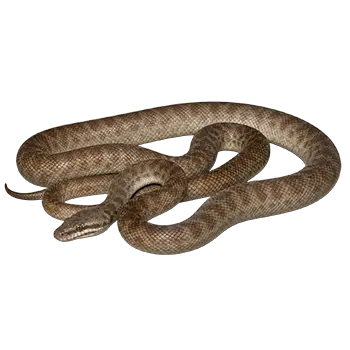

The Children's Python is one of the smaller python species, typically reaching three to four feet in adult length, which makes its housing requirements more manageable than those of its larger relatives. A single adult can be comfortably housed in an enclosure measuring approximately 36 inches long by 18 inches deep by 18 inches tall. While some keepers opt for slightly smaller setups, providing more space rather than less is always preferable, as it allows for better thermal gradients and more enrichment opportunities.
Hatchlings and juveniles should not be placed directly into a full-sized adult enclosure. A large open space can make a small snake feel exposed and stressed, which often leads to feeding problems and defensive behavior. Starting with a smaller enclosure, roughly 20 inches by 10 inches by 10 inches, and upgrading as the snake grows is a more effective approach. Most keepers transition through two or three enclosure sizes before settling into the permanent adult habitat.
Floor space is more important than height for this species. While Children's Pythons are semi-arboreal and will use climbing opportunities when provided, they are primarily terrestrial hunters and spend much of their time on the ground or in ground-level hides. An enclosure that prioritizes length and depth over height will serve the snake better than a tall, narrow arboreal setup. That said, providing some vertical space with branches or shelves adds enrichment without compromising the ground-level habitat.
The enclosure must be completely escape-proof. Snakes are remarkably persistent escape artists, and even a small gap around a door seal or a ventilation panel can provide an exit route for a determined Children's Python. Check all doors, latches, and ventilation openings before introducing the snake, and periodically inspect the enclosure for wear that could create new escape points over time.