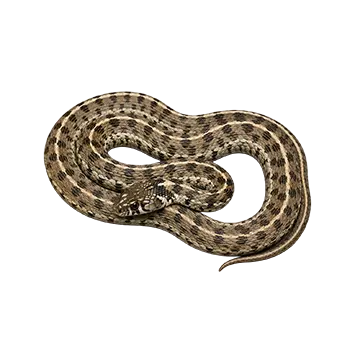

The Checkered Garter Snake is an active, exploratory species that requires more horizontal floor space than its modest adult size might initially suggest. While many snake species spend the majority of their time coiled in a hide, Thamnophis marcianus is a diurnal forager that patrols its environment throughout the day, investigates scent trails, and engages with environmental features in ways that more sedentary species simply do not. An adult Checkered Garter Snake between twenty and twenty-eight inches in length should be housed in an enclosure that provides a minimum of thirty-six inches of length, eighteen inches of depth, and eighteen inches of height. Larger individuals approaching the upper size range of the species benefit from enclosures measuring forty-eight inches in length or more.
Glass terrariums with screened tops are the most widely available enclosure option and work adequately for this species, provided certain modifications are made. The primary drawback of screen-top tanks is the rapid moisture and heat loss through the mesh, which makes maintaining appropriate humidity and thermal gradients more challenging in dry climates. Covering sixty to seventy percent of the screen top with a sheet of glass, acrylic, or aluminum foil mitigates this problem considerably while still allowing adequate ventilation. Front-opening glass terrariums with solid tops and ventilation strips are a superior alternative because they retain heat and humidity more effectively and allow access to the snake without reaching in from above, which reduces the startle response that top-opening enclosures tend to provoke in alert, visually oriented species like garter snakes.
PVC and molded plastic enclosures have become increasingly popular among garter snake keepers, and their advantages are significant. These enclosures provide excellent insulation, which stabilizes temperatures and reduces heating costs. Their solid construction retains humidity far more effectively than glass-and-screen designs, and they are lighter, more durable, and easier to clean. Several manufacturers produce PVC enclosures specifically sized for small to medium colubrid species, with dimensions that suit Checkered Garter Snakes perfectly. The main disadvantage is reduced visibility compared to glass, although many PVC enclosures include glass or acrylic viewing panels that provide a clear window into the habitat.
Neonatal and juvenile Checkered Garter Snakes should not be housed in adult-sized enclosures immediately. A very young garter snake placed in a thirty-six-inch tank may become stressed by the open space and have difficulty locating food and water. Small plastic enclosures, shoebox-sized tubs with ventilation holes, or ten-gallon terrariums provide a more appropriately scaled environment for snakes under ten inches in length. As the snake grows and demonstrates confident feeding and exploration behavior, it can be graduated to progressively larger enclosures. The transition should be accompanied by the addition of ample hides and visual barriers so the snake feels secure in its expanded territory.
Communal housing is practiced by many garter snake keepers because Thamnophis species are among the few snake genera that tolerate cohabitation reasonably well. Groups of Checkered Garter Snakes can be housed together in appropriately sized enclosures with multiple hides, water sources, and feeding stations. However, communal housing introduces complications including competition for resources, difficulty monitoring individual food intake, and the risk of one snake ingesting another during feeding frenzies. Males housed together during breeding season may engage in combat behavior, and mixed-sex groups will breed prolifically if not separated. Keepers who choose communal housing must increase enclosure dimensions proportionally — adding roughly fifty percent more floor space per additional snake — and must feed animals individually in separate containers to prevent accidental injuries.