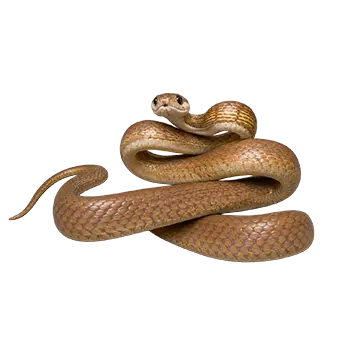

The Cat-Eyed Snake is a semi-arboreal, nocturnal colubrid that spends much of its active time navigating branches, vines, and vegetation above the forest floor. This behavioral profile makes vertical space at least as important as floor area when selecting an enclosure, and ideally the vivarium should prioritize height over length. A single adult Cat-Eyed Snake in the twenty-to-thirty-inch range thrives in a front-opening glass or PVC terrarium with minimum dimensions of twenty-four inches long, eighteen inches deep, and twenty-four inches tall. Larger individuals approaching the upper end of the species' size range benefit from enclosures measuring thirty-six inches long by eighteen inches deep by thirty-six inches tall, which provides ample room for a complex network of climbing opportunities.
Front-opening enclosures are strongly preferred over top-opening aquarium-style tanks for several practical and behavioral reasons. A front-opening door allows the keeper to access the enclosure without reaching over the snake from above, which is a predator-mimicking motion that triggers defensive responses in many colubrid species. Cat-Eyed Snakes are particularly prone to startling when approached from overhead during their daytime resting period, and repeated stress responses from top-opening access can lead to chronic stress, food refusal, and defensive biting. Front-opening enclosures also make it easier to maintain the interior environment, change water, spot-clean substrate, and perform routine inspections without disturbing the entire habitat.
Glass terrariums with mesh tops offer excellent visibility and are widely available in appropriate sizes from major reptile equipment manufacturers. However, the mesh top presents a significant challenge for maintaining the high humidity levels that Cat-Eyed Snakes require. Keepers using screen-topped enclosures typically need to cover sixty to eighty percent of the mesh with acrylic sheets, aluminum foil, or fitted plastic panels to reduce evaporative moisture loss. PVC and molded plastic enclosures with solid tops and integrated ventilation panels provide superior humidity retention out of the box and are increasingly popular among keepers of tropical and subtropical species.
Juvenile Cat-Eyed Snakes should not be housed in full-sized adult enclosures immediately. A hatchling or recently acquired juvenile in the eight-to-fourteen-inch range can feel exposed and stressed in a large vivarium, leading to chronic hiding, refusal to feed, and difficulty locating prey items. A smaller enclosure or a well-partitioned section of a larger one, with dimensions around twelve inches in each direction, provides the security that young snakes need while still offering vertical climbing opportunities. As the snake grows and demonstrates confident feeding behavior and regular activity, it can be transitioned to its permanent adult enclosure.