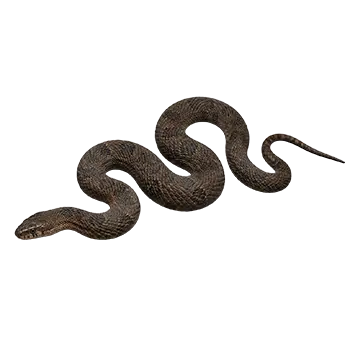

Enclosure Size and Type

The Brown Water Snake is a large, heavy-bodied semi-aquatic species that demands considerably more enclosure space than its adult length alone might suggest. While many terrestrial snake species of comparable length can be maintained in modestly sized enclosures, Nerodia taxispilota requires both a substantial land area and a significant water feature, effectively doubling the functional footprint of the habitat. An adult Brown Water Snake measuring forty to sixty inches should be housed in an enclosure with a minimum footprint of four feet by two feet, though larger setups of six feet by two feet or greater are strongly preferred by experienced keepers who prioritize animal welfare and behavioral expression.

Glass aquariums, while commonly available and affordable, present significant limitations for housing this species. Standard aquariums are designed for fully aquatic setups and lack the ventilation that a semi-aquatic reptile enclosure requires. The weight of water combined with substrate can stress the seams of tanks not rated for paludarium-style use. Purpose-built paludarium enclosures, which feature reinforced lower sections designed to hold water and ventilated upper sections for air exchange, are the most appropriate commercially available housing option. Several reptile enclosure manufacturers produce paludarium-style tanks in sizes suitable for adult Brown Water Snakes, and these units typically include waterproof lower compartments with built-in overflow drains.

Custom-built enclosures offer the greatest flexibility for keepers who want to design a habitat tailored specifically to the Brown Water Snake's semi-aquatic lifestyle. PVC panel enclosures with sealed lower sections can be constructed to virtually any dimension and are lightweight, easy to clean, and resistant to the moisture damage that plagues wooden enclosures over time. Fiberglass-lined plywood enclosures represent another durable option, though the construction process requires more skill and the materials are more expensive. Regardless of the construction material, the enclosure must be completely escape-proof, with secure latching mechanisms on all access points, because Brown Water Snakes are persistent escape artists that will exploit any gap or weakness in the enclosure's perimeter.

Vertical space, while secondary to floor area and water volume for this species, should not be neglected entirely. Brown Water Snakes in the wild are frequently observed basking on overhanging branches above the water's surface, and they are capable climbers despite their heavy build. An enclosure height of eighteen to twenty-four inches above the waterline allows room for basking platforms, branches, and adequate light fixture clearance. Enclosures that are too shallow restrict the keeper's ability to create a naturalistic environment with emergent branches and elevated basking sites, which are important for thermoregulation and behavioral enrichment.

Water Features and Aquatic Setup

The aquatic component of a Brown Water Snake enclosure is not an accessory or a supplementary feature but the functional center of the habitat. This species spends the majority of its active time in water, hunts in water, drinks from its water feature, and often defecates in water. The water section should occupy at minimum one-third of the enclosure's total floor area, and many successful keepers dedicate half or more of the available space to the aquatic zone. Water depth should allow the snake to submerge completely while still being able to rest with its head at the surface, which typically means a depth of four to eight inches for adults depending on the individual's size.

Water quality management is the single most labor-intensive aspect of Brown Water Snake husbandry and the factor most likely to determine long-term success or failure with this species. Unlike a simple water bowl that can be dumped and refilled, a large aquatic feature requires active filtration to manage the biological waste load that a messy piscivorous snake produces. Canister filters rated for aquariums significantly larger than the actual water volume are recommended because the waste output from fish-fed snakes far exceeds what a comparably sized fish tank would produce. A filter rated for a seventy-five-gallon aquarium is a reasonable starting point for a water feature holding twenty to thirty gallons, providing the mechanical and biological filtration capacity needed to process waste between water changes.

The transition between the aquatic and terrestrial zones must be gradual and accessible. A steep or slippery boundary between water and land forces the snake to struggle when moving between zones and can lead to stress, avoidance of the water feature, or injury. Smooth river rocks, aquarium-safe slate, or molded resin ramps provide traction and create a naturalistic shoreline. Silicone-sealed barriers or built-in dividers within the enclosure prevent substrate from the land area washing into the water section, which would clog the filter and degrade water clarity. Some keepers use egg crate light diffuser panels as a structural base beneath the substrate to create a false bottom that improves drainage and simplifies cleaning.

Water temperature should be maintained within the range of seventy-five to eighty-two degrees Fahrenheit, depending on the ambient temperature gradient established in the enclosure. Submersible aquarium heaters with built-in thermostats are the most practical option for heating the water section, and they should always be protected by a heater guard to prevent the snake from wrapping around the unit and sustaining thermal burns. The heater should be positioned in the deeper area of the water feature where it will not be exposed during routine water level fluctuations. Regular monitoring with a separate aquarium thermometer verifies that the heater's internal thermostat is functioning accurately.

Substrate and Land Area

The terrestrial portion of a Brown Water Snake enclosure serves as the primary basking zone, the location for land-based hides, and the area where the snake may rest during periods of inactivity. Substrate selection for this zone must balance moisture management, ease of cleaning, and naturalistic appearance. Cypress mulch is widely regarded as the best substrate option for Nerodia species because it tolerates high humidity without developing mold, resists compaction, and provides a naturalistic appearance that complements the semi-aquatic habitat aesthetic. Coconut coir, either loose or in compressed brick form, is another suitable option that holds moisture well and breaks down slowly.

Substrate depth on the land portion should be two to three inches, deep enough to provide cushioning and moisture retention without being so deep that the snake burrows beneath it and becomes difficult to locate during health checks. The substrate should be mounded slightly toward the back of the enclosure and slope gently downward toward the water's edge, mimicking a natural shoreline gradient. This sloping profile encourages water to drain toward the aquatic zone rather than pooling on the land area, which would create stagnant puddles that harbor bacteria and produce odor.

Cedar and pine shavings must be avoided entirely for Brown Water Snakes and all other reptile species. The aromatic phenols in these softwood substrates are toxic to reptiles, causing respiratory irritation, neurological damage, and organ failure with prolonged exposure. Sand is also inappropriate for this species because ingested grains can cause intestinal impaction, and sand does not manage moisture effectively in the high-humidity environment that Brown Water Snakes require. Paper towels and newspaper can serve as temporary substrates during quarantine or medical treatment periods, but they lack the moisture-holding properties and naturalistic appearance needed for a long-term habitat.

The land area should include at least one enclosed hide that provides complete visual security. Cork bark flats, half-log hides, and commercially produced reptile caves all function well in humid environments. The hide should be positioned in the warm zone of the enclosure so that the snake can thermoregulate while feeling secure. A second hide in the cooler area of the land section gives the snake the ability to choose between temperature zones without sacrificing the sense of cover. Hides that sit directly on the substrate and have only one entrance are preferred, as they provide the tight-fitting, enclosed feeling that reduces stress in a species that is naturally wary and defensive.

Heating and Lighting

Establishing a proper thermal gradient is essential for the Brown Water Snake's ability to digest food, maintain immune function, and regulate metabolic processes. The warm end of the enclosure should reach eighty-five to eighty-eight degrees Fahrenheit at the basking surface, while the cool end should remain in the mid-seventies. The water temperature, maintained independently by a submersible heater, typically falls within the middle of this gradient. This arrangement gives the snake access to a full range of temperatures and allows it to shuttle between zones according to its physiological needs, which is the fundamental mechanism by which ectothermic animals regulate body temperature.

Basking heat is most effectively delivered by an overhead heat lamp positioned above a designated basking platform on the land section. Halogen flood bulbs are preferred over ceramic heat emitters for daytime heating because they produce both heat and visible light, creating a naturalistic basking spot that the snake can identify visually. The basking lamp should be connected to a proportional thermostat that dims the bulb as the target temperature is reached rather than cycling the lamp on and off, which produces temperature swings. A digital probe thermometer with the probe positioned at the basking surface provides accurate, real-time temperature readings that the thermostat uses to regulate output.

Nighttime temperatures can safely drop into the low seventies across the enclosure, which mirrors the natural nocturnal temperature decline that Brown Water Snakes experience in their southeastern United States range. If ambient room temperatures fall below this threshold during cooler months, a ceramic heat emitter on a separate thermostat can provide supplemental nighttime warmth without producing light that would disrupt the snake's photoperiod. Under-tank heating pads are generally not recommended as primary heat sources for semi-aquatic setups because the water feature dissipates heat from the enclosure floor unevenly, and adhesive heating pads can fail or overheat when applied to surfaces that are intermittently wet.

Lighting requirements for the Brown Water Snake extend beyond heat delivery. A consistent photoperiod of twelve hours of light and twelve hours of darkness supports healthy circadian rhythms, seasonal behavioral patterns, and hormone regulation. While Nerodia species do not have the same documented UVB requirements as many diurnal lizards, emerging research suggests that low-level UVB exposure may provide marginal benefits for immune function and vitamin D synthesis in snakes. A low-output UVB fluorescent tube, such as a five-percent tropical forest bulb, can be included in the lighting setup without risk of harm and may offer subtle health advantages over a completely UVB-free environment. The UVB fixture should be positioned within twelve inches of the basking surface and replaced according to the manufacturer's recommended schedule, as UVB output declines significantly before the visible light output fades.

Cleaning and Maintenance

Routine maintenance of a Brown Water Snake enclosure is more demanding than the upkeep required for most terrestrial snake species, and keepers should be prepared for a weekly cleaning schedule that involves significant water management. The water section requires partial water changes of thirty to fifty percent at least once per week, with the frequency increasing if filtration is insufficient or the snake has recently fed. Fish-based waste products decompose rapidly and produce ammonia, which is toxic to the snake at elevated concentrations and creates a pungent odor that permeates the surrounding room. A gravel vacuum or siphon hose designed for aquarium maintenance simplifies the process of removing debris from the bottom of the water feature without requiring a full drain.

Filter maintenance must follow a regular schedule to prevent the biological filtration media from becoming saturated with waste and losing effectiveness. Canister filter media should be rinsed in dechlorinated water, never tap water, to preserve the beneficial bacterial colonies that process ammonia and nitrite. Mechanical filtration components such as sponge pads and filter floss should be replaced when they become visibly clogged or degraded. A keeper maintaining a well-stocked filtration system for a Brown Water Snake enclosure should expect to service the filter every two to four weeks, depending on the filter's capacity and the snake's waste output.

The land section of the enclosure requires spot-cleaning as waste is deposited, with a full substrate replacement every four to eight weeks depending on conditions. Brown Water Snakes frequently defecate in the water, which simplifies land-area maintenance but increases the demands on the filtration system. When the snake does deposit waste on the substrate, the affected area should be removed promptly along with a generous margin of surrounding substrate to ensure that all contaminated material is eliminated. Cypress mulch and coconut coir are forgiving substrates in this regard because contaminated sections can be scooped out without disturbing the rest of the substrate bed.

A full enclosure breakdown and deep clean should be performed every three to four months. This involves removing the snake to a secure temporary holding container, draining and scrubbing the water feature, replacing all substrate, cleaning and disinfecting all decor items and hides, servicing the filtration system thoroughly, and inspecting all equipment for wear or damage. A reptile-safe disinfectant such as a dilute chlorhexidine solution or an F10-based veterinary disinfectant is appropriate for sanitizing enclosure surfaces, and all surfaces must be rinsed thoroughly and allowed to dry before reassembly. This deep-clean cycle is also the ideal time to inspect silicone seals, replace degraded equipment, and reassess the enclosure layout based on the snake's observed behavior patterns.

Water quality testing using aquarium test kits provides objective data on the health of the aquatic environment between cleanings. Ammonia and nitrite levels should consistently read zero in a properly filtered and maintained system, while nitrate should remain below forty parts per million. Elevated ammonia or nitrite readings indicate that the biological filtration is overwhelmed or that the water change schedule is insufficient, and they should be addressed immediately with a large water change followed by an assessment of the filtration system. Maintaining a log of water test results, water change dates, and filter service intervals helps keepers identify trends and anticipate maintenance needs before water quality deteriorates to a level that affects the snake's health.

Always consult a qualified professional before making any health-related decisions. This content is provided for informational reference only and should not replace professional guidance specific to your animal.