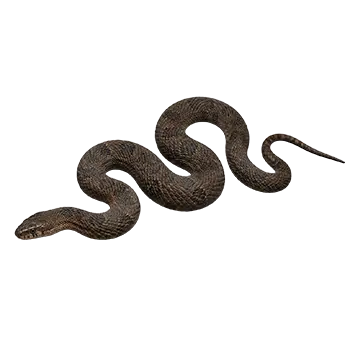

The Brown Water Snake is one of the most thoroughly piscivorous snake species in North America, and its nutritional needs reflect a diet built almost entirely around fish. In its native range across the southeastern United States, Nerodia taxispilota inhabits rivers, lakes, reservoirs, and swampy waterways where it feeds predominantly on catfish, sunfish, bass, and other freshwater species. Unlike many colubrid snakes that can be maintained on a rodent-based diet, the Brown Water Snake requires a feeding program centered on whole fish to meet its metabolic requirements and maintain long-term health in captivity.
Whole-fish feeding delivers a nutritional profile that is distinct from the rodent-based diets more commonly associated with snake keeping. Fish provide high-quality protein with a different amino acid distribution than mammalian prey, along with omega-3 fatty acids that support cardiovascular and neurological function. The skeletal structure of fish supplies calcium and phosphorus, while organs such as the liver contribute fat-soluble vitamins. However, fish as a sole dietary component presents a critical nutritional challenge: the enzyme thiaminase, which is present in certain freshwater fish species, breaks down thiamine and can produce a life-threatening vitamin B1 deficiency if the diet is not managed carefully.
Caloric requirements for the Brown Water Snake vary significantly with age, reproductive status, and seasonal activity patterns. Neonates and juveniles, which may measure only eight to ten inches at birth, require small, frequent meals of appropriately sized fish to fuel rapid growth during their first eighteen months. Sub-adults transitioning to larger prey items need careful portion sizing to avoid regurgitation while still supporting continued development. Adults in a maintenance phase can be fed less frequently, with meal intervals of seven to fourteen days depending on prey size and ambient temperature within the enclosure.
Hydration is inseparable from nutrition for this highly aquatic species. Brown Water Snakes spend the majority of their time in or near water and drink regularly. In captivity, the water feature that serves as the snake's primary habitat element also functions as a hydration source, and water quality directly affects digestive health. Contaminated or stagnant water can introduce bacterial pathogens that compromise gut function, while clean, regularly changed water supports efficient digestion and metabolic processing of fish-based meals.