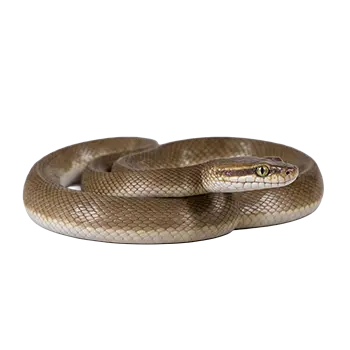

Understanding Enrichment for Snakes

Enrichment for the Brown House Snake operates on fundamentally different principles than enrichment for mammals or birds, and understanding this distinction is essential before investing in products or strategies. Snakes do not play in the way that a dog chases a ball or a parrot manipulates a puzzle feeder. They lack the cognitive framework for object-oriented play, social bonding through shared activities, or reward-based interaction with novel items. What snakes do respond to — and what constitutes meaningful enrichment for Boaedon capensis — is environmental complexity, sensory variation, and opportunities to express the full range of natural behaviors: exploring, hunting, thermoregulating, burrowing, and seeking shelter.

The concept of enrichment in herpetology has advanced significantly over the past two decades. Earlier generations of snake keepers often maintained animals in minimalist enclosures with a single hide and a water dish, operating under the assumption that snakes were simple creatures with no need for stimulation beyond the basics of survival. Research into reptile cognition and welfare has challenged this view, demonstrating that snakes in enriched environments show reduced stress indicators, improved feeding responses, more consistent shedding, and broader behavioral repertoires compared to those in barren setups. The Brown House Snake, as a naturally curious and active nocturnal explorer, benefits measurably from an environment that gives it things to investigate.

The practical implication for keepers is that enrichment for the Brown House Snake is less about purchasing specific products and more about thoughtful enclosure design and management. The snake's enclosure is its entire world, and the complexity, variability, and sensory texture of that world determine the quality of the animal's experience. Products that add structural variety — branches, cork bark, tunnels, textured surfaces — function as enrichment infrastructure. The enrichment itself comes from the snake's interaction with these elements as it navigates, explores, and makes choices about where to rest, how to move, and which microclimate to occupy at any given moment.

A well-enriched Brown House Snake enclosure does not need to be cluttered or elaborate. The goal is to provide enough structural and sensory diversity that the snake encounters variation during its nightly activity period without creating an environment so densely packed that the animal cannot move freely or the keeper cannot maintain hygiene. A thoughtful selection of five to eight interior elements — hides, climbing structures, burrowing substrate, textured surfaces, and a water feature — creates the foundation for ongoing enrichment that can be enhanced through rotational strategies and occasional rearrangement.

Environmental Complexity

Environmental complexity is the cornerstone of enrichment for the Brown House Snake. In the wild, Boaedon capensis navigates a rich and variable landscape of rock crevices, root tangles, leaf litter, loose soil, building foundations, and the interiors of human structures. Every surface offers different textures, temperatures, and scent signatures. Captive environments that approximate even a fraction of this complexity give the snake far more to process and interact with during its active hours than a flat floor with a single hide.

Multi-level structures that create ground-floor shelter and elevated pathways encourage the Brown House Snake to use all three dimensions of its enclosure. Cork bark tubes placed horizontally at substrate level create tunnels the snake can move through and rest inside. The same cork bark positioned at an angle against the enclosure wall becomes a ramp that the snake will climb during nocturnal exploration. Stacking flat pieces of slate or flagstone with small gaps between layers creates a rock-crevice microhabitat that closely mimics the rocky kopjes where wild Brown House Snakes shelter during the day. These layered structures offer multiple entry points, varying internal temperatures from top to bottom, and the tight-contact security that this species finds comforting.

Substrate depth itself constitutes a major enrichment feature for this semi-fossorial species. A uniform two-to-three-inch layer of aspen or coconut fiber allows the snake to burrow beneath the surface, create its own tunnels, and choose between being buried and being exposed. Some keepers provide a deeper substrate zone — four to five inches — in one section of the enclosure, creating a dedicated burrowing area while leaving shallower substrate elsewhere for easier spot-cleaning. Watching a Brown House Snake construct and maintain a network of subsurface tunnels over the course of several weeks provides clear evidence that the animal is actively engaging with and modifying its environment.

The physical arrangement of objects within the enclosure should break up open sight lines and create distinct microhabitats. A cluster of cork bark and dried leaves in one corner, an open basking platform near the warm end, a deep-substrate burrowing zone in the center, and a smooth rock near the water dish give the snake a varied landscape to navigate. This compartmentalization of the enclosure into functional zones mirrors the heterogeneous habitats Brown House Snakes occupy in the wild and gives the animal meaningful choices about where to spend its time based on its immediate physiological and behavioral state.

Sensory Enrichment

Sensory enrichment targets the Brown House Snake's primary means of perceiving and interacting with its environment — chemoreception, tactile sensation, and thermal detection. Unlike visually oriented animals, snakes experience their world primarily through scent molecules collected on the tongue and processed by the vomeronasal organ, through the texture and temperature of surfaces they traverse, and through infrared heat signatures detected by specialized labial pit organs. Enrichment strategies that engage these sensory pathways are far more relevant to the snake's experience than colorful decorations or visually complex arrangements designed for the keeper's aesthetic appreciation.

Scent-based enrichment is the most powerful and underutilized enrichment tool available to Brown House Snake keepers. Introducing novel, non-threatening scents into the enclosure stimulates investigatory tongue-flicking and increased exploratory movement as the snake works to identify and map the unfamiliar chemical signature. This can be accomplished by placing a clean, dry piece of shed skin from another non-venomous snake species in the enclosure for a few hours, by rubbing a small section of a branch with a leaf or herb from a safe, non-toxic plant, or by introducing substrate or bedding material from a different animal enclosure. The snake cannot become habituated to constant novel scents, so scent enrichment is most effective when used intermittently — once or twice per week — rather than as a permanent fixture.

Tactile enrichment leverages the snake's sensitivity to surface texture and substrate composition. Offering a variety of textures within the enclosure — smooth ceramic tile, rough cork bark, soft sphagnum moss, coarse stone, fine aspen shavings — gives the snake a range of surfaces to move across and rest upon. This variety is not merely aesthetic. The ventral scales of the Brown House Snake detect subtle differences in friction, temperature, and humidity across different substrates, and navigating a texturally complex environment keeps the animal engaged in a way that a uniform surface cannot. Changing the type or arrangement of textured surfaces periodically adds novelty without stressing the animal.

Thermal enrichment goes beyond the basic warm-side/cool-side gradient and introduces localized temperature microhabitats within the enclosure. A flat stone positioned above the heat source absorbs and radiates warmth differently than the surrounding substrate, creating a basking surface the snake can choose to rest on. A ceramic hide placed on the cool side stays slightly cooler than the ambient air inside it. A branch positioned at mid-height sits in a different thermal zone than the floor. These subtle temperature variations give the snake more thermoregulatory choices, which translates to more behavioral decision-making — the cognitive equivalent of enrichment for a reptile.

Avoid artificial scent products, essential oils, or air fresheners near the snake's enclosure. The Brown House Snake's chemosensory system is exquisitely sensitive, and concentrated chemical fragrances can overwhelm or damage the vomeronasal organ, cause respiratory irritation, or create persistent stress responses. Any scent enrichment must come from natural, non-toxic sources and should be introduced in small amounts that the snake encounters as it explores rather than as a saturating airborne presence.

Handling as Enrichment

Handling provides a unique form of enrichment for the Brown House Snake that no enclosure modification can replicate. The novelty of being outside the enclosure, the warmth and texture of human skin, the scent complexity of a household environment, and the physical challenge of gripping and balancing on hands and arms stimulate the snake's sensory systems and motor coordination in ways that captive enclosure life cannot. The Brown House Snake's docile, inquisitive temperament makes it one of the most handle-friendly snake species available, and regular handling sessions contribute positively to the animal's behavioral repertoire and stress tolerance.

Handling sessions should be approached as structured enrichment rather than casual contact. A consistent routine — gently lifting the snake from its enclosure with slow, confident movements, allowing it to explore hands and arms at its own pace, and returning it smoothly after a defined period — establishes a predictable pattern that reduces the stress of the transition between enclosure and open environment. Sessions of ten to twenty minutes, two to four times per week, provide sufficient enrichment without over-stressing the animal. Avoid handling within forty-eight hours of feeding, during the pre-shed blue phase, or when the snake displays defensive postures such as sustained hissing, tight coiling, or rapid tail vibration.

The sensory richness of the handling experience itself constitutes the enrichment. As the snake moves along arms and through fingers, it encounters a continuous stream of new textures, temperatures, and scent information. Allowing the snake to explore a safe, enclosed space outside its enclosure — such as a bed with pillows as obstacles, a snake-proofed room with blankets and cushions, or a supervised tabletop with fabric tunnels — amplifies this stimulation by introducing terrain complexity that the snake navigates voluntarily. These supervised exploration sessions engage the snake's problem-solving and spatial-mapping abilities as it finds paths, investigates objects, and makes navigational choices.

Handling also serves a long-term behavioral function by maintaining the snake's tolerance for human contact and novel stimulation. Brown House Snakes that are handled regularly throughout their lives tend to remain calm, curious, and responsive during veterinary examinations, enclosure maintenance, and transport situations. Animals that are never handled become progressively more defensive over time, not because they are inherently aggressive but because each encounter with a human becomes a novel and potentially threatening event. Consistent, gentle handling keeps the threshold of novelty low enough that human contact falls within the snake's comfort zone rather than triggering a flight-or-fight response.

Naturalistic Decor and Climbing Opportunities

Naturalistic decor serves a dual purpose in the Brown House Snake enclosure: it provides functional enrichment for the animal and creates an aesthetically engaging display for the keeper. While the snake itself has no opinion about visual beauty, it does respond to the structural properties of natural materials — the rough grip of cork bark, the branching complexity of grapewood, the crevice-forming potential of stacked stones — in ways that commercial plastic decorations often fail to replicate. Natural materials offer irregular shapes, varied textures, and microhabitat potential that manufactured items cannot match.

Cork bark is the single most versatile natural material for Brown House Snake enrichment. Available in flat sections, curved rounds, tubes, and branching structures, cork bark provides hiding spots, climbing surfaces, burrowing barriers, and territorial boundaries within a single material type. Cork rounds placed on the substrate function as ready-made tunnels. Flat cork sections leaned against the glass create angled ramps that the snake navigates during nighttime activity. Cork tubes propped vertically offer tight vertical retreats that some Brown House Snakes prefer over ground-level hides. The material is lightweight, naturally resistant to mold and rot, and holds up well in moderate-humidity environments.

Climbing opportunities are valuable for Brown House Snakes despite the species' primarily terrestrial lifestyle. Observations of both captive and wild Boaedon capensis confirm that these snakes regularly climb low vegetation, rock walls, building facades, and tree trunks, particularly at night when they are actively hunting and exploring. In the enclosure, sturdy branches secured at various angles give the snake routes to elevated hides or resting platforms and increase the functional surface area of the habitat. Branches should be secured firmly enough that they cannot shift or collapse under the snake's weight, and any rough spots or sharp protrusions should be sanded smooth to prevent scale damage.

Dried leaf litter adds a layer of complexity to the enclosure floor that is often overlooked but highly effective as enrichment. A scattering of dried oak, magnolia, or other non-toxic leaves over the substrate creates a rustling, shifting surface layer that the snake moves through and under during exploration. The leaf litter traps scent particles, creates small temperature variations at the substrate surface, and provides visual concealment that encourages the snake to move more boldly through open areas of the enclosure. Leaf litter should be sourced from areas free of pesticide treatment and replaced regularly as it breaks down.

When selecting decor, safety is the overriding concern. Every item placed in the enclosure must be stable enough that it cannot fall on the snake, free of sharp edges or toxic coatings, and resistant to mold in the warm, moderately humid conditions of the enclosure. Items collected from outdoors — branches, rocks, leaf litter — should be sanitized before use by baking at two hundred degrees Fahrenheit for thirty to forty minutes or soaking in a dilute bleach solution followed by thorough rinsing and drying. Commercial reptile decor should be checked for loose components, peeling paint, and hollow interiors where the snake could become trapped.

Rotational Enrichment Strategies

Rotational enrichment is the practice of periodically changing, rearranging, or swapping elements within the enclosure to introduce novelty without requiring continuous investment in new products. This strategy capitalizes on the Brown House Snake's natural exploratory drive — when the environment changes, even subtly, the snake is compelled to reinvestigate its territory, re-map spatial relationships, and re-evaluate hiding and thermoregulation options. The behavioral activation triggered by environmental changes is one of the most effective forms of enrichment available and costs the keeper nothing beyond a few minutes of effort.

The simplest form of rotational enrichment is rearranging existing enclosure furniture during routine cleaning. Moving a hide from the left side to the right, repositioning a branch at a different angle, or shifting the water dish to a new location forces the snake to explore and adapt to the altered layout. This is not stressful for the animal provided the core resources — a hide on the warm side, a hide on the cool side, water, and adequate substrate — remain accessible. The snake may spend one or two nights more actively exploring than usual as it re-familiarizes itself with the reconfigured space, which is precisely the behavioral enrichment the change is intended to provoke.

Maintaining a rotation stock of enrichment items that are swapped in and out of the enclosure every two to four weeks amplifies the novelty effect. A keeper might have two or three sets of hides, branches, and decorative elements and cycle between them so that each set feels fresh when reintroduced. Items not currently in use should be cleaned, sanitized, and stored in a sealed container to prevent dust accumulation and pest colonization. This rotation approach is especially practical for keepers who maintain naturalistic enclosures and want to introduce seasonal variation — for example, denser leaf litter and darker substrates during winter months, and lighter, more open arrangements during warmer seasons.

Feeding-based enrichment adds another layer of rotational variety. Rather than always presenting prey from the same position with the same technique, the keeper can vary the delivery method to engage different aspects of the snake's predatory behavior. Placing a thawed mouse inside a cardboard tube or beneath a piece of cork bark encourages the snake to locate prey by scent and navigate obstacles to reach it. Draping the prey item over a branch so the snake must climb to investigate triggers arboreal hunting behavior. These variations engage the snake's problem-solving abilities and create feeding sessions that more closely resemble the unpredictability of wild hunting, where prey is never delivered to a fixed location at a fixed time.

The frequency of environmental changes should balance enrichment value against the snake's need for stability. Brown House Snakes are adaptable and recover quickly from mild environmental disruptions, but constant, daily changes to the enclosure layout can create chronic low-level stress in some individuals, manifesting as reduced feeding, excessive hiding, or defensive behavior during handling. A cycle of two to four weeks between significant changes, with minor variations such as adding a new scent item or shifting a single object occurring more frequently, strikes an effective balance between stimulation and security for most individuals.

Always consult a qualified professional before making any health-related decisions. This content is provided for informational reference only and should not replace professional guidance specific to your animal.