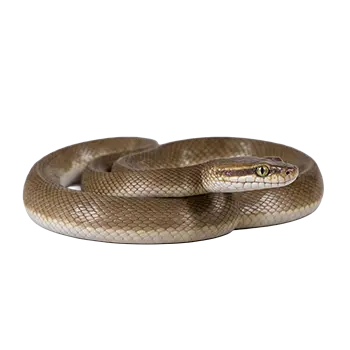

Selecting the right enclosure for a Brown House Snake begins with understanding the animal's natural behavior and spatial needs. Boaedon capensis is a terrestrial, semi-fossorial species that spends the majority of its time on the ground or beneath surface cover rather than climbing. In the wild, these snakes inhabit rocky outcrops, grasslands, agricultural areas, and the walls and foundations of human structures across southern and eastern Africa. Their enclosure should reflect this ground-oriented lifestyle by prioritizing floor space over vertical height, though modest climbing opportunities are welcomed and used, particularly by younger animals exploring their environment.
For hatchling and juvenile Brown House Snakes, small plastic tubs or shoebox-sized enclosures measuring approximately twelve inches long by eight inches wide by six inches tall provide an ideal starting environment. Young snakes feel exposed and stressed in enclosures that are too large relative to their body size, and a compact space with adequate cover allows a hatchling to locate its heat source, water, and hides without navigating a vast and overwhelming territory. Ventilation holes drilled or melted into the sides and lid of plastic tubs provide airflow without compromising the humidity retention that small enclosures manage well. Secure lids are essential from the very first day — Brown House Snakes are notorious escape artists, and a hatchling can squeeze through gaps that appear impossibly small.
Adult Brown House Snakes thrive in enclosures measuring approximately thirty-six inches long by eighteen inches wide by twelve to eighteen inches tall. This footprint provides adequate room for a proper thermal gradient, multiple hides, a water dish, and enough open floor space for the snake to stretch and move comfortably during its nocturnal activity period. Glass terrariums with screen tops, front-opening glass vivariums, and PVC or molded plastic reptile enclosures all serve well for this species. Each material has trade-offs: glass offers excellent visibility but loses heat and humidity more readily through screen tops, PVC retains heat and humidity superbly but limits visibility to the front panel, and front-opening enclosures reduce the overhead approach that can startle a resting snake.
The single most critical feature of any Brown House Snake enclosure is security. This species is among the most persistent and capable escape artists in the colubrid family. They test enclosure boundaries methodically during nighttime activity, and any gap wider than the snake's head is a potential exit point. Screen-top enclosures require clips or locks rated for the snake's pushing strength, sliding glass doors must have pin locks or wedges to prevent lateral movement, and any cord or tubing entry points must be sealed with foam or silicone. A Brown House Snake that escapes into a home can survive for weeks by finding water sources and hunting house geckos or mice, making recovery difficult and uncertain.