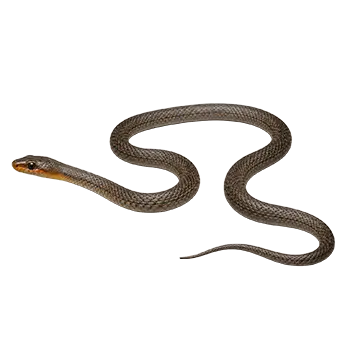

Enrichment for captive snakes has historically received far less attention than enrichment for mammals or birds, largely because of the persistent misconception that snakes are simple, stimulus-indifferent animals that require nothing beyond food, water, and warmth. Decades of behavioral research and the accumulated observations of experienced keepers have thoroughly dismantled this view. Baird's Rat Snake is a particularly compelling argument against it — this is a species that actively explores its environment, investigates novel objects and scents, climbs with purpose and apparent enthusiasm, and demonstrates clear behavioral differences between enriched and barren housing conditions.
The concept of enrichment for snakes centers on providing choices, complexity, and novelty within the captive environment. A snake housed in a bare enclosure with a single hide and a water bowl can survive for years, but its behavioral repertoire is compressed to the point where it cycles between hiding, drinking, and eating. An enriched environment, by contrast, invites the snake to make decisions — where to rest, which route to take through the enclosure, whether to investigate a new scent or texture, when to climb and when to burrow. These decisions exercise the snake's cognitive faculties, promote physical fitness, and produce an animal that is more alert, more confident during handling, and less prone to stereotypic behaviors such as repetitive glass-surfing or nose-rubbing.
Baird's Rat Snake is especially well suited to enrichment programs because of its semi-arboreal nature and its reputation as one of the more active and inquisitive North American colubrids. In the wild, this species navigates complex three-dimensional terrain — rocky outcrops, canyon walls, shrubby vegetation, and the interiors of rodent burrows — and encounters a constantly shifting landscape of thermal gradients, scent trails, prey opportunities, and potential threats. Captive enrichment cannot fully replicate this complexity, but it can approximate key elements of it in ways that meaningfully improve the animal's quality of life.
Effective enrichment for this species falls into several overlapping categories: structural enrichment that alters the physical landscape of the enclosure, sensory enrichment that introduces novel scents, textures, or visual stimuli, feeding enrichment that adds complexity to the prey-acquisition process, and temporal enrichment that changes the environment over time to prevent habituation. The most successful enrichment programs draw from all of these categories in rotation, ensuring that the snake encounters something new or different on a regular basis without being overwhelmed by constant, unpredictable change.