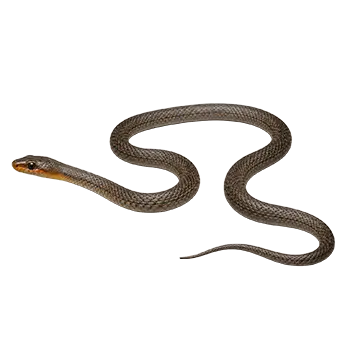

Selecting the right enclosure for a Baird's Rat Snake begins with understanding the spatial needs of a moderately sized, active, and semi-arboreal colubrid. Adult Baird's Rat Snakes typically reach three and a half to five and a half feet in total length, and they are notably more active and exploratory than many other rat snake species. An adult specimen requires an enclosure with a minimum footprint of thirty-six inches long by eighteen inches deep and at least eighteen to twenty-four inches tall. Taller enclosures are strongly preferred because this species is an enthusiastic climber that will actively use vertical space when it is available, and providing that opportunity is one of the simplest ways to promote natural behavior and reduce stress.
Glass terrariums with screen tops remain the most widely available and affordable enclosure option for this species. Front-opening glass terrariums offer superior access for husbandry tasks and minimize the overhead approach that many snakes find threatening. The primary drawback of glass enclosures is their relatively poor heat retention and difficulty maintaining stable humidity levels, both of which can be mitigated with partial screen covers, insulating panels on the back and sides, and careful placement of heating elements. Screen-top terrariums also present a minor escape risk if the lid does not lock securely, and Baird's Rat Snake is a persistent and methodical explorer that will exploit any gap.
PVC and molded plastic enclosures have become increasingly popular among experienced keepers and offer significant advantages over glass for this species. PVC enclosures retain heat and humidity far more effectively than glass, reduce the snake's visual exposure to household activity on multiple sides, and typically feature built-in ventilation ports that can be adjusted to fine-tune airflow. The opaque walls also provide a greater sense of security for the snake, which can translate into reduced stress, better feeding response, and more confident behavior during handling. High-quality PVC enclosures represent a larger upfront investment than glass terrariums but typically outlast them by many years.
Hatchling and juvenile Baird's Rat Snakes should be housed in smaller enclosures proportional to their size. A hatchling does best in a well-ventilated plastic enclosure or small terrarium roughly twelve to sixteen inches long, graduated to a mid-sized setup as the snake grows. Housing a small snake in an excessively large enclosure can cause stress, feeding refusal, and difficulty locating prey items. The transition from juvenile to adult housing should occur gradually, ideally when the snake has reached approximately two-thirds of its expected adult length and is feeding consistently.