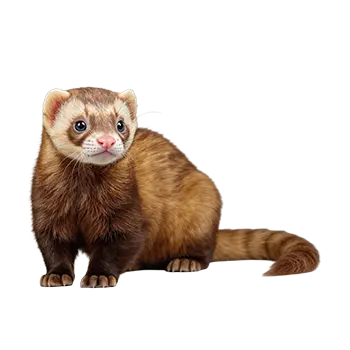

Play is not a luxury for Cinnamon Ferrets but a biological imperative that ranks alongside food, water, and shelter in its importance to overall wellbeing. Domestic ferrets retain the intense predatory drive of their wild polecat ancestors, and in the absence of prey to stalk, chase, and capture, they redirect this energy toward toys, household objects, cage mates, and their human companions. A ferret that does not receive adequate play stimulation will develop behavioral problems including cage-bar biting, obsessive digging at cage floors and corners, excessive sleeping beyond normal ferret rest patterns, and in severe cases, self-directed behaviors such as tail chewing and overgrooming that result in hair loss and skin damage.
Ferret play is characterized by several distinctive behavioral patterns that inform effective toy selection. The war dance, a frenzied sideways hopping accompanied by an arched back and puffed tail, signals peak excitement and is often triggered by novel stimuli or the introduction of a new toy. Dooking, the soft clucking vocalization ferrets produce during play, indicates contentment and engagement. Stashing behavior, in which the ferret seizes a toy and drags it to a hidden cache under furniture or in a corner, reflects the polecat's instinct to store food for later consumption and is a sign that the ferret finds the item valuable. Effective toys engage one or more of these natural behavioral patterns rather than requiring the ferret to interact in ways that have no analogue in its instinctive repertoire.
Play sessions outside the cage should occur for a minimum of three to four hours daily, split into at least two sessions that align with the ferret's natural crepuscular activity peaks in the early morning and evening hours. These free-roam periods are when the ferret gets its most vigorous exercise, practices spatial navigation of the home environment, and engages in the sustained chase-and-wrestle interactions with humans or other ferrets that no in-cage toy can fully replicate. The free-roam area must be thoroughly ferret-proofed before each session, as a ferret in play mode is maximally curious and will investigate every gap, opening, and loose object it encounters.
Age and individual personality significantly influence toy preferences and play intensity. Kits and juvenile ferrets under one year of age are essentially in perpetual play mode, requiring a constant rotation of stimulating toys and substantial interactive play time to prevent destructive boredom. Mature adults between two and five years tend to develop established toy preferences and may ignore categories of toys that do not match their individual play style. Senior ferrets over six years often have reduced energy and may prefer gentler interactive play and comfort-oriented enrichment such as novel bedding materials over the high-energy chase-and-pounce activities that younger ferrets demand.