
Carriers & Travel Gear

A well-chosen carrier is one of the first accessories every Cinnamon Ferret owner should acquire, as it serves a role that extends far beyond occasional veterinary visits. Carriers are necessary for emergency evacuations, travel, temporary housing during deep cage cleaning, outdoor excursions, and any situation where the ferret needs to be transported safely outside its primary enclosure. The ideal ferret carrier is a hard-sided plastic kennel in the small or extra-small pet size range, featuring a secure latch that the ferret cannot manipulate from inside, ventilation openings that provide airflow without creating gaps large enough for an escape attempt, and a door mechanism that can be opened and closed with one hand while the other hand manages the ferret.

Soft-sided carriers designed for cats or small dogs offer a lighter, more flexible alternative to hard-shell kennels and are particularly convenient for short trips to the veterinarian or quick errands. However, soft carriers must be evaluated specifically for ferret-escape potential, which is considerably higher than the cat-escape potential that most products are designed to resist. A ferret can chew through lightweight mesh panels in minutes if motivated, and zippers without secondary clip-lock mechanisms can be nosed open by a persistent animal. The best soft carriers for ferrets feature reinforced mesh made from thick, bite-resistant material and dual-closure zipper systems that require deliberate human manipulation to open.

Carrier comfort during extended trips is important for reducing the stress that transport imposes on a ferret. Lining the carrier floor with a familiar-smelling piece of fleece bedding from the ferret's cage provides olfactory reassurance in the unfamiliar environment. A small clip-on water bottle or a damp sponge secured to the carrier wall provides hydration access during trips longer than an hour. For car travel, the carrier should be secured with a seatbelt to prevent it from sliding or tipping during braking and turns, and the vehicle's climate control should be set to maintain a temperature below seventy-five degrees Fahrenheit, as a ferret in a confined carrier with limited airflow is even more vulnerable to heat stress than one in an open cage.

Travel-specific accessories such as portable playpens and collapsible exercise pens expand the ferret's usable space at the destination and during rest stops on longer journeys. A pop-up fabric playpen with a zip-top enclosure gives the ferret room to stretch, play, and use a travel litter pan without requiring full ferret-proofing of an unfamiliar hotel room or relative's house. These items fold flat for transport and typically weigh less than five pounds, making them practical additions to the travel kit. Pairing the playpen with a clip-on food bowl, a compact water bottle, and a ziplock bag of the ferret's regular kibble creates a self-contained travel setup that keeps the ferret comfortable and properly supplied away from home.

Harnesses & Leashes

Taking a Cinnamon Ferret outdoors on a harness provides enrichment that no indoor toy can replicate. The novel sights, sounds, smells, and textures of an outdoor environment engage every sensory channel the ferret possesses and deliver the kind of intensive mental stimulation that reduces cage boredom and its associated behavioral problems. However, ferrets are not dogs and cannot be walked in the conventional sense. Outdoor excursions with a ferret involve following the ferret's chosen exploration path, allowing it to investigate at its own pace, and gently redirecting it away from hazards rather than maintaining a structured heel-and-walk pattern.

Harness design is the critical variable that determines whether outdoor excursions are safe and enjoyable or dangerous and frustrating. Ferrets have uniquely proportioned bodies with a narrow skull, a flexible spine, and a minimal difference between the circumference of the head and the circumference of the neck, which means they can back out of any collar or harness that relies on a simple loop around the neck. An H-style harness with one loop around the neck and a second loop around the chest, connected by a strap along the back, is the minimum configuration for secure retention. Figure-eight harnesses that cross over the chest and vest-style harnesses that distribute pressure across the torso are even more secure and are strongly preferred for ferrets that have learned to test their restraints.

Fit is paramount and must be checked every time the harness is put on, since weight fluctuations, coat condition changes, and the natural flexibility of the ferret's body mean that a harness that fit perfectly last month may be loose enough to escape from today. The harness should be snug enough that you cannot easily slide more than one finger between the strap and the ferret's body, but not so tight that it restricts breathing or creates visible pressure marks on the fur and skin when removed. Ferrets that are new to harness wearing will often resist by flattening to the ground, rolling, and attempting to back out, and desensitization should begin indoors with short positive-association sessions before any outdoor use is attempted.

Leash selection should prioritize lightweight materials and short lengths that keep the ferret within close reach. A four- to six-foot lightweight nylon or cotton leash is appropriate for most outdoor excursions. Retractable leashes are generally not recommended for ferrets because the variable tension and sudden locking mechanism can startle the animal, and the thin cord versions can cut into the ferret's skin if it wraps around a limb during a sudden direction change. The leash attachment point on the harness should be a D-ring positioned on the back between the shoulder blades, not on the neck, to prevent tracheal pressure when the ferret pulls or reaches the end of the leash.

Feeding & Water Accessories

The choice between water bottles and water bowls is one of the longest-running debates in ferret husbandry, and the answer for most Cinnamon Ferret owners is to provide both. Sipper-style water bottles attached to the cage wall prevent the spilling and contamination that occur when a ferret steps in, digs at, or drags bedding into an open water bowl. However, multiple studies and extensive anecdotal evidence from ferret rescue organizations indicate that ferrets drink more water from bowls than from bottles, likely because the lapping motion used with a bowl is more natural and less effort-intensive than the tongue-press motion required to operate a ball-bearing sipper tube. Adequate hydration is critical for ferrets, particularly those on dry kibble diets, so offering both delivery methods ensures the ferret has every opportunity to meet its fluid needs.

Water bowls for ferrets must be heavy enough to resist tipping, as ferrets will paw at, stand on, and attempt to flip any bowl they can move. Ceramic crocks with wide bases and low profiles are the most tip-resistant option and have the added advantage of being easy to clean and resistant to harboring bacteria in scratches the way plastic bowls do. Stainless steel bowls are equally hygienic but tend to be lighter and more easily moved unless they are designed with a weighted base or a cage-mounting bracket. Bowls should be washed daily with hot water and dish soap, as biofilm builds up rapidly on the interior surface and creates a breeding ground for bacteria that can cause gastrointestinal illness.

Food bowl selection follows similar principles of stability and hygiene, with the additional consideration of preventing food caching and selective eating. Ferrets that are fed muesli-style mixes will often sort through the bowl, eating preferred items first and scattering or stashing the rest. A small, heavy crock that fits tightly into a cage-mounted bracket or sits in a raised bowl holder reduces the ferret's ability to drag the bowl around the cage, tip it over, and stash kibble in inaccessible cage corners where it decays and attracts pests. In multi-ferret households, providing two food bowls in different cage locations prevents dominant animals from monopolizing the food supply and ensures subordinate ferrets can eat without confrontation.

Fountain-style water dispensers designed for cats have been adopted by some ferret keepers as an alternative that encourages greater water consumption through the movement and sound of flowing water. These products recirculate water through a charcoal filter and over a small cascade or dome, creating a flowing water source that many ferrets find more appealing than a static bowl or bottle. The drawback is maintenance complexity, as the fountain pump and filter require regular cleaning and replacement, and the electrical cord must be positioned where the ferret cannot chew on it. Fountain users should still maintain a backup water bottle on the cage as a safeguard against pump failure.

Grooming Supplies

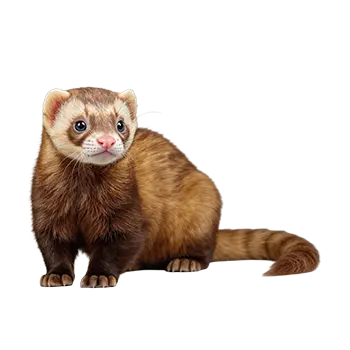
Grooming a Cinnamon Ferret is considerably less labor-intensive than grooming many other companion animals, but it does require a specific set of tools and products tailored to the ferret's unique coat characteristics and skin sensitivity. The cinnamon color variation of the domestic ferret features a warm reddish-brown guard coat over a lighter, creamy undercoat that sheds moderately throughout the year and more heavily during seasonal coat transitions in spring and fall. A soft-bristle brush or a small rubber grooming mitt used once or twice a week during non-shedding periods, and daily during heavy sheds, removes loose fur and reduces the amount of hair the ferret ingests through self-grooming, which lowers the risk of hairball-related intestinal blockages.

Bathing should be performed infrequently, no more than once every two to three months under normal circumstances, and many experienced ferret owners bathe even less often than that. Ferrets produce a natural musky odor from sebaceous glands in their skin, and contrary to intuition, frequent bathing actually intensifies this smell rather than reducing it. Bathing strips the skin's natural oils, triggering the sebaceous glands to overcompensate with increased oil production, which produces a stronger odor within a day or two of the bath. When bathing is necessary, a mild oatmeal-based shampoo formulated for kittens or ferrets should be used, the water should be lukewarm rather than hot, and the ferret should be thoroughly towel-dried and kept in a warm, draft-free area until completely dry to prevent chilling.

Nail trimming is the single most important routine grooming task and should be performed every two to three weeks throughout the ferret's life. Ferret nails grow continuously and will curl and catch on fabric, carpet, and cage surfaces if not maintained, potentially tearing off entirely and causing bleeding and pain. A small pair of cat nail clippers or human toenail clippers is appropriate for the task. The quick, the vascularized core of the nail visible as a pink line within the translucent nail, must be avoided during trimming. Cinnamon Ferrets typically have lighter-colored nails that make the quick relatively easy to identify, which is a practical advantage over dark-coated ferret varieties whose nails are often fully opaque. Applying a drop of salmon oil to the ferret's belly as a distraction during nail clipping is the single most commonly recommended handling technique in the ferret community and is remarkably effective.

Ear cleaning should be performed every two to four weeks using a veterinarian-approved ear cleaning solution and cotton balls or gauze pads. Ferrets produce a dark reddish-brown earwax that accumulates visibly in the outer ear canal and, if left unmanaged, can create an environment conducive to yeast and bacterial infections. The cleaning process involves applying several drops of the ear solution into the ear canal, gently massaging the base of the ear to distribute the solution and loosen debris, and then allowing the ferret to shake its head before wiping the loosened wax from the visible portions of the ear with a cotton ball. Cotton swabs should never be inserted into the ear canal, as the ferret's ear anatomy makes it easy to inadvertently damage the tympanic membrane or pack wax deeper into the canal rather than removing it.

Bedding & Sleep Accessories

Ferrets sleep between fourteen and eighteen hours per day, a figure that surprises many new owners and underscores the importance of providing comfortable, secure sleeping environments that support the quality and depth of rest their biology demands. The most popular and widely recommended sleep accessory for domestic ferrets is the hammock, a suspended fabric sling that hangs from the cage bars or ceiling and provides a cradling, enclosed sleeping surface that satisfies the ferret's instinct to sleep in dark, confined, elevated spaces. Hammocks come in countless configurations including single-layer flat slings, double-layer pouches with a top and bottom entry, multi-tiered bunk-style designs, and fully enclosed hanging cubes with a single access hole.

Sleep sacks and snuggle bags offer an alternative to hammocks for ferrets that prefer ground-level sleeping or for use outside the cage during supervised free-roam naps. These are essentially fabric pouches that the ferret can crawl inside and burrow into, creating the darkness and enclosure that promote deep sleep. Fleece is the most common and most suitable material, as it is warm, soft, machine-washable, and allows moisture to wick away from the ferret's body. Sleep sacks placed inside a covered hideaway box or beneath a shelf create a layered dark environment that most ferrets find deeply appealing and will use consistently as their primary sleep location.

Hide houses and enclosed sleep boxes made from rigid materials such as wood, plastic, or molded fabric provide a permanent sleep structure within the cage that the ferret can use independently of or in conjunction with fabric bedding. Plastic igloo-style hideaways designed for guinea pigs or rabbits are commonly used for ferrets and are easy to clean, though they lack the insulative warmth of fabric options. Wooden hideaways offer a more natural aesthetic but must be sealed with a pet-safe finish to prevent urine absorption and odor retention, and they should be sanded smooth to eliminate any rough surfaces or splinters. A hideaway with an entry hole just large enough for the ferret to enter creates the tight threshold that triggers the thigmotactic comfort response, while internal space should be generous enough for the ferret to turn around and stretch out fully.

All fabric sleep accessories should be washed weekly in hot water with unscented detergent to control odor buildup and remove accumulated oils, dander, and microscopic debris. Hammock clips and attachment hardware should be inspected during each wash for signs of stress, bending, or weakening, as a clip failure while the ferret is sleeping can cause a fall that results in injury, particularly from upper-level cage positions. Maintaining three or four sets of hammocks and sleep sacks in rotation ensures the ferret always has a clean, dry set available immediately after laundry day, preventing the disruption to the ferret's sleep routine that occurs when its preferred sleeping spot is damp or missing.

Health & Safety Accessories

A well-stocked ferret first-aid kit is an accessory that every Cinnamon Ferret owner should assemble before it is needed, because ferret emergencies are often time-sensitive situations where having supplies immediately available can mean the difference between a manageable incident and a crisis. The kit should include a bottle of styptic powder or a styptic pencil for nail bleeding emergencies, a tube of ferret-safe hairball remedy for suspected partial obstructions, a digital rectal thermometer with petroleum jelly for temperature checks, a small bottle of unflavored electrolyte solution for rehydrating a ferret with diarrhea, corn syrup or honey for emergency treatment of insulinoma-related hypoglycemic episodes, gauze pads and self-adhesive bandage wrap for wound management, and a card listing the phone numbers of the nearest ferret-experienced veterinarian and the closest emergency animal hospital.

Bitter-tasting deterrent sprays are essential safety accessories for ferret-proofing rooms where the ferret has supervised free-roam access. Ferrets are drawn to chew on rubber, latex, foam, and soft plastic items, and a household contains hundreds of potential targets including shoe soles, remote control buttons, earbuds, electrical cords, and the rubber gaskets around refrigerator doors. Applying bitter apple or bitter cherry spray to these items makes them distasteful without harming the ferret. The spray needs to be reapplied regularly as it loses potency over days to weeks depending on the product formulation and the surface it is applied to. Some particularly determined ferrets appear to develop tolerance to or even preference for certain bitter sprays, and keepers may need to try multiple brands to find one that reliably deters their individual animal.

Cord protectors and cable management accessories serve a critical safety function in any room where a ferret roams. Ferrets chew through electrical cords with alarming speed and can suffer fatal electrocution or severe oral burns from biting into a live wire. Hard plastic cord covers that encase the cable in a rigid channel too large for the ferret to get its jaws around are the most effective solution. Flexible spiral cable wraps provide a lesser degree of protection but are better than leaving cords exposed. All cords in the ferret's free-roam area should be routed behind furniture, through cord management channels, or elevated above the ferret's reach wherever possible, with protectors applied to any remaining accessible sections.

Gate and barrier systems allow keepers to restrict ferret access to specific rooms or areas of the home without closing doors that would also block human traffic and airflow. Standard baby gates are generally inadequate for ferrets, as most ferrets can either squeeze through the bar spacing or climb over the gate entirely. Ferret-specific barriers use solid panels with smooth surfaces that provide no climbing purchase and extend close enough to the floor that the ferret cannot belly-crawl underneath. Plexiglass panels cut to doorway dimensions and held in place with tension rods or hook-and-loop mounting strips create effective custom barriers that are transparent, allowing the ferret to see into the restricted area without being able to access it, which reduces the frustrated scratching and digging that occurs when a barrier completely blocks the ferret's line of sight.

Always consult a qualified professional before making any health-related decisions. This content is provided for informational reference only and should not replace professional guidance specific to your animal.