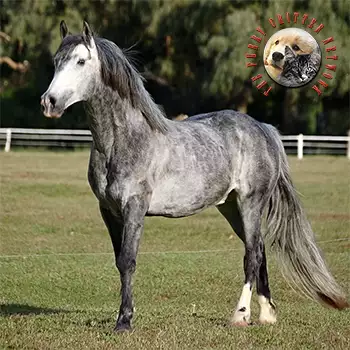

Play Style & Mental Drive

The Paso Fino is an intelligent, curious breed that engages actively with its environment. Unlike some heavier breeds content to stand quietly for hours, the Paso Fino tends to investigate new objects, interact with herd mates, and seek stimulation when confined. This mental energy is one of the breed's most appealing qualities under saddle, but it also means that boredom in the stall or paddock can lead to unwanted habits such as cribbing, weaving, or pawing.

Understanding your individual horse's play preferences is the first step in choosing effective enrichment. Some Paso Finos are highly oral — they mouth, lip, and manipulate objects with their muzzle. Others are more physical and enjoy pushing, rolling, or striking objects with their legs. Observing how your horse interacts with novel items during turnout reveals which category of toy will hold its interest longest.

Enrichment should be viewed as a complement to adequate turnout and social contact, not a substitute for them. No toy replaces the behavioral benefits of time spent grazing with compatible herd mates. But for periods when stall rest, weather, or facility limitations restrict free movement, well-chosen enrichment can significantly reduce stress and maintain mental health.

Rotation is critical to sustaining interest. Even the most engaging toy becomes background scenery after a few days of constant exposure. Keeping a small rotation of three to four enrichment items and swapping them weekly prevents habituation and keeps each item feeling novel when it reappears.

Puzzle Feeders & Slow Feed Toys

Puzzle feeders are among the most effective enrichment tools for horses because they tap into the animal's strongest natural drive — foraging. For the Paso Fino, which tends to be an easy keeper, puzzle feeders serve a dual purpose: they provide mental stimulation while also slowing feed consumption, which supports digestive health and weight management.

Hanging treat balls that dispense small pieces of hay or low-sugar treats as the horse pushes them are a staple of equine enrichment. These balls can be suspended in a stall or attached to a fence post at head height. The horse must use its muzzle to manipulate the ball in a specific way to release the food, which engages problem-solving behavior and extends the time spent eating.

Ground-level puzzle feeders take a different approach, requiring the horse to slide, flip, or lift components to access food hidden in compartments. These are more challenging and work well for intelligent horses that master hanging balls quickly. The complexity of the puzzle should match the horse's experience level — starting too difficult can frustrate the horse and discourage interaction.

Slow feed hay nets with small openings function as enrichment devices even though they are primarily feeding tools. By extending the time a Paso Fino spends pulling hay from the net, they replicate the slow, continuous grazing pattern the horse would follow naturally. Nets with openings in the range of one to one and a half inches strike a good balance between challenge and accessibility for most horses.

Stall Toys & Boredom Busters

Stall toys designed for horses are typically built to withstand mouthing, tossing, and impact without breaking into dangerous fragments. Durable rubber balls, hanging ropes with knots, and wall-mounted spinning or rolling devices are all common options. The best stall toys are those that respond to the horse's interaction — moving, making sound, or dispensing a reward — because passive objects lose their novelty quickly.

Lick-based toys and salt or mineral blocks provide sensory enrichment and oral stimulation. Flavored lick blocks can hold a Paso Fino's attention for extended periods and have the added benefit of encouraging water intake. Placement matters — mounting a lick toy at chest height encourages a natural head and neck position, while toys mounted too high or too low can create awkward postures if used for extended periods.

Mirrors have shown surprising effectiveness in reducing stress behaviors in stalled horses. Research suggests that a horse's reflection provides a form of social stimulus that partially compensates for isolation. For Paso Finos that become anxious when stalled alone, a safely mounted acrylic mirror on the stall wall can reduce weaving and calling. The mirror must be unbreakable and securely fastened with no exposed edges.

Traffic cones, large rubber feed tubs, and heavy-duty playground balls placed in the stall give the horse something to push and manipulate. Some horses develop elaborate games with these items, picking them up and dropping them or rolling them into corners. These items should be large enough that the horse cannot get a hoof stuck in or under them, and they should be checked regularly for cracks or damage.

Paddock & Pasture Enrichment

Outdoor enrichment takes advantage of the larger space available in paddocks and pastures. Large exercise balls designed for horses — typically 25 to 40 inches in diameter — are popular paddock toys. Many Paso Finos enjoy chasing and pushing these balls around the paddock, which provides both physical exercise and mental engagement. Choose balls rated for equine use, as standard fitness balls puncture too easily under hooves.

Varied terrain within the turnout area provides passive enrichment. If your property allows it, incorporating gentle slopes, gravel strips, a shallow water crossing, or logs placed along pathways gives the horse sensory variety during daily movement. These features encourage the horse to watch its footing, navigate obstacles, and engage different muscle groups — all of which contribute to physical conditioning and mental alertness.

Scattering hay in multiple locations across the paddock rather than placing it in a single pile mimics the search-and-forage pattern of wild grazing. This approach encourages movement, reduces feeding competition in multi-horse setups, and extends the time the horse spends engaged in natural foraging behavior. Small piles hidden in different spots each day add an element of discovery.

Socialization is the most powerful form of enrichment for any herd animal. When possible, housing Paso Finos where they can see, touch, and interact with compatible companions meets a fundamental behavioral need that no manufactured toy can replicate. Even visual contact with horses in adjacent paddocks provides meaningful social stimulation for horses that cannot be safely turned out together.

Comfort & Companion Items

Some Paso Finos develop strong attachments to specific comfort objects. Stuffed toys designed for large dogs or purpose-built equine plush toys can serve as stall companions for horses that seek tactile comfort, particularly young horses or those recently separated from familiar companions. These items should be constructed without small parts, buttons, or squeakers that could be swallowed if the horse chews on them.

Aromatic enrichment is an underutilized strategy that can be particularly effective for the naturally curious Paso Fino. Introducing novel, safe scents into the stall environment — a handful of dried herbs like chamomile or peppermint in a hanging mesh bag, for example — gives the horse something new to investigate and can have mild calming effects. Rotate scents regularly to maintain novelty.

Music and auditory enrichment have been studied in equine settings with generally positive results. Low-volume classical or country music played in the barn aisle tends to reduce stress indicators in stalled horses. Sudden, loud, or bass-heavy music has the opposite effect. For barns where music is played routinely, a consistent playlist at moderate volume becomes part of the environmental backdrop and can help mask startling external noises.

For Paso Finos on stall rest during injury recovery, the enrichment strategy needs to be comprehensive. A combination of a stall mirror, a slow feeder, a rotating selection of toys, and regular hand-walking or grooming sessions helps manage the psychological stress of confinement. Boredom during stall rest is not just a behavioral nuisance — it can elevate cortisol levels and slow the healing process.

DIY & Budget Enrichment

Effective enrichment does not require expensive commercial products. Many of the best horse enrichment ideas can be built from materials already available around the barn. A plastic milk jug with a few holes punched in the sides and a handful of hay cubes inside becomes a simple treat dispenser. Hang it at muzzle height from a hay string and the horse must nose it around to release the cubes. Replace the jug when it cracks or deforms.

Frozen treats are easy to prepare and provide extended engagement. Fill a bucket with water, add apple slices or carrot chunks, and freeze it solid. The resulting block can be placed in the stall or paddock for the horse to lick and paw at as it melts, gradually releasing the treats. This is particularly useful during hot weather, as it combines enrichment with cooling. Keep sugar content in mind for metabolically sensitive horses — use low-sugar vegetables instead of fruit.

Old towels or burlap sacks tied to a fence rail at nose height give the horse something to grab, shake, and tug. This satisfies the oral manipulation drive without risk, as long as the fabric is checked daily for unraveling threads that could wrap around teeth or legs. Replace the fabric before it deteriorates to the point of producing loose strips.

Trail-style obstacles can be set up in a riding arena or paddock using simple materials. Ground poles, a tarp weighted at the corners, a platform made from a sturdy pallet with plywood on top, or pool noodles on posts all create low-cost training and enrichment stations. Working through these obstacles with your Paso Fino on a lead line builds confidence, strengthens the handler-horse bond, and provides both mental and physical exercise without any specialized equipment.

Always consult a qualified professional before making any health-related decisions. This content is provided for informational reference only and should not replace professional guidance specific to your animal.