
Play Style & Mental Engagement

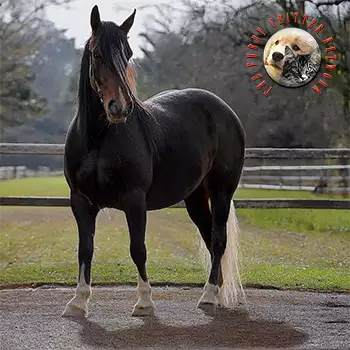
The Oldenburg is an intelligent, curious breed that was selectively developed for trainability and willingness to work with a human partner. These same cognitive traits mean that Oldenburgs are prone to boredom when left without mental stimulation, particularly during periods of stall confinement or reduced work schedules. Boredom in horses is not merely an inconvenience — it can lead to the development of stereotypic behaviors like cribbing, weaving, stall walking, and wood chewing, some of which become self-reinforcing habits that persist even after the original cause is addressed.

Understanding how an individual Oldenburg prefers to interact with its environment is the first step in selecting appropriate enrichment. Some horses are highly oral and motivated by food-based puzzles, while others are more tactile and enjoy manipulating objects with their lips and muzzle. A few are genuinely playful in the classic sense, tossing objects, pawing at hanging items, or engaging in spontaneous movement for its own sake. Observing your horse during free time reveals its natural play preferences and helps you invest in products that will actually be used rather than ignored.

The Oldenburg's size and strength must be factored into any toy or enrichment selection. Products designed for smaller horses or ponies may be destroyed within minutes by a large warmblood, creating a choking hazard or leaving sharp fragments in the stall or paddock. Durability and material safety should be primary considerations, and any product small enough to be bitten in half or swallowed should be avoided entirely.

Enrichment is most effective when it is varied and rotated. Horses, like most intelligent animals, habituate to constant stimuli. A toy that captivates an Oldenburg for hours on the first day may be completely ignored within a week. Maintaining a rotation of three or four different enrichment options and swapping them every few days keeps the environment novel and maintains the horse's interest over time.

Treat-Dispensing & Puzzle Toys

Treat-dispensing toys are among the most reliably engaging enrichment products for food-motivated Oldenburgs. These devices require the horse to manipulate an object in a specific way to release a reward, combining physical activity with problem-solving. Large, heavy-duty treat balls designed for horses can be filled with pellets, hay cubes, or small treats and rolled around the stall or paddock. The horse pushes the ball with its muzzle or hooves, and treats fall out through adjustable openings as the ball moves.

Hanging treat dispensers offer a different type of challenge and are particularly useful in stalls where floor space is limited. These products typically consist of a durable container suspended from the ceiling or a wall bracket at head height, with small openings that release treats as the horse interacts with them. The swinging motion adds a layer of difficulty, as the horse must time its manipulation to coincide with the movement of the dispenser. Hanging toys also encourage the horse to lift its head and engage its neck muscles, providing a mild physical workout alongside the mental challenge.

Slow-feed hay nets and hay balls serve a dual purpose as both feeding tools and enrichment devices. A small-mesh hay net filled with a flake or two of hay can keep an Oldenburg occupied for significantly longer than loose hay, extending foraging time and reducing boredom during stall rest. Hay balls that require the horse to roll or nudge them to access the forage inside combine movement with feeding behavior, mimicking the natural grazing pattern of walking and eating simultaneously.

When selecting treat-dispensing products, consider the caloric impact of the treats being dispensed. An Oldenburg that receives multiple treat-filled toys throughout the day may be consuming a significant amount of additional calories that should be accounted for in the overall feeding plan. Low-calorie options like hay cubes, chopped forage, or even soaked beet pulp pellets can be effective motivators without contributing to weight gain.

Stall Toys & Hanging Objects

Stall-mounted toys provide stimulation for horses that spend extended periods indoors due to injury recovery, weather, or management schedules. Large, durable rubber balls designed to be hung from the ceiling at chest or head height are a classic option. The horse can push, bite, and swing the ball, which provides both physical engagement and a satisfying sensory experience. Look for products made from thick, non-toxic rubber that will withstand repeated biting without breaking into pieces.

Lick toys and mineral lick holders mounted at appropriate height give the Oldenburg something productive to do with its mouth. While plain salt blocks serve a nutritional purpose, flavored lick products are designed primarily as enrichment tools. They typically last longer than treats and provide extended engagement, with some horses spending twenty to thirty minutes working on a lick toy in a single session. These products should be positioned securely so they do not fall and create a hazard.

Mirrors have emerged as a surprisingly effective enrichment tool for stall-kept horses. Research indicates that horses housed individually show reduced stress behaviors when a stall mirror is present, likely because the reflection provides a sense of social companionship. Mirrors should be made from acrylic or polished metal rather than glass, mounted securely at the horse's head height, and positioned so the horse can choose to look at or away from its reflection. They are not a substitute for genuine social contact but can be a useful supplement during periods of necessary isolation.

Textured wall panels and scratching posts mounted in the stall satisfy the horse's natural desire to groom and scratch against objects. Oldenburgs, like all horses, have itchy spots they cannot reach on their own, and a well-placed scratching surface can provide both physical relief and a form of self-directed enrichment. Stiff bristle brush panels mounted at withers height are popular and can be installed in stalls, run-in sheds, or along fence lines in paddocks.

Paddock & Outdoor Enrichment

Outdoor enrichment takes advantage of the larger space and more varied environment available in paddocks and pastures. Large, heavy-duty balls designed for horse play are available in sizes ranging from 25 to 40 inches in diameter. These balls are too large to bite and must be pushed with the chest, head, or legs, which encourages full-body movement and play behavior. Not every horse will engage with a ball, but those that do often develop an enthusiastic and entertaining play routine. Choose a ball made from durable, puncture-resistant material with a handle or textured surface for grip.

Trail and obstacle features installed in paddock areas provide physical and mental challenges that simulate the variety a horse might encounter on a trail ride or in a natural environment. Simple installations like low platforms to step onto, poles laid on the ground for walking over, and narrow passages between barriers encourage the horse to think about its body placement and develop confidence. These features are particularly valuable for young Oldenburgs in development or horses recovering from injury who need controlled, low-intensity physical challenges.

Natural enrichment elements like log piles placed along fence lines, varied terrain with gentle hills, and different ground textures within the paddock provide environmental complexity without additional cost. Horses are naturally curious about changes in their environment, and even something as simple as rearranging existing features or adding a pile of branches can stimulate investigation and engagement. Ensure that any natural materials are free of toxic plants, sharp edges, and hardware like nails or wire.

Social enrichment through companionship remains the most effective form of environmental enrichment for any horse. Oldenburgs housed with compatible pasture mates engage in mutual grooming, play, and social learning that no manufactured toy can replicate. If a companion horse is not available, other species like goats, donkeys, or even calm miniature horses can provide social interaction that reduces stress and prevents the isolation-related behavioral issues that are common in singly housed horses.

Comfort & Sensory Items

Comfort-oriented enrichment addresses the Oldenburg's sensory needs and emotional wellbeing rather than its desire for physical play. Aromatherapy products designed for equine use, including sachets and diffusers containing lavender or chamomile, have shown some evidence of calming effects in stall-kept horses. While the scientific support for equine aromatherapy is still limited, many owners report that their horses appear more relaxed in the presence of these scents. Any aromatic product should be positioned where the horse can move away from it if the smell becomes overwhelming.

Music and ambient sound have been studied as environmental enrichment for stabled horses, with classical and country music generally producing the most relaxed behavioral responses. Horses exposed to loud, rhythmically intense music tend to show more agitation, so genre selection matters. A radio or speaker positioned outside the stall, set to moderate volume, can provide auditory stimulation that masks startling external noises and creates a more predictable acoustic environment. This is particularly useful for horses stabled near busy roads, construction sites, or other sources of irregular noise.

Tactile enrichment through varied bedding textures, hanging fabric strips, or rubber mats with different surface patterns provides sensory variety within the stall environment. Some horses enjoy lying on deep, fluffy bedding and will paw and arrange it to create a nest-like sleeping area. Providing sufficient bedding depth for this behavior is itself a form of enrichment, as the horse is exercising choice and control over its environment.

Visual enrichment should not be overlooked. Horses stabled in windowless interior stalls receive limited visual stimulation, which can contribute to lethargy and disengagement. Where possible, stalls should have windows or openings that provide views of outdoor activity, other horses, or human movement in the barn aisle. Even repositioning a horse to a different stall periodically can provide a change of scenery that refreshes its mental state.

DIY & Budget Options

Effective horse enrichment does not require a large financial investment, and many of the best options can be assembled from materials already available around the barn. A plastic traffic cone placed in the stall or paddock becomes a satisfying object for horses that enjoy picking things up and tossing them. The cone should be the full-size highway variety, made from thick, flexible plastic without any metal components. Some horses will carry these around for extended periods, providing both entertainment for the horse and amusement for the owner.

Empty feed bags or burlap sacks filled loosely with hay and tied shut create a rustling, aromatic puzzle that encourages the horse to manipulate the bag to access the forage inside. This mimics the function of commercial slow feeders at no cost. The bags should be monitored initially to ensure the horse does not become tangled in or ingest the bag material. Some owners double-bag for durability or use purpose-made mesh laundry bags as a safer alternative.

Frozen treat blocks are an excellent warm-weather enrichment option that can be made at home with a bucket, water, and a mixture of safe treats like apple slices, carrot chunks, and hay cubes. Fill a bucket with water, add the treats, and freeze. Once frozen solid, unmold the block and place it in a ground-level feed tub in the stall or paddock. The horse must lick and work at the ice to reach the treats, providing both mental stimulation and a cooling effect during hot weather.

Cardboard boxes filled with hay or a few hidden treats offer a simple destructible enrichment that satisfies the horse's desire to investigate and manipulate novel objects. Ensure the boxes are free of staples, tape, and ink, and remove the debris once the horse has finished with them. Rotating through different DIY options on a weekly basis keeps the enrichment program fresh without any recurring expense, and observing which options your Oldenburg engages with most enthusiastically helps you refine your approach over time.

Always consult a qualified professional before making any health-related decisions. This content is provided for informational reference only and should not replace professional guidance specific to your animal.