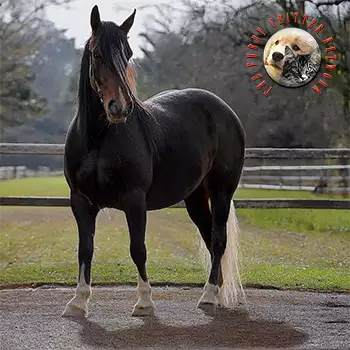

The Oldenburg is one of the larger warmblood breeds, with mature horses commonly standing 16 to 17.2 hands and weighing between 1,200 and 1,700 pounds. This substantial frame demands generous housing dimensions that go beyond the minimums acceptable for smaller breeds. A stall for an Oldenburg should measure at least 12 by 14 feet, though many owners of larger individuals find that a 14-by-14-foot stall provides the room needed for comfortable lying down, rolling, and moving without risk of becoming cast against a wall.
Ceiling height is another dimension that requires attention with tall warmbloods. A minimum clearance of ten feet is recommended, and twelve feet is preferable in barns housing multiple large horses. Inadequate ceiling height increases the risk of head injuries, limits airflow, and creates a claustrophobic environment that can contribute to stall vices like weaving and cribbing. Door openings should be at least four feet wide and eight feet tall to allow the horse to pass through without ducking or twisting.
Turnout space is equally important for the Oldenburg's physical and mental wellbeing. As a sport horse bred for athleticism, the Oldenburg benefits enormously from daily access to a paddock or pasture where it can move freely. A minimum paddock size of roughly one acre per horse allows for meaningful exercise, though more space is always better. Oldenburgs kept exclusively in stalls without adequate turnout are more prone to behavioral issues, joint stiffness, and digestive problems related to inactivity.
For facilities housing multiple Oldenburgs, aisle width should be at least twelve feet to allow two horses to pass safely with handlers. Cross-ties should be spaced far enough apart to accommodate the breed's longer body, and wash stalls should be built to at least 10 by 10 feet with non-slip flooring to prevent injuries during bathing and grooming.