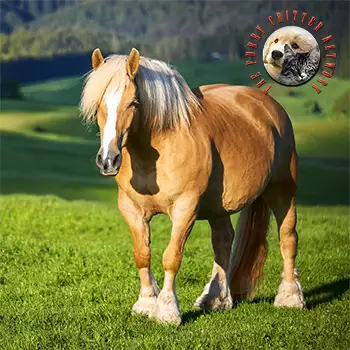

Activity & Health Monitors

Equine activity monitors have advanced significantly in recent years, moving beyond simple step counters into comprehensive health tracking systems that provide meaningful insight into your horse's daily patterns. These devices, typically attached to a halter, leg band, or surcingle, track metrics such as total movement, time spent lying down, time spent standing, and overall activity levels throughout the day and night. For Haflinger owners, this data is particularly valuable because subtle changes in behavior — a horse lying down more frequently, pacing at night, or becoming significantly less active — can be early indicators of discomfort, colic, or metabolic disturbance.

The most useful feature of modern equine monitors is the ability to establish a baseline for your individual horse and then alert you when behavior deviates from that norm. Colic, one of the most common and potentially fatal equine emergencies, often presents with behavioral changes hours before visible symptoms appear. A monitor that detects excessive rolling, unusual recumbency, or a sudden drop in activity and sends an alert to your phone can give you a critical head start in seeking veterinary attention.

Heart rate monitoring is available in some systems, either through a girth-mounted sensor or a leg band with optical sensors. Resting heart rate trends over time can indicate fitness improvements, stress patterns, or developing health issues. For Haflingers in regular work, comparing heart rate recovery after exercise sessions provides objective feedback on conditioning progress that is difficult to assess subjectively. A horse whose recovery time is lengthening despite consistent work may be experiencing fatigue, subclinical lameness, or respiratory compromise.

When evaluating activity monitors, consider battery life, durability, connectivity range, and the quality of the companion app or web dashboard. A device that requires daily charging or has a Bluetooth-only range limited to 30 feet will quickly become impractical for a horse that lives in a pasture 200 yards from your house. Look for devices with multi-day battery life, cellular or long-range wireless connectivity, and waterproof housings rated for the outdoor conditions your horse will encounter.

GPS & Location Tracking

GPS trackers designed for equine use address one of the most stressful scenarios in horse ownership: a loose horse. Whether a gate is left open, a fence fails, or a horse escapes during a trailering incident, knowing your horse's real-time location can mean the difference between a quick recovery and hours or days of searching. GPS trackers for horses are typically attached to the halter or a breakaway collar and transmit location data to a smartphone app via cellular networks.

For Haflingers kept on large acreage or in areas adjacent to roads, a GPS tracker with geofencing capability adds an important safety layer. Geofencing allows you to define a virtual perimeter around your property and receive an instant alert if the horse crosses that boundary. This feature is equally useful for monitoring pasture rotation — you can verify that a horse has not breached the electric fence dividing grazing sections — and for keeping tabs on horses during overnight turnout when you are not physically present.

Trail riders benefit from GPS tracking in a different way. Recording ride routes, distance, elevation gain, speed, and duration provides useful training data and allows you to share trail maps with other riders. Some equine GPS systems overlay trail data with activity metrics, letting you see how the horse's heart rate or pace changed over different terrain. For Haflingers used in competitive trail riding or endurance, this data supports structured training plans and helps identify sections of a course where the horse struggled or excelled.

Practical considerations for GPS devices include cellular coverage in your area, subscription costs for data service, device weight and attachment security, and battery life. Rural properties and trail locations often have spotty cellular service, which can create gaps in tracking data. Some devices store location data locally when out of coverage and upload it once the signal returns, which ensures a complete record even if real-time tracking is temporarily unavailable. Battery life varies widely — from two days to several weeks — depending on the update frequency and connectivity method, so match the device to your actual use case rather than paying for features you will not use.

Smart Feeders & Water Systems

Smart feeders bring precision and automation to one of the most important aspects of Haflinger management: controlling feed intake. For a breed prone to obesity and metabolic issues, the ability to dispense exact, measured amounts of concentrate or ration balancer at programmed times is a genuine management advantage. Smart feeders typically consist of a motorized hopper mounted above or adjacent to the stall, controlled by a timer or a connected app, that drops a preset quantity of feed into the manger at scheduled intervals.

The benefits extend beyond portion control. Splitting the daily concentrate ration into three or four small feedings rather than two larger ones is better for the horse's digestive system but impractical for most owners to manage manually. An automated feeder handles this effortlessly, delivering small amounts throughout the day that align with the horse's natural trickle-feeding pattern. Some systems include sensors that detect whether the horse has consumed the previous meal, which can alert you to a loss of appetite — one of the earliest signs of illness in horses.

Automated water systems range from simple heated buckets with thermostatic controls to sophisticated units that monitor daily water consumption and send alerts when intake drops below a preset threshold. Water intake is one of the most reliable indicators of equine health, and a sudden decrease often signals illness, dental pain, or a water quality issue. For Haflingers, who are susceptible to impaction colic related to dehydration, a system that tracks consumption and alerts you to changes can provide early warning that prevents a veterinary emergency.

When choosing smart feeding and watering equipment, prioritize reliability and simplicity over feature count. The best system is one that works consistently without daily troubleshooting. Look for units with manual override capability so you can feed and water normally if the electronics fail, and choose equipment designed for the agricultural environment — meaning dust-resistant, moisture-resistant, and built to withstand the occasional investigative nudge from a curious Haflinger. Wi-Fi-dependent systems are only as reliable as your barn's signal strength, so test connectivity at the installation point before committing.

Cameras & Barn Monitoring

Barn cameras have become one of the most widely adopted technologies in horse management, and for good reason. The ability to check on your horse from your phone at any time of day or night provides peace of mind, supports foaling watch, and helps you monitor sick or injured horses without the disruption of repeated barn visits. Modern barn cameras offer high-definition video, night vision, two-way audio, and motion-triggered recording, all accessible through a smartphone app.

Camera placement strategy matters as much as camera quality. At minimum, mount a camera in each occupied stall to capture the horse's behavior, posture, and feed and water consumption. An additional camera covering the barn aisle provides a wider view that captures activity around the stall doors, feed room, and entries. For properties with outdoor turnout, a weatherproof camera covering the paddock or pasture gate gives you visibility on herd dynamics, fence integrity, and any unusual behavior during turnout hours.

Motion detection and alert features should be configured thoughtfully to avoid alert fatigue. A camera that sends a notification every time a horse shifts position will quickly be muted by a frustrated owner, defeating its purpose. Instead, configure alerts for specific trigger zones — such as the stall door being opened, an animal entering a restricted area, or prolonged absence of motion that might indicate a horse cast against a wall or in distress. Some camera systems allow you to set time-based alert schedules, so you receive notifications during overnight hours when the barn is unattended but not during active daytime management.

Data security is an often-overlooked consideration. Barn cameras connected to your home network are potential entry points for unauthorized access if not properly secured. Use cameras from reputable manufacturers that provide regular firmware updates, change default passwords immediately upon installation, and use a dedicated network segment for your barn cameras if your router supports it. Cloud storage for recorded footage is convenient but adds a recurring subscription cost — local storage on a network-attached device is an alternative that keeps your footage entirely under your control.

Training Technology

Technology-assisted training tools can complement traditional horsemanship methods and provide objective feedback that subjective feel alone cannot capture. One of the most impactful categories for Haflinger owners is the rein tension sensor, a device that clips to the reins and measures the force applied to each side of the horse's mouth in real time. This data helps riders identify asymmetric rein contact, excessive hand movement, and moments of harsh communication that they may not perceive while focused on the ride. For Haflingers, which are sensitive and responsive horses that stiffen under heavy hands, this feedback can significantly improve riding harmony.

Saddle pressure mapping systems use a sensor pad placed between the saddle and the horse's back to visualize pressure distribution during movement. The real-time heat map shows exactly where the saddle concentrates force, where bridging creates unsupported gaps, and how pressure changes at different gaits. For Haflingers, whose wide, round backs challenge many saddle tree designs, pressure mapping provides invaluable data for saddle fitting decisions that would otherwise rely on subjective assessment and trial-and-error.

Video analysis has become more accessible and powerful with the proliferation of high-quality smartphone cameras and affordable action cameras. Mounting a camera at the arena fence or having a ground assistant record schooling sessions allows you to review gait quality, straightness, impulsion, and overall frame in a way that is impossible from the saddle. Slow-motion replay is particularly useful for identifying subtle lameness or asymmetry that is difficult to detect at normal speed. Some equine-specific apps overlay gait analysis metrics on the video, tracking stride length, limb timing, and symmetry.

Virtual fence systems represent an emerging technology that uses GPS collars and audible or mild electrical cues to keep horses within a defined boundary without physical fencing. While still in early adoption for equines and subject to ongoing welfare research and regulatory review, this technology holds potential for rotational grazing management, temporary containment during travel, and managing horses on large open rangeland. As with any training tool that involves aversive stimuli, the welfare implications should be carefully considered and the technology should only be used under the guidance of professionals familiar with both the equipment and equine behavior.

Veterinary Telehealth

Veterinary telehealth services have expanded rapidly, offering horse owners a way to consult with equine veterinarians remotely for non-emergency situations. These platforms connect you with licensed veterinarians via video call, allowing the vet to observe the horse's condition, gait, wound, or behavioral concern in real time and provide guidance on whether the situation requires an in-person visit. For Haflinger owners in rural areas where equine veterinary practices may be distant, telehealth can save significant time and travel costs for routine questions and triage decisions.

The most appropriate uses for veterinary telehealth include wound assessment and initial triage, medication questions and dosage clarification, behavioral consultations, nutrition and feeding plan reviews, and post-surgical or post-treatment follow-ups where the veterinarian needs to visually confirm progress without making a farm call. Telehealth is not a replacement for hands-on veterinary care — physical examination, diagnostic imaging, blood work, dental floats, and emergency interventions all require the veterinarian to be physically present with the horse.

To get the most value from a telehealth consultation, prepare before the call. Have clear, well-lit video of the concern — whether it is a skin lesion, a gait abnormality, or a swelling — from multiple angles. Know your horse's vital signs: resting heart rate, respiratory rate, temperature, capillary refill time, and gut sounds. Have your horse's medical history accessible, including vaccination records, deworming schedule, and any current medications. This preparation allows the veterinarian to make a more informed assessment and reduces the likelihood of an inconclusive consultation that still results in a farm call.

Some telehealth platforms integrate with equine health management apps that maintain a complete digital record of your horse's medical history, vaccinations, farrier visits, deworming, and weight trends. Centralizing this information in one place makes it easier to share with any veterinarian — telehealth or in-person — and ensures continuity of care when you switch providers or seek a second opinion. For Haflinger owners managing metabolic conditions, tracking weight, body condition score, and insulin levels over time in a digital system provides the longitudinal data that helps veterinarians make nuanced management recommendations tailored to your individual horse.

Always consult a qualified professional before making any health-related decisions. This content is provided for informational reference only and should not replace professional guidance specific to your animal.