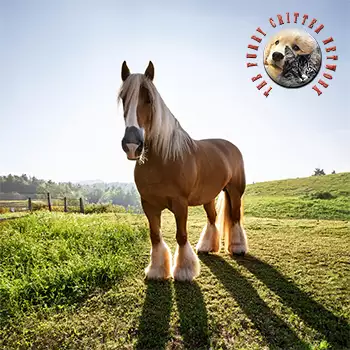

Play Style & Personality

Belgian Drafts are not typically high-energy thrill-seekers, but that does not mean they lack curiosity or a desire for stimulation. Their temperament is often described as gentle, willing, and people-oriented, which shapes the kind of enrichment they respond to best. Belgians tend to enjoy activities that involve investigation, manipulation, and problem-solving at a relaxed pace rather than frenetic play. Understanding this disposition helps in selecting toys and activities that will actually hold their interest.

Boredom is a real concern for any stalled horse, and Belgians are no exception. Despite their calm demeanor, a Belgian left without stimulation for extended periods can develop stereotypic behaviors such as wood chewing, weaving, or cribbing. These habits are not just annoying; they can cause dental damage, weight loss, and chronic stress. Providing enrichment is a proactive strategy that supports both mental health and physical well-being.

Belgians also tend to be social players. They enjoy interaction with other horses and with their human handlers, so enrichment that incorporates a social element often gets the best response. Grooming sessions, hand-walking through new environments, and even simple bonding time in the stall can serve as enrichment. Toys and puzzles are valuable supplements to this social interaction, not replacements for it.

Size is a practical factor that influences toy selection. Products designed for average-sized horses may not withstand the strength of a Belgian's jaw or the weight of a casual stomp. Durability should be a top priority, and anything placed in a Belgian's environment should be evaluated for safety given the scale of the animal using it.

Treat-Dispensing & Puzzle Toys

Treat-dispensing toys are among the most effective enrichment tools for Belgian Drafts because they combine two things these horses enjoy: food and problem-solving. The basic concept is simple: a container holds treats or forage that the horse must manipulate to access. Rolling balls, hanging dispensers, and ground-level puzzle feeders all fall into this category. The challenge of working for a reward keeps the horse engaged far longer than a treat handed over freely.

When choosing a treat-dispensing toy for a Belgian, look for products made from heavy-duty materials that can withstand repeated impact from a powerful muzzle and heavy hooves. Thin plastic toys designed for lighter horses may crack or shatter under a Belgian's attention, creating sharp edges and a choking hazard. Thick-walled rubber or reinforced polyethylene products are better suited to the forces a draft horse can apply.

The difficulty level of the puzzle should match the horse's experience. A Belgian that has never encountered a treat ball may become frustrated and lose interest if the toy is too difficult to operate. Start with simpler designs that release treats relatively easily and progress to more challenging puzzles as the horse learns the mechanics. This progressive approach builds confidence and keeps the enrichment novel over time.

Placement matters as well. A treat ball left in a muddy paddock will quickly become unappealing and hard to use. Placing puzzle toys in clean, dry areas where the horse spends leisure time increases the likelihood that they will engage with the toy. Hanging treat dispensers can be secured at an appropriate height in the stall, providing stimulation during periods of confinement without taking up floor space.

Stall Toys & Boredom Busters

Stall-bound time is where enrichment matters most, and a variety of stall toys can help break the monotony for a Belgian Draft. Hanging toys that the horse can push, swing, and mouth are popular choices. These products attach to a stall wall or ceiling and provide a simple outlet for oral and tactile curiosity. Look for designs that allow the horse to interact from multiple angles and that produce some movement or sound to maintain interest.

Mirrors have shown surprising effectiveness as stall enrichment for horses. The reflection provides a sense of companionship that can reduce anxiety and stereotypic behaviors in horses that are stalled alone or cannot see other horses. For a Belgian, the mirror should be securely mounted behind a protective guard to prevent the horse from shattering the glass. Acrylic or polished metal mirrors designed specifically for equine use are the safest options.

Slow feeders and hay nets serve a dual purpose as both feeding tools and enrichment devices. By extending the time a Belgian spends eating, these products mimic the natural grazing pattern that horses are designed for and reduce the long empty stretches between meals that contribute to boredom. Small-mesh hay nets are particularly effective, though they must be hung at an appropriate height and secured firmly to withstand the pulling force of a draft horse.

Rotation is the key to keeping stall toys effective. Horses, like most animals, habituate to stimuli that remain constant in their environment. Introducing a new toy, removing it after a few days, and bringing it back later keeps the item novel and interesting. Maintaining a small inventory of three or four different stall toys and cycling through them on a weekly basis is a simple strategy that maximizes engagement without requiring a large investment.

Ground Toys & Paddock Play

Paddock enrichment gives Belgians the space to interact with toys on their own terms and at their own pace. Large, durable balls designed for equine use are a classic paddock toy. These oversized balls can be pushed, nudged, and chased across the ground, providing both physical activity and mental engagement. For a Belgian, choose a ball that is large enough that the horse cannot bite it and heavy enough that it moves in a satisfying way when pushed rather than skittering away at the lightest touch.

Traffic cones, plastic barrels, and other obstacle-style items can be placed in a paddock to create an informal playground. Belgians may not interact with these items as energetically as a young Thoroughbred would, but many will investigate them, push them around, and use them as scratching posts. The novelty of rearranging these objects periodically encourages the horse to re-explore the environment and engage with the items anew.

Water play is an enrichment option that some Belgians genuinely enjoy, particularly during warm weather. A shallow trough or puddle area where the horse can paw and splash provides sensory stimulation and a cooling opportunity. Some owners place floating objects in water troughs to encourage investigation. Any water-based enrichment should be set up in a location where drainage is adequate to prevent the creation of a permanent mud pit.

Natural enrichment should not be overlooked. Logs, large rocks, and varied terrain within a paddock provide environmental complexity that promotes natural movement and curiosity. Fallen tree branches with bark still attached can be interesting for a horse to investigate and strip, as long as the wood species is non-toxic. Creating a diverse paddock environment is one of the most cost-effective enrichment strategies available.

Social & Handler-Led Enrichment

Some of the best enrichment for a Belgian Draft does not come in a box. Belgians are deeply people-oriented horses, and structured interaction with their handlers provides stimulation that no toy can replicate. Groundwork exercises, liberty training, and clicker training all engage the horse's mind and strengthen the handler-horse bond. These activities are particularly well-suited to Belgians, whose willing temperament makes them responsive and enthusiastic participants.

Trail walks and hand-walking through varied environments offer sensory enrichment that a stall or familiar paddock simply cannot provide. Exposure to different sights, sounds, surfaces, and smells keeps the horse mentally alert and builds confidence. For a Belgian that is primarily used for draft work or kept on a small property, even a short walk down a country road or through a wooded trail introduces valuable novelty into the daily routine.

Socialization with other horses is a form of enrichment that is easy to underestimate. Horses are herd animals by nature, and the opportunity to engage in mutual grooming, play, and simple proximity with companions fulfills a deep behavioral need. Belgians that are turned out with compatible herd mates tend to display fewer stereotypic behaviors and exhibit lower stress levels than those kept in isolation. If a companion horse is not available, some owners have found success with companion animals such as goats or donkeys.

Structured work itself can be a form of enrichment for a Belgian Draft. These horses were bred for purpose, and many Belgians thrive when they have a job to do. Driving, pulling, plowing, logging, or even participating in parades and public events gives the horse a sense of engagement and accomplishment. A Belgian with regular work is generally a happier and more settled horse than one that stands idle day after day.

DIY & Budget-Friendly Options

Enrichment does not need to be expensive to be effective. Many of the best toys and activities for Belgian Drafts can be made from materials already available around the farm. A sturdy plastic jug with a few holes cut in the sides and filled with treats or grain becomes an instant puzzle feeder. A length of thick rope tied in knots and hung from a stall beam provides a simple tug and chew toy. The key is ensuring that any DIY creation is free of sharp edges, small parts that could be swallowed, and materials that are toxic if ingested.

Empty feed bags stuffed with hay and hung in the stall give the horse something to pull at and investigate. Old tires, thoroughly cleaned and free of steel belting, can serve as ground toys that Belgians enjoy flipping and pushing. Cardboard boxes filled with hay or treats provide short-lived but entertaining puzzle sessions, though they should be monitored to ensure the horse does not consume large quantities of cardboard.

Frozen treat blocks are a popular DIY enrichment idea for warm weather. Fill a bucket with water, add apple slices, carrot chunks, or a handful of grain, and freeze it overnight. The resulting ice block can be placed in the stall or paddock for the horse to lick and paw at as it slowly melts, providing both a cooling treat and a sustained activity. For a Belgian, use a larger bucket to create a block that lasts long enough to be worthwhile.

Environmental changes can function as enrichment at zero cost. Simply rearranging items in the paddock, moving the water trough to a new location, or creating a different turnout route introduces novelty that stimulates the horse's natural curiosity. Rotating the horse through different pastures or paddocks, even on a small property, provides fresh ground and new sights that keep the Belgian mentally engaged without any commercial product required.

Always consult a qualified professional before making any health-related decisions. This content is provided for informational reference only and should not replace professional guidance specific to your animal.