
Behavior & Enrichment Needs

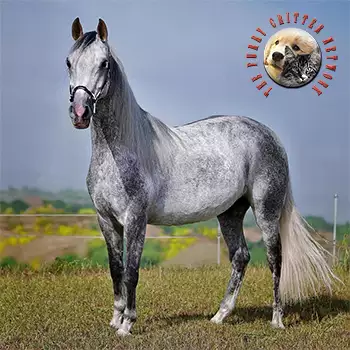
Arabians are among the most intelligent and people-oriented horse breeds, which makes them wonderful companions but also means they require more mental stimulation than many other horses. A bored Arabian is a creative Arabian, and that creativity often manifests as stall vices like cribbing, weaving, pawing, or finding inventive ways to escape enclosures. Understanding the breed's psychological needs is the first step toward choosing effective enrichment strategies.

In the wild, horses spend the majority of their day walking and foraging, covering significant distances while engaging in constant low-level problem solving about food sources, terrain, and social dynamics. Domesticated Arabians confined to stalls or small paddocks lose access to these natural outlets, and the resulting boredom creates stress. Enrichment products and activities aim to replicate some of these natural behaviors in a managed setting.

The Arabian's sensitivity and quick learning ability mean that enrichment tools need to be rotated regularly. A toy or puzzle that captivates an Arabian for a week may be completely ignored after that initial period of novelty wears off. Building a rotation of different enrichment options and cycling through them keeps the horse engaged without requiring a constantly growing collection.

Social interaction is itself a form of enrichment for Arabians. Visual contact with other horses, grooming sessions with handlers, and even observing activity around the barn all contribute to mental wellbeing. Enrichment products are most effective as supplements to a lifestyle that already includes turnout, social contact, and regular human interaction rather than as replacements for those fundamental needs.

Stall Toys & Hanging Objects

Stall toys designed for horses typically fall into two categories: objects that swing or move when pushed, and objects that dispense treats or encourage licking. Hanging balls, jolly-ball style toys suspended from stall walls, and rubber or plastic objects attached at muzzle height give the horse something to interact with during stall time. Look for products made from durable, non-toxic materials that can withstand biting and pawing without breaking into pieces that could be swallowed.

Lick-based enrichment products provide extended engagement because they combine sensory stimulation with a food reward. Salt and mineral licks serve a dual purpose of nutritional supplementation and entertainment. Flavored lick blocks designed specifically for horses come in various formulations and can occupy an Arabian for extended periods. Mount these at an appropriate height and check them regularly for wear that might create sharp edges.

When selecting hanging toys, consider the attachment hardware carefully. Chains, clips, and ropes must be strong enough that the horse cannot break them free, but the attachment point should also be designed so that the horse cannot become entangled. Quick-release snaps or breakaway attachments add a safety margin. Avoid anything with small removable parts, loops large enough for a hoof to pass through, or materials that splinter.

Some Arabians respond enthusiastically to mirrors placed in or near their stalls. The reflected image provides a sense of companionship and can reduce anxiety in horses that are stalled alone or separated from herdmates. Unbreakable acrylic mirrors designed for equine use are available and mount securely to stall walls. While not every horse responds to mirrors, those that do often show measurable reductions in stress behaviors.

Puzzle Feeders & Slow Dispensers

Puzzle feeders transform mealtime into an enrichment activity by requiring the horse to manipulate an object to access food. These range from simple treat balls that release pellets as they roll across the ground to more complex multi-step feeders that challenge the horse to lift lids, slide panels, or push levers. For the intelligent Arabian, puzzle feeders provide the kind of problem-solving engagement that aligns naturally with the breed's cognitive abilities.

Ground-level treat balls are the most accessible entry point into puzzle feeding. Fill them with a portion of the horse's daily ration balancer or a small quantity of low-sugar treats, and the horse pushes the ball with its muzzle to release the food gradually. This extends feeding time, encourages natural foraging posture, and adds physical movement to the stall routine. Choose balls sized appropriately for horses rather than repurposing smaller livestock or pet products.

Slow-feed hay nets and bags serve as both nutritional management tools and enrichment devices. Nets with small openings require the horse to work methodically to extract hay, mimicking the slow, continuous grazing pattern that occupies wild horses for most of the day. Double-netting hay inside two layers of slow-feed net further increases the challenge and extends consumption time for Arabians that master single nets quickly.

For advanced puzzle enrichment, some owners create DIY feeding stations using traffic cones with treats hidden underneath, muffin tins with tennis balls covering treat-filled cups, or PVC pipe feeders that dispense grain when tilted. These homemade solutions can be highly effective and inexpensive, though they should always be constructed from horse-safe materials and monitored during initial use to ensure the horse does not become frustrated or injure itself.

Paddock & Pasture Enrichment

Outdoor enrichment takes advantage of the Arabian's natural inclination to explore and investigate its environment. Large rubber balls designed for horses, such as oversized jolly balls or equine play balls, can be left in paddocks for the horse to push, chase, and toss. Many Arabians develop elaborate self-directed games with these objects, providing entertainment for both horse and owner. Choose balls large enough that they cannot be bitten and carried, which typically means a diameter of at least 25 inches.

Trail features and obstacle elements placed in paddocks or pasture encourage voluntary movement and mental engagement. Simple additions like a ground pole to step over, a platform to stand on, or a curtain of pool noodles hanging from a cross rail introduce novelty without requiring formal training sessions. These features should be stable, free of sharp edges, and positioned so the horse can choose to interact with them or walk around them freely.

Varied terrain within turnout areas provides natural enrichment. Hills, gentle slopes, and changes in footing challenge the horse physically and encourage different movement patterns. If your property is flat, small earthwork features or gravel pathways between paddock areas add textural variety. Even something as simple as placing hay in different locations each day encourages the horse to explore its space rather than standing in one spot waiting.

Socialization is the most powerful enrichment tool available in a pasture setting. Turnout with compatible companions allows for mutual grooming, play, and the complex social interactions that are central to equine wellbeing. For Arabians that cannot be turned out with other horses due to safety concerns, turnout alongside a companion animal such as a goat, donkey, or miniature horse can provide some of the social benefits.

Training as Enrichment

Structured training sessions double as some of the most effective enrichment for Arabians. The breed's intelligence and desire to connect with humans means that learning new skills provides deep mental satisfaction in a way that passive toys cannot fully replicate. Short, varied training sessions of 15 to 20 minutes are often more productive and engaging than longer repetitive drills, particularly with a breed that becomes bored with monotony.

Ground work exercises including liberty work, in-hand obstacles, and trick training channel the Arabian's energy and curiosity into productive outlets. Teaching simple tricks like touching a target, picking up an object, or nodding on cue gives the horse a job to do and strengthens the communication bond between horse and handler. Positive reinforcement methods using food rewards or scratches at favorite spots align well with the Arabian's cooperative and food-motivated nature.

Trail riding and varied riding environments serve as enrichment for Arabians under saddle. The breed excels in endurance riding partly because the constantly changing terrain, scenery, and challenges of trail work keep the horse mentally engaged in ways that arena work sometimes does not. Even for show-focused Arabians, periodic trail outings break up the routine and provide mental refreshment that often improves focus during formal training.

Sensory enrichment through exposure to novel but non-threatening stimuli builds confidence and satisfies curiosity. Walking past new objects, hearing unfamiliar sounds, and navigating different surfaces all engage the Arabian's active mind. Desensitization exercises that introduce tarps, flags, water crossings, and other challenges in a calm progressive manner turn potential spooking triggers into interesting puzzles that the horse learns to investigate rather than flee from.

DIY & Budget-Friendly Options

Effective enrichment does not require expensive commercial products. Many of the best enrichment solutions for Arabians can be made from common materials found around the barn or purchased inexpensively. A plastic milk jug with a few holes cut in the sides and a handful of pellets inside becomes a treat-dispensing toy. An old rubber feed tub turned upside down with treats underneath becomes a puzzle. Cardboard boxes filled loosely with hay and a few hidden carrot pieces create a foraging challenge.

Rotating the horse's environment is a free and highly effective enrichment strategy. Moving hay to different locations in the paddock each day, changing turnout companions periodically, or opening access to a new section of pasture all introduce novelty without any cost. Even rearranging familiar objects in or around the stall can spark investigation from a curious Arabian.

Natural browse materials offer enrichment that connects to wild foraging instincts. Horse-safe tree branches from species like willow, apple, or hazel can be offered for the horse to strip bark and leaves from, providing both a mental activity and a natural source of fiber. Always verify that any plant material is safe for horses before offering it, as many common trees and shrubs are toxic to equines.

Water play appeals to some Arabians, particularly during warm weather. A shallow splash pad made from a sturdy tarp or low-sided container filled with a few inches of water can entertain horses that enjoy pawing and splashing. Floating apple pieces in the water combines the sensory experience with a treat reward. As with any enrichment, introduce water play gradually and never force a horse to interact with something that causes genuine fear or anxiety.

Always consult a qualified professional before making any health-related decisions. This content is provided for informational reference only and should not replace professional guidance specific to your animal.