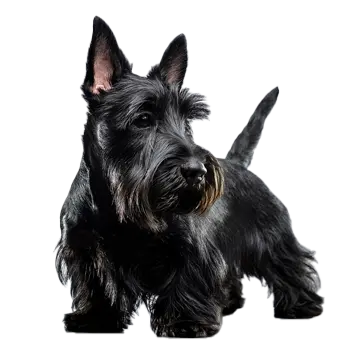

Play Style & Drive

Understanding how a Scottish Terrier plays is the key to choosing toys that will actually get used. Scotties are not the exuberant, fetch-obsessed retrievers of the dog world. Their play style is more deliberate, investigative, and often solitary. They tend to engage with toys on their own terms, picking something up, carrying it to a preferred spot, and working on it methodically rather than bringing it back for another throw.

The terrier prey drive is the dominant force behind a Scottie's play behavior. These dogs were bred to hunt and dispatch small animals underground, which means they are naturally drawn to toys that simulate that experience — things they can grab, shake, tug, and dismantle. Squeaky toys tap directly into this instinct, as the squeak mimics the sound of prey, and you will often see a Scottie work determinedly to locate and destroy the squeaker inside a plush toy.

Scotties are also intelligent problem-solvers, though they approach puzzles differently than breeds that are eager to please. A Scottie will work on a challenge because they find it intrinsically rewarding, not because they are looking for your approval. This independence means they can entertain themselves for extended periods with the right toy, but it also means they will abandon anything that fails to hold their interest.

Physical play tends to be moderate in intensity. Scottish Terriers enjoy short bursts of activity followed by rest. They are not marathon players, and they can become frustrated or disinterested if play sessions drag on too long. Keep play engaging but respect their natural rhythms — a tired Scottie is more likely to withdraw than to keep pushing through fatigue.

Interactive & Puzzle Toys

Puzzle toys are an excellent match for the Scottish Terrier's problem-solving mind. Treat-dispensing puzzles that require the dog to slide, flip, or lift compartments to access hidden rewards can keep a Scottie occupied for surprising lengths of time. Start with beginner-level puzzles and progress to more complex designs as your dog masters each stage — Scotties learn quickly, and a puzzle that is too easy will be dismissed after the first attempt.

Snuffle mats and foraging toys are another strong option. These simulate the experience of searching through grass or undergrowth for hidden food, which aligns perfectly with the Scottie's natural ground-level hunting instincts. Scatter a portion of your dog's daily kibble across a snuffle mat and let them work for their meal — it provides mental stimulation and slows down fast eaters at the same time.

Interactive toys that involve you in the play can help strengthen the bond between you and your Scottie, even though the breed is famously independent. Tug toys are often well-received, as tugging engages the grab-and-hold instinct that is central to terrier behavior. Choose a tug toy with a comfortable handle and a durable rope or rubber construction, and keep sessions short and upbeat.

Avoid over-relying on any single type of interactive toy. Scotties are sharp enough to lose interest in anything predictable. Rotate puzzles in and out of availability on a weekly basis, and occasionally introduce a completely new challenge. The novelty itself is part of the enrichment.

Chew Toys & Durability

Scottish Terriers are determined chewers with surprisingly strong jaws for their size. Standard plush toys and thin rubber products will not last long in a Scottie's mouth, so durability should be a primary consideration when shopping for chew toys. Look for products rated for aggressive or power chewers, even though the breed is small — their bite force and persistence exceed what their size might suggest.

Rubber chew toys designed for tough chewers are a staple. Products made from solid natural rubber can withstand significant abuse and often come in shapes that bounce unpredictably, adding an extra element of interest. Some can be stuffed with treats or frozen with peanut butter to extend engagement time. A stuffed and frozen rubber chew toy is one of the best tools for keeping a Scottie quietly occupied.

Nylon and composite chew bones are another durable option, though they require some monitoring. Choose sizes appropriate for your Scottie's jaw — too small and they become a choking hazard, too large and the dog cannot get a satisfying grip. Inspect these regularly for sharp edges or splintering, and replace them when they show significant wear.

Avoid rawhide chews, as they can soften into slippery chunks that pose a choking or intestinal blockage risk. Antlers and hard bones, while popular, should also be offered with caution — they can crack teeth if the dog bites down too aggressively on a hard surface. Supervise your Scottie with any hard chew product until you understand their chewing style and intensity.

Fetch & Outdoor Toys

Fetch is not every Scottish Terrier's favorite activity, but many Scotties enjoy a modified version of the game. Rather than the classic retrieve-and-return loop, a Scottie is more likely to chase after a thrown object, grab it triumphantly, and then trot off to enjoy it on their own. Adjusting your expectations to match this behavior makes outdoor play more enjoyable for both of you.

Small balls and lightweight flying discs designed for small breeds can work well for short fetch sessions. Tennis-ball-sized toys are ideal for a Scottie's mouth, though standard tennis balls can wear down tooth enamel over time with heavy use. Look for rubber or foam alternatives that are gentler on teeth. Avoid balls small enough to lodge in the throat — anything smaller than a racquetball is risky.

Flirt poles are an outstanding outdoor toy for Scottish Terriers. These are essentially a pole with a rope and a lure attached to the end, and they tap directly into the chase-and-grab instinct that defines terrier play. A few minutes with a flirt pole can burn off significant energy and provide intense mental engagement. Use them on soft ground to protect your Scottie's joints during the quick stops and turns.

Outdoor enrichment does not have to involve manufactured toys at all. Scotties love to dig, explore, and investigate scents. Setting up a designated digging area in your yard — a sandbox or loose-soil pit with buried treats — gives your Scottie a sanctioned outlet for their digging drive and can redirect them away from your flower beds.

Comfort & Companion Toys

While Scottish Terriers project an image of rugged independence, many Scotties have a softer side when it comes to comfort toys. It is not uncommon for a Scottie to adopt a particular plush toy and carry it around the house, sleep with it, or guard it possessively. If your dog shows this tendency, let them have their comfort object — it serves a genuine emotional function.

When selecting comfort toys, choose ones that are well-constructed with reinforced seams. Even a toy destined for cuddling rather than destruction will eventually be subjected to some chewing, and loose stuffing or small parts like button eyes can be ingested. Flat, unstuffed plush toys are a safer alternative that still provides the soft texture many Scotties enjoy without the hazard of loose filling.

Heartbeat simulators and warming toys can be particularly useful for puppies transitioning to a new home. These products mimic the presence of a littermate and can reduce nighttime whining and anxiety during the first few weeks of adjustment. Even some adult Scotties find comfort in these products during stressful situations like thunderstorms or visits to unfamiliar environments.

Do not force a comfort toy on a Scottie that shows no interest. The breed is nothing if not opinionated, and a dog that ignores or rejects a toy is communicating clearly. Some Scotties simply do not attach to objects, preferring instead to self-soothe by retreating to their crate or a quiet corner. Respect your dog's individual coping style.

DIY & Budget Options

Scottish Terriers do not need expensive toys to be entertained. Some of the most engaging enrichment activities can be assembled from household items at little or no cost. A muffin tin with tennis balls placed over treats in each cup creates an instant puzzle toy. An old towel knotted into a rope makes a durable tug toy. A cardboard box filled with crumpled paper and scattered kibble becomes a foraging challenge that most Scotties find irresistible.

Frozen enrichment is another budget-friendly option with high engagement value. Fill a silicone mold or small container with a mixture of wet dog food, plain yogurt, and a few small treats, then freeze it solid. The resulting frozen block can keep a Scottie busy for 20 to 30 minutes as they lick and chew their way through it. This is especially useful during warm weather when a cooling activity is doubly beneficial.

DIY sniff walks are free and endlessly variable. Instead of marching through your usual route at a brisk pace, let your Scottie lead with their nose. Allow them to stop and investigate scents for as long as they want. This type of mental enrichment is often more tiring than physical exercise and costs nothing. Vary your routes frequently to introduce new scent landscapes.

Safety should always guide your DIY choices. Avoid using items with small detachable parts, staples, tape, or toxic materials. Supervise your Scottie with any homemade toy until you are confident it poses no choking or ingestion risk. When in doubt, the frozen-food and sniff-walk approaches are the safest and most universally enjoyed budget enrichment options.

Always consult a qualified professional before making any health-related decisions. This content is provided for informational reference only and should not replace professional guidance specific to your animal.