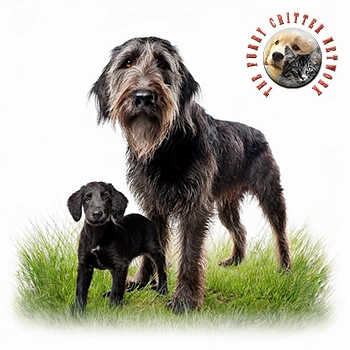

Play Style & Drive

Understanding how an Otterhound plays is the key to choosing toys that will actually get used rather than ignored in a corner. This breed was developed to follow scent trails for hours at a time, which means their primary drive is olfactory rather than visual. Unlike breeds that fixate on a moving ball, Otterhounds are more likely to engage with toys that involve sniffing, searching, and problem-solving. Their play tends to be investigative rather than repetitive — they want to figure something out, not just chase the same object endlessly.

That said, Otterhounds are also physically playful dogs, especially in their younger years. They enjoy wrestling with other dogs, tugging on rope toys, and splashing through water with toys in their mouths. Their play style tends to be boisterous and somewhat clumsy given their size, so fragile toys and small objects are poor choices. Anything that can be swallowed or broken into ingestible pieces should be avoided.

The breed's independence also shapes their play preferences. Otterhounds are not always eager to please in the way that retrievers or herding breeds are, so fetch-based games may hold their interest for a few rounds before they wander off to investigate something more compelling. Toys that allow self-directed play — where the dog can engage on its own terms — tend to see more sustained use than toys that require constant human participation.

Water play deserves special mention. Many Otterhounds are natural swimmers with webbed feet and a coat built for aquatic work. Toys that float, can be tossed into shallow water, or are used during wading and swimming sessions tap into the breed's deepest instincts and provide excellent physical exercise alongside mental satisfaction.

Interactive & Puzzle Toys

Puzzle toys are among the most effective enrichment tools for Otterhounds because they engage the nose and the brain simultaneously. Snuffle mats — fabric mats with deep folds where kibble or treats are hidden — are a natural fit for a scent hound. The dog uses its nose to locate food hidden within the mat's layers, mimicking the foraging behavior that scent hounds find deeply satisfying. These mats are inexpensive, easy to wash, and can turn a regular meal into a fifteen-minute enrichment session.

Slider puzzles, flip-board toys, and treat-dispensing balls offer escalating levels of difficulty. Start with simpler designs and graduate to more complex puzzles as your Otterhound develops problem-solving skills. The goal is to challenge without frustrating — if the dog gives up and walks away, the puzzle may be too difficult or the reward insufficient. High-value treats can increase motivation for tougher challenges.

Scent-based games extend beyond commercial products. Hiding treats around the house or yard and letting your Otterhound search for them is a zero-cost enrichment activity that leverages the breed's greatest natural asset. You can increase complexity over time by hiding treats in harder-to-reach spots, placing them inside closed containers, or creating multi-room scent trails. This kind of nose work provides significant mental fatigue, which helps manage energy levels in a large, active breed.

Interactive feeders that require the dog to push, paw, or nose compartments open are also useful for slowing down mealtimes. For Otterhounds that tend to gulp food, combining mealtime with puzzle feeding addresses both the enrichment need and the practical concern of bloat risk from rapid eating.

Chew Toys & Durability

Otterhounds are strong dogs with powerful jaws, and any chew toy needs to be rated for heavy or aggressive chewers to survive more than a single session. Look for toys made from solid rubber, reinforced nylon, or other durable materials specifically marketed for large, powerful breeds. Toys labeled for small or medium dogs will be destroyed quickly and may pose choking hazards once broken apart.

Rubber toys designed to be stuffed with food — filled with peanut butter, wet food, or a mixture of kibble and broth, then frozen — provide extended chewing engagement. The frozen filling takes longer to extract, turning a simple chew into a sustained activity that can keep an Otterhound occupied for thirty minutes or more. These are particularly useful when you need the dog to settle during work calls, visitors, or other situations that require calm behavior.

Natural chews such as bully sticks, tendons, and hard chews made from yak milk or similar dense materials can supplement manufactured toys. These tend to be highly palatable and satisfying for the dog, but they should always be offered under supervision. Once a natural chew wears down to a size small enough to swallow, it should be discarded. The Otterhound's enthusiasm for chewing combined with its size means pieces can be swallowed whole if the owner is not paying attention.

Avoid toys with squeakers unless they are deeply embedded within multiple layers of reinforced material. Many Otterhounds will surgically extract a squeaker within minutes, and the small plastic mechanism is an ingestion risk. Similarly, plush toys with stuffing are generally not durable enough for this breed and should be reserved for gentle play under direct supervision if offered at all.

Fetch & Outdoor Toys

While Otterhounds are not the most naturally fetch-obsessed breed, many enjoy retrieval games when the activity involves water or varied terrain. Floating toys designed for water retrieval are excellent choices — rubber bumpers, buoyant rings, and floating rope toys allow the dog to combine swimming with the satisfaction of carrying something back. Even dogs that lose interest in land-based fetch often become enthusiastic retrievers when water is involved.

For dry-land play, oversized balls that cannot be swallowed are safer than standard tennis balls. The Otterhound's large mouth can compress a tennis ball enough to create a choking hazard, so opt for balls designed for large breeds — typically four inches or more in diameter. Rubber balls with unpredictable bounce patterns can add interest by triggering the dog's prey drive as the ball changes direction.

Tug toys made from heavy rope, reinforced rubber, or firehose material provide excellent interactive play between dog and handler. Tug engages the Otterhound's strength and satisfies a natural pulling instinct. Establish clear rules for tug games — a reliable "drop it" command should be part of the routine — and use tug sessions as both play and training opportunities. The physical effort involved in a vigorous tug session makes it an efficient way to burn energy on days when outdoor time is limited.

Flirt poles — essentially a lure on a string attached to a long pole — can engage the Otterhound's chase instinct in a controlled setting. While scent hounds are generally less visually driven than sighthounds, many Otterhounds will enthusiastically pursue a flirt pole lure, especially if it is dragged along the ground rather than waved in the air. This tool provides intense exercise in a small space and can be used in the backyard when longer outings are not feasible.

Comfort & Companion Toys

Not every toy needs to serve an athletic or cognitive purpose. Some Otterhounds develop attachments to specific soft toys that serve as comfort objects — carried around the house, brought to the bed, or used during settling-down periods. If your Otterhound is gentle enough to maintain a plush toy without destroying it, allowing this attachment can provide genuine emotional comfort, particularly during transitions like moving to a new home, recovering from surgery, or adjusting to changes in household routine.

For puppies, a soft toy with a simulated heartbeat can ease the transition from the litter to the new home. These products mimic the warmth and rhythmic pulse of a littermate, helping reduce nighttime whining and anxiety during the first few weeks. Even some adult Otterhounds respond well to these calming toys during stressful events like thunderstorms or fireworks.

The key with comfort toys is matching durability to the individual dog's behavior. Some Otterhounds will carry a stuffed toy gently for months, while others will disembowel it within the hour. Observe your dog's interaction style before investing heavily in plush products. Flat, stuffing-free plush toys offer a middle ground — they provide the soft texture and carrying satisfaction without the risk of stuffing ingestion.

Rotating toys helps maintain interest and prevents any single toy from becoming boring. Keep a collection and swap out three or four toys every week, returning the others to a storage bin. When previously retired toys reappear, they often generate renewed excitement. This rotation strategy also helps you identify which types of toys your Otterhound genuinely prefers versus which ones were novelty attractions that lost their appeal quickly.

DIY & Budget Options

Enrichment for an Otterhound does not have to be expensive. Many of the most effective activities use household items or simple materials that cost little or nothing. A muffin tin with tennis balls placed over treats in each cup creates an instant puzzle — the dog must figure out how to remove the balls to access the food. A cardboard box filled with crumpled paper and scattered kibble becomes a foraging activity that engages the nose and provides satisfying destruction.

Frozen enrichment is another budget-friendly powerhouse. Fill a large bowl or bucket with water, add some kibble, treats, and safe vegetables like carrot chunks, and freeze it overnight. The resulting ice block provides a licking and gnawing challenge that keeps the dog occupied and cool during warm weather. Silicone molds can be used to create smaller frozen treats with yogurt, pumpkin puree, or broth for quicker enrichment sessions.

Old towels and fleece blankets can be repurposed into tug toys by braiding strips together, or into snuffle mats by tying short strips through a rubber mat with drainage holes. These homemade options are machine washable and can be replaced easily when they wear out. For scent work, a set of small cardboard boxes with one containing a hidden treat teaches the dog to use its nose methodically — a skill that Otterhounds take to with remarkable natural ability.

The most important budget enrichment tool is your own creativity and time. Novel walking routes that expose the dog to new scent environments, short training sessions that challenge the brain, and supervised exploration of safe natural areas all provide stimulation that no manufactured toy can replicate. An Otterhound that gets thirty minutes of nose-engaged outdoor time is often more satisfied than one with a basket full of expensive toys and nothing to investigate.

Always consult a qualified professional before making any health-related decisions. This content is provided for informational reference only and should not replace professional guidance specific to your animal.