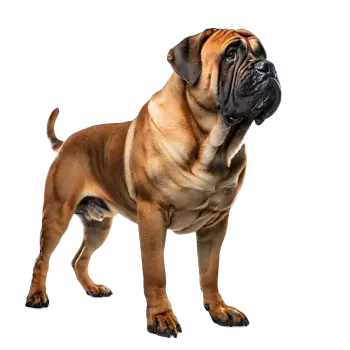

Play Style & Drive

Bullmastiffs are not hyperactive dogs, but they do enjoy play sessions that engage their minds and give them a sense of purpose. Their play style tends toward moderate intensity with short bursts of energy followed by extended rest periods. Understanding this rhythm is key to selecting toys that hold their interest without overstimulating them or encouraging rough behavior that their size makes dangerous.

This breed has a moderate prey drive and a strong guarding instinct. They are more interested in interactive play with their owners than in self-directed activities, which means toys that facilitate bonding and cooperative play tend to be the most successful. Tug toys, slow-paced fetch, and nose work games align well with their natural tendencies.

Bullmastiffs are powerful chewers with broad, strong jaws capable of destroying most standard dog toys in minutes. Toy selection must prioritize durability above all other factors. A toy that disintegrates quickly is not only a waste of money but a safety hazard, as ingested pieces can cause intestinal blockages that require surgical intervention.

Despite their calm demeanor, Bullmastiffs can become bored if left without mental stimulation for extended periods. Boredom in this breed often manifests as destructive chewing on furniture, shoes, or household items rather than hyperactivity. Providing a rotation of engaging toys prevents this behavior and channels their energy into appropriate outlets.

Interactive & Puzzle Toys

Puzzle toys that dispense treats or require problem-solving engage a Bullmastiff's intelligence and provide mental enrichment that physical exercise alone cannot. Look for puzzle toys designed for large breeds with heavy-duty construction that can withstand significant jaw pressure. Lightweight plastic puzzles built for smaller dogs will not survive first contact with a determined Bullmastiff.

Treat-dispensing balls and wobble toys are effective options that combine food motivation with physical activity. The dog must push, roll, or manipulate the toy to release kibble or treats, slowing down eating and providing entertainment simultaneously. These are particularly useful for Bullmastiffs that eat too quickly, as they transform mealtime into a stimulating activity.

Snuffle mats and scent-based puzzle games tap into the Bullmastiff's natural olfactory abilities. Hiding treats in a textured mat or around the house for the dog to find provides low-impact enrichment that does not stress joints or encourage rough play. These activities are ideal for senior Bullmastiffs or dogs recovering from injury who need mental engagement without physical strain.

Rotate puzzle toys regularly to maintain novelty. Dogs that have mastered a particular puzzle lose interest quickly, so having three or four options that you cycle through weekly keeps each one feeling fresh. Increasing the difficulty gradually by using smaller treat openings or adding complexity challenges the dog without causing frustration.

Chew Toys & Durability

Durability is the single most important factor when selecting chew toys for a Bullmastiff. Standard rubber toys, plush toys, and thin plastic products are unsuitable for this breed and will be destroyed within minutes, creating choking hazards and potential digestive obstructions. Look for toys specifically rated for aggressive or power chewers, made from solid natural rubber, reinforced nylon, or heavy-duty composite materials.

Solid rubber toys designed for giant breeds offer the best combination of durability and safety. They provide enough give to be satisfying to chew without breaking apart into ingestible pieces. The toy should be large enough that the dog cannot fit the entire object into its mouth, reducing the risk of choking or swallowing.

Nylon and composite chew bones designed for powerful chewers can last significantly longer than rubber alternatives. However, inspect them regularly for sharp edges, deep gouges, or small fragments that can break loose. Replace any chew toy that shows significant wear, regardless of how much life appears to remain. A worn chew toy is a hazard, not a bargain.

Avoid antlers, hooves, and extremely hard chew items that do not yield under pressure. While these products are marketed as long-lasting, they can fracture teeth, particularly the large premolars and carnassials that bear the brunt of chewing force. Dental repairs are expensive and painful, making the apparent durability of these products a false economy.

Fetch & Outdoor Toys

Fetch is an enjoyable activity for many Bullmastiffs, though their enthusiasm for retrieval varies by individual. Unlike sporting breeds that will chase a ball tirelessly, most Bullmastiffs enjoy a moderate number of throws before losing interest or settling down to chew on the toy instead. Keep fetch sessions short and low-impact to protect joints from repetitive stress.

Balls for Bullmastiffs must be large enough to prevent accidental swallowing. Standard tennis balls are a serious choking hazard for a dog with a mouth this large. Use balls designed for giant breeds, typically four inches in diameter or larger, made from solid rubber or similar durable material. Avoid balls with squeakers that can be extracted and ingested.

Tug toys made from heavy-duty rope, firehose material, or reinforced rubber provide excellent interactive outdoor play. Tug games satisfy the Bullmastiff's desire for cooperative engagement with their owner and provide a controlled outlet for their strength. Establish clear rules for tug play, including a reliable release command, to keep sessions safe and structured.

Water toys can be enjoyable for Bullmastiffs that like to wade or splash, though this breed is not known for swimming ability. Their heavy build and top-heavy frame make deep water risky. If your dog enjoys water play, use floating toys in shallow areas and always supervise closely. Never assume a Bullmastiff can swim competently simply because it enters the water willingly.

Comfort & Companion Toys

Despite their tough appearance, many Bullmastiffs enjoy soft companion toys that they carry around, sleep with, or gently mouth. Not every interaction with a toy is about destruction, and some dogs develop genuine attachments to specific plush or stuffed items. If your Bullmastiff is gentle with soft toys, there is no reason to deny them this comfort.

Choose plush toys designed for large breeds with reinforced seams, double stitching, and minimal small parts like plastic eyes or noses that can be chewed off and swallowed. Some manufacturers produce stuffing-free plush toys that eliminate the risk of ingesting filling material. These flat plush toys are a good compromise for dogs that enjoy soft textures but tend to eventually open up traditional stuffed toys.

Comfort toys serve an important function for Bullmastiffs that experience separation anxiety or stress during thunderstorms, fireworks, or changes in routine. A familiar toy with the dog's own scent can provide reassurance and reduce anxious behaviors like pacing, whining, or destructive chewing. Introducing a comfort toy during calm, positive moments builds the association before it is needed during stressful situations.

Monitor the condition of comfort toys closely. Even gentle chewers will eventually wear through fabric and seams, and a toy that was safe last week may develop loose threads or exposed filling today. Replace worn comfort toys with similar items to maintain the dog's sense of familiarity while eliminating safety risks.

DIY & Budget Options

Not every enrichment activity requires a purchased product. Simple DIY solutions can be just as engaging for a Bullmastiff and cost little or nothing. A muffin tin with tennis balls placed over treats in each cup creates a basic puzzle that requires the dog to remove the balls to access the reward. Cardboard boxes with treats hidden inside provide satisfying shredding and foraging activity, though cleanup is required afterward.

Frozen enrichment is one of the most effective budget-friendly options. Fill a large rubber toy with a mixture of peanut butter, plain yogurt, and kibble, then freeze it overnight. The frozen filling extends the chewing session from minutes to an hour or more and provides cooling relief during warm weather. You can also freeze low-sodium broth in ice cube trays for a simple, hydrating treat.

Old towels or t-shirts can be braided into tug ropes that are surprisingly durable for casual play. While they will not withstand intense power chewing, they work well for gentle tug sessions and interactive play. Supervise use and discard the rope once it begins to unravel, as swallowed fabric can cause serious intestinal complications.

Rotation is the best budget strategy of all. Rather than buying new toys constantly, divide your dog's existing toys into three groups and rotate them weekly. Toys that have been out of sight for two weeks feel novel again, extending their useful life and keeping your Bullmastiff engaged without additional expense. Combine rotation with occasional DIY enrichment to provide consistent variety on a modest budget.

Always consult a qualified professional before making any health-related decisions. This content is provided for informational reference only and should not replace professional guidance specific to your animal.