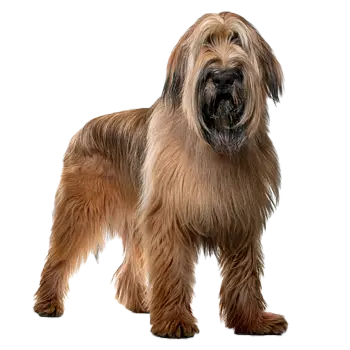

The Briard is a large, athletic herding breed with a muscular frame hidden beneath its famously long, wavy coat. These dogs were bred for demanding physical work in the French countryside, and their metabolism reflects that heritage. Even in a companion setting, the Briard requires a calorie-dense diet rich in high-quality animal proteins to support lean muscle mass, joint integrity, and sustained stamina throughout the day.
Coat health is a major nutritional consideration for this breed. The Briard's double coat — a coarse outer layer over a fine, tight undercoat — depends heavily on adequate fat intake, particularly omega-3 and omega-6 fatty acids. A diet deficient in these essential fats will show up quickly as a dull, brittle coat that tangles more easily and loses its characteristic luster. Look for foods that list whole protein sources and named fat sources within the first several ingredients.
Briards are also a deep-chested breed, which places them in a higher risk category for gastric dilatation-volvulus. This has direct implications for how and what they eat, making digestibility and portion control just as important as the nutrient profile itself. Puppies, adults, and senior Briards each have distinct caloric and nutrient requirements, so selecting a formula matched to life stage is essential rather than relying on a single all-stages product.
Joint support should be built into the diet from an early age. Large breed puppies need controlled calcium-to-phosphorus ratios to promote steady, even bone growth without the rapid weight gain that stresses developing joints. Adult and senior Briards benefit from foods that include natural sources of glucosamine and chondroitin to maintain cartilage health over time.