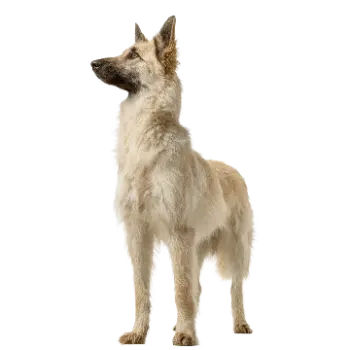

Play Style & Drive

The Belgian Laekenois approaches play with the same intensity and focus it brings to every other aspect of life. This is a breed driven by a combination of herding instinct, prey drive, and a deep need for cooperative interaction with its handler. Understanding these drives is essential to selecting toys that actually engage the dog rather than ending up ignored in a corner after thirty seconds of investigation.

Herding drive manifests in play as a desire to chase, control movement, and redirect objects. The Laekenois is less interested in simple possession of a toy and more interested in the dynamic interaction — the chase, the catch, the return, the repeat. This makes interactive toys that involve handler participation far more appealing to the breed than passive toys left out for solo entertainment. A toy that bounces unpredictably or can be launched and retrieved will hold a Laekenois's attention far longer than a stationary object.

The breed's intelligence adds another layer to play preferences. The Laekenois learns toy mechanics quickly, which means simple puzzles and single-function toys lose their appeal faster than with less cognitively driven breeds. Rotating toys on a weekly basis, introducing new challenges regularly, and varying play routines helps maintain engagement. A dog that seems bored with its toys usually isn't tired of playing — it's tired of playing the same game.

Mouthiness during play is common in the breed, particularly in younger dogs. The Laekenois tends to grab, carry, and mouth objects enthusiastically, which means toys need to withstand firm jaw pressure without immediately disintegrating into swallowable fragments. This doesn't necessarily mean the dog is an aggressive chewer — it means the breed engages with toys using its whole mouth rather than delicately lipping at surfaces.

Interactive & Puzzle Toys

Puzzle toys are arguably the single most important enrichment category for the Belgian Laekenois. This breed's cognitive capacity demands regular mental challenge, and puzzle feeders that require the dog to manipulate compartments, slide panels, or work through sequential steps to access food rewards provide exactly the kind of structured problem-solving that satisfies the Laekenois brain. Start with intermediate-difficulty puzzles and progress to advanced multi-step designs as the dog masters each level.

Snuffle mats and foraging toys tap into the breed's natural scenting abilities, transforming mealtime from a ten-second inhale into a fifteen-to-twenty-minute engagement session. Scattering a portion of the daily kibble ration across a snuffle mat or hiding it inside a foraging ball encourages the dog to use its nose and paws to extract food piece by piece. This kind of slow feeding also benefits digestion and provides mental fatigue that helps settle an active dog during downtime.

Treat-dispensing toys that roll, wobble, or require specific manipulation to release rewards keep the Laekenois occupied during periods when direct human interaction isn't available. Look for designs that allow you to adjust the difficulty level — wider openings for beginners, narrower channels for experienced dogs — so the toy remains challenging as the dog's skills improve. Toys that are too easy become boring quickly, while toys that are too difficult can cause frustration and disengagement.

Interactive tug toys designed for handler-dog play serve double duty as enrichment and relationship-building tools. The Laekenois responds well to structured tug games with clear rules — take it, hold it, release on cue — because the format mirrors the cooperative work dynamic the breed was developed for. These sessions provide physical exercise, impulse control practice, and bonding time in a single activity.

Chew Toys & Durability

Durability is the primary selection criterion when choosing chew toys for a Belgian Laekenois. While the breed is not classified among the most destructive power chewers, their persistent, focused chewing style means that toys rated for gentle or moderate chewers will be reduced to fragments within minutes. Look for toys explicitly rated for aggressive or heavy chewers, constructed from solid rubber, reinforced nylon, or multi-layer composite materials.

Rubber chew toys in the firm-to-hard density range work well for most Laekenois. These provide satisfying resistance without being so hard that they risk cracking teeth — a genuine concern with some ultra-hard nylon or antler products. The ideal chew toy should give slightly under firm thumb pressure. If you can't dent the surface at all with your thumbnail, the material may be harder than the dog's tooth enamel and could cause dental fractures during vigorous chewing sessions.

Textured surfaces on chew toys provide additional dental benefits by helping to scrape plaque and massage gum tissue as the dog works the toy. Ridged, nubbed, or grooved designs encourage varied chewing angles and keep the dog engaged longer than smooth-surfaced alternatives. Some chew toys are designed to hold paste or spreadable treats in grooves or hollow centers, combining the dental benefits of chewing with the reward motivation of food extraction.

Inspect chew toys regularly — at minimum weekly — for signs of wear that could create hazards. Small pieces breaking off, deep gouges exposing softer inner material, or cracks that could trap the dog's tongue or teeth mean it's time to retire the toy. The Laekenois's focused chewing style means wear patterns tend to concentrate in specific areas, so check the dog's preferred gnawing spots carefully even if the rest of the toy looks intact.

Fetch & Outdoor Toys

Fetch is a natural fit for the Belgian Laekenois's chase drive, and investing in quality outdoor toys makes the activity more satisfying for both dog and handler. Standard tennis balls work for casual play but wear down quickly under the Laekenois's firm grip and can pose a choking risk as they compress and lose structural integrity. Rubber fetch balls designed for dogs — slightly larger than tennis balls, with higher bounce and greater puncture resistance — are a safer and more durable alternative.

Ball launchers extend throwing distance significantly, which is particularly valuable for the Laekenois because this breed has the stamina to outrun most owners' throwing arms within the first five minutes of a fetch session. Manual and automatic launchers both have their place — manual versions offer more control over direction and distance, while automatic launchers can provide independent fetch sessions for dogs trained to reload them. Introduce automatic launchers gradually to avoid startling a noise-sensitive Laekenois.

Flying discs designed for dogs offer an alternative to ball fetch that adds jumping and aerial tracking to the exercise profile. The Laekenois's agility and coordination make them natural disc dogs, but start with soft rubber or fabric discs rather than hard plastic models to protect teeth and gums during learning catches. As the dog's catching skills develop, firmer discs provide better flight characteristics for longer throws and more precise targeting.

Water toys expand the play repertoire for Laekenois that enjoy swimming. Floating fetch toys in high-visibility colors are easy for the dog to track on the water surface and simple for the handler to spot at distance. Not all Laekenois take to water naturally, so introduce water play gradually in shallow, calm settings before progressing to deeper water retrieval. A well-fitted canine life vest provides safety during water activities, especially in moving water or during the early stages of swimming confidence building.

Comfort & Companion Toys

While the Belgian Laekenois is not typically a breed that fixates on stuffed animals or plush comfort objects, many individuals do develop attachments to specific soft toys that serve as transitional comfort items, particularly during puppyhood and adolescence. A well-chosen plush toy can ease crate training, provide comfort during thunderstorms or fireworks, and give the dog something acceptable to carry around the house instead of stealing socks or shoes.

For Laekenois that enjoy plush toys, durability construction matters. Standard stuffed animals from pet stores often feature thin fabric, minimal stitching, and small plastic parts like eyes and noses that become choking hazards once the toy is enthusiastically dismembered. Look for plush toys with reinforced seams, embroidered facial features rather than attached plastic components, and minimal or no loose stuffing. Some manufacturers offer plush toys specifically designed for rough play, with double-stitched seams and durable outer fabrics.

Heartbeat simulators — small battery-operated devices that mimic a resting heartbeat and can be placed inside a plush toy or bedding — are helpful tools for newly adopted Laekenois puppies adjusting to life away from their littermates. The rhythmic pulse provides a calming sensory input that can reduce whining, restlessness, and anxiety during the first weeks in a new home. These devices are typically most effective during the initial adjustment period and can be phased out as the puppy settles.

Some Laekenois develop strong toy guarding behaviors around comfort objects, which should be addressed through structured trading games and positive reinforcement rather than by removing the toy entirely. Teaching the dog that surrendering a valued object always results in something equally good or better — a high-value treat, a different toy, or a play session — builds trust and reduces possessive behavior over time.

DIY & Budget Options

Not every enrichment activity requires a trip to the pet store. The Belgian Laekenois responds just as enthusiastically to creative homemade enrichment as to commercial products, and many of the most effective mental stimulation exercises cost nothing beyond a few minutes of preparation time. A muffin tin with tennis balls placed over treats in each cup creates an instant puzzle feeder. A towel rolled around scattered kibble becomes a snuffle challenge. A cardboard box filled with crumpled paper and hidden treats turns into a foraging adventure.

Frozen enrichment is a simple, effective tool for warm weather or for occupying a Laekenois during downtime. Fill a rubber food toy with a mixture of wet dog food, yogurt, mashed banana, or soaked kibble, then freeze it solid. The resulting frozen treat takes 20 to 40 minutes for most dogs to work through, providing sustained mental engagement and a cooling snack. For a larger-scale version, freeze a mixture of broth and treats in a bowl or silicone mold to create an ice block that the dog can lick and gnaw at in the yard.

Rotation systems maximize the perceived novelty of existing toys without buying new ones. Divide the dog's toy collection into three or four groups and make only one group available at a time, swapping groups every five to seven days. Toys that have been out of circulation for a few weeks regain their novelty when reintroduced, keeping the Laekenois engaged without an ever-expanding toy budget.

Training sessions themselves are a form of enrichment that costs nothing and provides exactly the kind of cooperative mental work the Laekenois craves. Five to ten minutes of focused obedience work, trick training, or scent detection games provides as much mental fatigue as thirty minutes of physical exercise. Incorporate everyday objects — cardboard boxes to search, upturned cups to indicate, household items to retrieve by name — to keep sessions varied and challenging.

Always consult a qualified professional before making any health-related decisions. This content is provided for informational reference only and should not replace professional guidance specific to your animal.