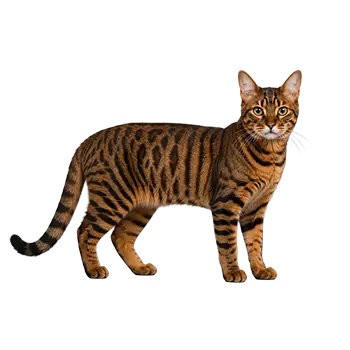

Play Style & Drive

Toygers are intelligent, high-energy cats with a strong prey drive that manifests in enthusiastic stalking, pouncing, and batting behaviors during play. Their muscular build and athletic agility mean they can sustain active play sessions longer than many other domestic breeds, and they genuinely seem to enjoy the physical and mental challenge of hunting-style games. Understanding this play profile is essential for selecting toys that actually hold their interest.

This breed responds particularly well to toys that mimic the movement patterns of small prey — erratic darting, fluttering, and sudden stops. Predictable or slow-moving toys tend to bore a Toyger quickly. Their intelligence means they can figure out simple toy mechanisms rapidly, so variety and rotation are key strategies for maintaining engagement over time.

Toygers are also notably social players who prefer interactive sessions with their owners over solitary play. While they will engage with toys on their own, the most vigorous and sustained play sessions typically involve a human partner wielding a wand toy or tossing objects for the cat to chase. This social dimension makes play an excellent bonding activity and an important part of the human-cat relationship.

Scheduling two to three dedicated play sessions of 15 to 20 minutes each day provides adequate physical exercise and mental stimulation for most adult Toygers. These sessions are best timed before meals, as the hunt-catch-eat sequence mirrors natural feline behavior patterns and can lead to more satisfying meals and more restful post-meal sleep.

Interactive & Puzzle Toys

Puzzle feeders and treat-dispensing toys are among the most effective enrichment tools for a Toyger's sharp mind. These products require the cat to manipulate components — sliding panels, spinning drums, or lifting covers — to access hidden treats or kibble. For a breed that thrives on mental challenge, puzzle toys transform a passive snack into an engaging problem-solving activity that can occupy a cat for extended periods.

Start with simpler puzzle designs and gradually increase complexity as your Toyger masters each level. Many puzzle toy systems offer adjustable difficulty settings or interchangeable components that grow with your cat's skills. If a puzzle becomes too easy, the cat will lose interest; if it is too difficult, frustration may lead to disengagement. Finding the sweet spot requires observation and occasional adjustment.

Interactive toys that respond to a cat's touch — such as motion-activated balls, wobble toys, and electronic toys with unpredictable movement patterns — provide stimulation when owners are unavailable for hands-on play. These are particularly useful for Toyger owners who work outside the home and want to ensure their cat has entertainment options during the day.

Rotate puzzle and interactive toys on a weekly basis to prevent habituation. Store inactive toys out of sight and reintroduce them after a break of several weeks, when they will feel novel again. This rotation strategy is far more cost-effective than constantly purchasing new toys and is more effective at maintaining your Toyger's interest.

Wand Toys & Chase Play

Wand toys — also called fishing rod toys or teaser toys — are consistently the most engaging toy category for Toygers. These consist of a flexible rod with a string or elastic cord attached to a lure, which can be feathered, furred, or shaped like an insect or small animal. The owner controls the movement, creating realistic prey-like behavior that triggers the cat's full hunting sequence: stalk, chase, pounce, and capture.

Effective wand toy technique involves mimicking how real prey would move — away from the cat rather than toward it, with sudden pauses and direction changes that build anticipation. Dragging the lure along the ground behind furniture, flicking it into the air, and letting it "hide" behind objects all add realism and excitement. The goal is to make your Toyger work for the catch, which provides both physical exercise and mental satisfaction.

Always let your cat catch the lure periodically during play sessions. A game that never results in a successful capture is frustrating rather than enriching. After a catch, allow the cat a moment to "subdue" the toy before resuming play. End each session with a final successful catch followed by a small treat or meal to complete the hunt-catch-eat cycle.

Safety is an important consideration with wand toys. Never leave string or elastic cord toys unattended with your cat, as ingestion of string material can cause serious intestinal complications. Store wand toys in a closed cabinet or drawer after each session. Inspect lures regularly for loose feathers, small parts, or fraying string that could be swallowed.

Kick Toys & Wrestling

Kick toys — typically elongated, stuffed fabric toys sized for a cat to grab with its front paws and rake with its hind legs — satisfy a different aspect of the Toyger's play repertoire. This bunny-kicking behavior is a natural predatory response, and providing an appropriate outlet for it protects your hands, feet, and furniture from becoming substitute targets.

The ideal kick toy for a Toyger is roughly six to ten inches long, firmly stuffed enough to provide resistance, and covered in a durable fabric that can withstand aggressive clawing. Many kick toys include catnip or silver vine inside, which can intensify engagement. Toygers tend to respond well to catnip, though sensitivity varies between individual cats and some may show no response at all.

Textured surfaces add interest to kick toys. Fabrics that combine smooth and rough textures, or toys with crinkle material embedded inside, provide additional sensory stimulation during wrestling sessions. Some cats prefer toys with a slight weight to them, as the resistance makes the wrestling interaction feel more substantial and satisfying.

Kick toys are one of the few toy categories where most cats are happy to play independently. Tossing a kick toy to your Toyger can initiate a solo play session that occupies the cat for several minutes without further human involvement. Keep two or three kick toys available and replace them when they show significant wear, as torn seams can expose stuffing material that may pose an ingestion risk.

Comfort & Companion Toys

While Toygers are confident, social cats, some individuals develop attachments to specific soft toys that serve as comfort objects. This is most common in cats adopted as solo pets or those that spend significant time alone. A soft, appropriately sized stuffed animal can provide companionship and a sense of security, particularly during times of change such as a household move or the introduction of a new family member.

Catnip-infused comfort toys combine the soothing aspects of a soft companion with the stimulating effects of catnip. These are useful for helping anxious Toygers relax during stressful situations such as veterinary visits, travel, or thunderstorms. Silver vine and valerian root are alternatives that may appeal to cats who do not respond to catnip, as sensitivity to these substances is governed by different genetic markers.

Small plush mice and similar prey-shaped comfort toys often serve dual purposes — carried around the house as comfort objects during calm periods and pounced on during active play sessions. Many Toyger owners report their cats developing clear favorites among their toy collection, retrieving specific toys from wherever they were left and carrying them to preferred resting spots.

Ensure comfort toys are made from cat-safe materials with securely attached features. Plastic eyes, ribbon decorations, and small bells are potential choking hazards if dislodged. Opt for toys with embroidered features rather than glued-on components, and inspect regularly for wear.

DIY & Budget Options

Some of the most engaging toys for Toygers cost nothing at all. A crumpled ball of paper tossed across a hard floor provides unpredictable bouncing and sliding that many cats find irresistible. Empty cardboard boxes, paper grocery bags with handles removed, and tissue paper create opportunities for hiding, pouncing, and exploration that rival expensive commercial products.

Simple DIY puzzle feeders can be constructed from household items. A muffin tin with kibble placed in several cups and covered with tennis balls or crumpled paper forces the cat to problem-solve for each piece of food. Toilet paper tubes folded closed at the ends with a few treats inside become disposable foraging toys. An egg carton with treats hidden in some compartments provides a similar challenge with materials you already have.

Homemade wand toys can be crafted from a wooden dowel, a length of cotton string, and a small bundle of fabric strips or feathers tied to the end. While these lack the durability and polish of commercial products, they are effective and easily replaced when worn. As with any string toy, never leave homemade wand toys accessible to your cat unsupervised.

Rotating free and inexpensive enrichment into your Toyger's routine ensures variety without straining your budget. A fresh cardboard box every week or two, occasional paper bag tunnels, and regular DIY puzzle challenges complement your investment in quality commercial toys and keep your cat's environment consistently interesting.

Always consult a qualified professional before making any health-related decisions. This content is provided for informational reference only and should not replace professional guidance specific to your animal.