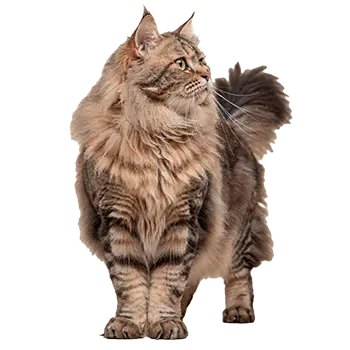

Play Style & Drive

Siberians are among the most playful and athletically gifted of all domestic cat breeds. Their forest-cat heritage gives them powerful hindquarters, exceptional jumping ability, and an enduring prey drive that stays strong well past kittenhood. Understanding how your Siberian likes to play is the foundation for choosing toys that will actually get used rather than gathering dust under the couch.

Most Siberians favor active, predatory play sequences — stalking, chasing, pouncing, and capturing. They tend to be drawn to toys that mimic the movement of small prey animals: erratic darting motions, fluttering, and quick directional changes. Unlike some breeds that lose interest quickly, Siberians often sustain intense play sessions of fifteen to twenty minutes or longer, especially if the toy provides unpredictable movement.

Many Siberians also display an unusual affinity for water. Some will bat at dripping faucets, fish toys out of water bowls, or play in shallow pools. This trait opens up enrichment possibilities that most cat owners never consider, such as floating toys in a shallow dish or creating water-based puzzle feeders. Not every Siberian shares this fascination, but it is worth testing early on.

Scheduled play sessions — ideally two per day of at least ten to fifteen minutes each — are important for managing energy levels and preventing behavioral issues. A Siberian without adequate play outlets may redirect their predatory energy toward ankles, curtains, or other household targets. Consistent interactive play also strengthens the bond between you and your cat, which Siberians, as a particularly people-oriented breed, deeply value.

Interactive & Puzzle Toys

Interactive toys that require human participation are the gold standard for Siberian enrichment. Wand toys with feather, fur, or crinkle attachments at the end of a string allow you to simulate the flight of a bird or the scurrying of a mouse. Vary the speed, direction, and height of the lure to engage your Siberian's full hunting sequence — let them stalk, crouch, spring, and make the catch. Always end a session by letting your cat capture the toy, which provides the psychological satisfaction of a successful hunt.

Puzzle feeders channel the Siberian's intelligence into problem-solving. These devices require cats to manipulate sliders, flip lids, or paw treats out of compartments. Start with simpler designs and increase difficulty as your cat masters each level. Puzzle feeders serve double duty by slowing down fast eaters and providing mental stimulation during the hours you are away from home.

Track-and-ball toys — enclosed circular tracks with a ball that orbits inside — can hold a Siberian's attention for surprising stretches. The best versions feature multiple tiers or incorporate additional elements like a central scratching pad or a motion-activated light. While not a substitute for interactive play, these toys provide self-directed entertainment and are especially useful for solo cats or during work-from-home days when you need your Siberian occupied.

Rotation is essential. Even the most engaging toy becomes boring when it is available twenty-four hours a day. Keep a collection of fifteen to twenty toys and rotate five or six into active use each week. Store the rest out of sight and reintroduce them on a staggered schedule. A toy your Siberian ignored a month ago may suddenly become their new obsession when it reappears with the novelty factor refreshed.

Chew Toys & Durability

While cats are not aggressive chewers in the way dogs are, Siberians do enjoy gnawing on certain textures, particularly during play or when working through excess energy. Chew toys designed for cats are typically made from compressed catnip, silvervine sticks, or durable rubber with textured surfaces. These satisfy the urge to bite and can provide modest dental benefits by mechanically scrubbing tooth surfaces during use.

Durability is a significant consideration for Siberians because their size and jaw strength exceed what many standard cat toys are designed to withstand. Thin fabric mice filled with loose stuffing are unlikely to survive more than a single play session, and the ingested filling, eyes, or ribbons can pose a choking or intestinal blockage risk. Choose toys with reinforced stitching, no small glued-on parts, and solid construction that can endure vigorous bunny-kicking.

Silvervine and valerian-root toys are excellent alternatives for cats who show little response to catnip. Research suggests that silvervine elicits a positive response in a higher percentage of cats than catnip does, and some cats respond to both with equal enthusiasm. These plant-based attractants can be found infused into plush toys, compressed into chew sticks, or sold as loose powder to refresh older toys.

Inspect chew toys regularly for signs of wear. Frayed edges, exposed stuffing, loose threads, and cracked rubber all present ingestion hazards. Replace worn toys promptly, and supervise your cat with any new toy until you are confident they can use it safely. Siberians tend to be vigorous players, so a toy that holds up for months with a lighter cat may need replacement within weeks.

Chase & Hunting Toys

Toys that trigger the chase instinct are consistently the biggest hits with Siberians. Laser pointers, motorized mice, and spring-loaded launchers all fall into this category. The key feature they share is unpredictable, rapid movement across the floor or through the air, which activates the feline hunting response at a deep, instinctive level.

Laser pointers deserve a specific note. While they provide excellent aerobic exercise and are irresistible to most Siberians, the inability to ever physically catch the light can cause frustration in some cats over time. The best practice is to end a laser session by directing the dot onto a physical toy or treat that your cat can pounce on and possess. This gives the hunting sequence its natural conclusion — the capture — and prevents the buildup of unfulfilled predatory tension.

Motorized and robotic toys that move on their own are ideal for periods when you cannot actively participate in play. Many feature erratic movement patterns, directional changes, and auto-shutoff timers to mimic the behavior of real prey. Look for models with a low noise profile, as some Siberians are put off by loud motor sounds. Battery life and ease of recharging are also practical factors — a toy that dies after ten minutes of use is unlikely to provide adequate exercise.

Kickable toys shaped like elongated prey animals — sometimes called kicker toys or body pillows for cats — let Siberians engage their powerful back legs in the classic bunny-kick attack. These are typically ten to fourteen inches long and filled with a combination of stuffing, crinkle material, and catnip or silvervine. Siberians often wrestle, bite, and kick these toys with an intensity that makes them one of the more cathartic play options available.

Comfort & Companion Toys

Not all play is high-energy. Siberians also have a gentle, affectionate side and sometimes seek out soft toys for comfort rather than destruction. Plush toys that approximate the size and shape of a small animal can serve as comfort objects, particularly for kittens adjusting to a new home, single cats without feline companionship, or older Siberians whose play style has mellowed with age.

Heated plush toys that contain a microwavable insert can be soothing for cats who enjoy warmth. Some models include a simulated heartbeat mechanism that provides an additional layer of comfort. These are especially useful for newly adopted kittens separated from their litter, as the warmth and rhythmic pulse can ease the transition and reduce nighttime crying.

Crinkle toys occupy an interesting middle ground between comfort and stimulation. The crackling sound produced when a cat kneads or paws at crinkle-filled fabric triggers investigative behavior without requiring vigorous physical activity. Many Siberians enjoy carrying crinkle balls or crinkle-stuffed pillows around the house, depositing them in sleeping spots or presenting them to their owners — a behavior that speaks to the breed's sociable, gift-giving tendencies.

Window-mounted bird feeders, while not toys in the traditional sense, provide passive entertainment that many Siberians find deeply absorbing. Watching birds, squirrels, and insects from a secure indoor perch satisfies the predatory gaze without any risk to wildlife. Pair a window feeder with a comfortable perch or shelf at the right height, and you have created what many cat behaviorists refer to as "cat television" — hours of free, self-renewing enrichment.

DIY & Budget Options

Some of the most effective cat toys cost nothing at all. A crumpled ball of paper, a wadded-up piece of aluminum foil, or a cardboard box with holes cut in the sides can provide as much entertainment as any store-bought toy. Siberians are particularly fond of boxes and paper bags — they will dive in, ambush passing feet, and use them as portable forts. Always remove handles from bags and any tape or staples from boxes before offering them.

DIY puzzle feeders can be made from items you already have at home. A muffin tin with treats hidden under tennis balls, a toilet paper tube folded closed at both ends with kibble inside, or a plastic bottle with holes punched in it large enough for treats to fall through all provide mental stimulation at zero cost. These homemade versions work on the same principle as commercial puzzle feeders and can be adjusted in difficulty by changing hole sizes or adding obstacles.

Feather-and-string toys are easy to assemble from craft store supplies, but supervision is critical. Loose strings, ribbons, and elastic cords are among the most dangerous household items for cats because they can be swallowed and cause linear foreign body obstructions in the intestines. Always store homemade string toys out of reach when you are not actively playing, and never leave them unattended.

Rotating household objects through your Siberian's environment provides novelty without spending money. Moving a chair to a new location, placing a paper bag in an unexpected room, or setting up a tunnel made of taped-together boxes creates fresh territory for your cat to explore. Siberians are naturally curious and investigative, so even small environmental changes register as enrichment. Combine these free tactics with a modest investment in a few durable commercial toys, and you will have a comprehensive enrichment program that keeps your Siberian engaged without straining your budget.

Always consult a qualified professional before making any health-related decisions. This content is provided for informational reference only and should not replace professional guidance specific to your animal.