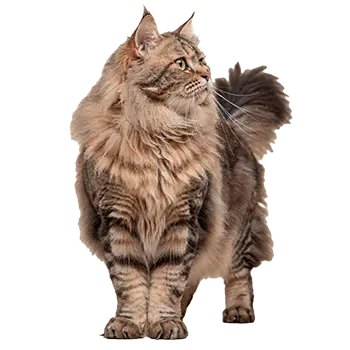

Space Requirements

Siberians are athletic, medium-to-large cats that need ample room to move, climb, and explore. Unlike some more sedentary breeds, they retain a strong prey drive and a love of physical activity well into adulthood. A cramped apartment without vertical enrichment will quickly leave a Siberian bored and prone to destructive behavior. The key to housing a Siberian successfully is not necessarily square footage alone, but how effectively you use the space you have.

Vertical territory is arguably more important than floor space for this breed. Siberians are powerful jumpers and natural climbers, capable of reaching the tops of bookshelves and refrigerators with ease. Tall cat trees, wall-mounted shelving systems, and elevated walkways allow them to survey their domain from above, which satisfies both their curiosity and their instinct to seek high vantage points. A well-designed vertical environment can make even a modest apartment feel spacious to a Siberian.

Designate distinct zones within your home for different activities — a quiet sleeping area away from foot traffic, an active play zone with climbing structures, and a feeding station separated from the litter box by as much distance as possible. Siberians are creatures of habit and thrive when their environment has a predictable structure. Rearranging furniture constantly or eliminating a favorite perch without providing an alternative can cause stress.

If you have outdoor space, a secure catio or enclosed patio can dramatically improve your Siberian's quality of life. These enclosures let your cat experience fresh air, sunlight, and natural stimuli without the dangers of free roaming. Even a small window-mounted enclosure that extends a couple of feet outward gives a Siberian access to sights, sounds, and smells that enrich their indoor experience.

Cat Trees & Climbing Structures

A sturdy cat tree is one of the single most important purchases you can make for a Siberian. Because these cats are heavier and more muscular than average, flimsy or lightweight structures are a safety hazard and a waste of money. Look for cat trees with a wide, heavy base — ideally weighted or floor-to-ceiling tension-mounted — that can support a 15-to-20-pound cat launching onto a top platform at full speed without tipping.

Post diameter matters. Thin posts wrapped in jute or sisal rope will wobble under a Siberian's weight and discourage use. Posts with a diameter of at least three and a half inches provide the stability larger cats need, and solid wood cores outperform hollow cardboard tubes in both durability and feel. Sisal rope wrapping is the gold standard for scratch surfaces because it withstands heavy use and can be re-wrapped when worn.

Platform depth and spacing are worth evaluating carefully. Siberians like to stretch out fully when lounging, so platforms should be at least 18 inches deep to accommodate their body length. Spacing between levels should allow comfortable jumping without requiring awkward contortions — roughly 12 to 18 inches between platforms works well for most cats. Some designs include hammocks, enclosed cubbies, or dangling toys, all of which add variety.

Wall-mounted shelving systems offer an alternative or supplement to freestanding cat trees. Floating shelves installed in a staggered pattern let your Siberian traverse the room at ceiling height, turning dead wall space into active territory. These systems are particularly useful in smaller homes where a large cat tree would dominate the floor plan. Ensure brackets are anchored into wall studs and rated for the weight they will bear.

Beds & Sleeping Areas

Siberians are adaptable sleepers who will claim a favorite armchair, a sunny windowsill, or the middle of your bed as their own. That said, providing dedicated sleeping options gives them choices and can help redirect them away from surfaces you would rather keep cat-free. Bolstered beds with raised edges are popular with Siberians because they offer a sense of enclosure and a place to rest their head.

Size matters when selecting a bed. Many standard cat beds are designed for eight-to-ten-pound cats and will feel cramped to a fully grown Siberian. Look for beds marketed for large cats or even small dogs, with interior dimensions of at least 18 by 22 inches. Memory foam or high-density poly-fill inserts provide joint support for heavier cats, which is especially beneficial as your Siberian ages.

Placement influences how often a bed gets used. Cats prefer sleeping spots that feel safe — typically elevated, tucked against a wall, or in a low-traffic corner with a clear sightline to the room's entrance. Placing a bed on top of a cat tree platform, on a shelf, or near a window where sunlight streams in during the afternoon dramatically increases the likelihood your Siberian will adopt it.

Washability is a practical concern given the Siberian's heavy shedding patterns. Choose beds with removable, machine-washable covers or fully washable construction. During seasonal coat blowouts — typically spring and fall — you may find yourself laundering bed covers weekly. Beds with zippered covers and smooth fabric surfaces are easier to de-fur between washes than those with textured or fleece-style materials.

Outdoor Enclosures

Catios — enclosed outdoor spaces designed specifically for cats — have become increasingly popular among owners who want to give their cats outdoor access without the risks of free roaming. For Siberians, whose ancestors thrived in the Siberian wilderness, the opportunity to experience outdoor air and watch birds and squirrels provides meaningful enrichment. A well-built catio can range from a simple window box to a full walk-in enclosure attached to your home.

Construction materials should be weather-resistant and escape-proof. Galvanized steel or powder-coated aluminum frames hold up better over time than untreated wood, which can warp, rot, or develop splinters. Wire mesh or hardware cloth with openings no larger than one inch by two inches prevents your cat from squeezing through or getting their head stuck. Standard window screening is not strong enough for a determined Siberian and will tear under clawing.

Include interior furniture within the catio to make it a destination rather than just a cage. Shelves at varying heights, a scratching post, a weatherproof bed, and some potted cat-safe plants like catnip or cat grass transform a basic enclosure into an outdoor living room. Ensure there is both sun-exposed and shaded area so your cat can thermoregulate — Siberians tolerate cold well but can overheat in direct summer sun due to their dense coat.

Access between the catio and your home is best managed through a cat flap or a window insert that allows your Siberian to come and go freely. Microchip-activated or magnetic-key cat doors prevent other animals from entering. If a permanent installation is not possible, a removable window insert panel that accommodates a small pet door offers a renter-friendly alternative.

Climate Considerations

The Siberian's triple-layered coat is an engineering marvel adapted for extreme cold, consisting of a dense undercoat, a middle awn layer, and a longer outer guard coat. This means Siberians handle cold weather exceptionally well but are more vulnerable to heat than many other breeds. If you live in a warm climate or experience hot summers, managing indoor temperature and airflow is essential for your cat's comfort and safety.

Air conditioning is the most straightforward solution for heat-sensitive cats. Keep indoor temperatures below 78 degrees Fahrenheit during warm months, and ensure your Siberian has access to cool tile or hardwood floors where they can sprawl to dissipate body heat. Elevated mesh beds and cooling mats — either gel-filled or pressure-activated — provide additional relief and are particularly useful in homes without central air conditioning.

In colder climates, Siberians are in their element, but drafty sleeping areas should still be avoided. A heated cat bed or a self-warming pad that reflects body heat can provide extra comfort during winter months, especially for older cats or those with arthritis. Window perches near heating vents are prime real estate during cold snaps, but make sure the heat source is not close enough to cause burns or dry out your cat's skin.

Humidity levels affect coat health year-round. Very dry indoor air — common in centrally heated homes during winter — can cause static buildup in the Siberian's thick fur and contribute to dry skin and increased shedding. A room humidifier set between 40 and 60 percent relative humidity benefits both you and your cat. Conversely, excessive humidity promotes fungal growth and can aggravate skin conditions, so aim for that moderate middle range.

Multi-Cat Households

Siberians are generally sociable cats that do well in multi-pet households, but successful cohabitation requires thoughtful resource planning. The standard guideline is one of each essential resource per cat, plus one extra — so a household with two cats should have three litter boxes, three feeding stations, and multiple sleeping and perching options. This formula reduces competition and territorial stress, which is especially important during the introduction period.

Vertical territory becomes even more critical when multiple cats share a space. Dominant and subordinate dynamics in feline social groups are often expressed through vertical positioning — the cat on the highest perch holds social precedence. Providing multiple high perches prevents a single cat from monopolizing the best vantage point and gives less assertive cats escape routes and safe observation posts.

Introductions should be gradual regardless of the Siberian's friendly reputation. Start with complete physical separation — the new cat in a closed room with their own resources — and progress through scent swapping, visual introduction through a baby gate or cracked door, and finally supervised face-to-face meetings. Rushing this process is the most common cause of long-term inter-cat conflict. Most Siberians adapt well within two to four weeks, but some pairings take longer.

Watch for resource guarding and subtle signs of tension that can be easy to miss. Staring, blocking access to litter boxes or food bowls, and one cat consistently displacing another from preferred resting spots are all indicators that the environment needs adjustment. Adding an extra cat tree, relocating a feeding station, or providing a covered litter box for the less confident cat can resolve many issues without further behavioral intervention.

Always consult a qualified professional before making any health-related decisions. This content is provided for informational reference only and should not replace professional guidance specific to your animal.