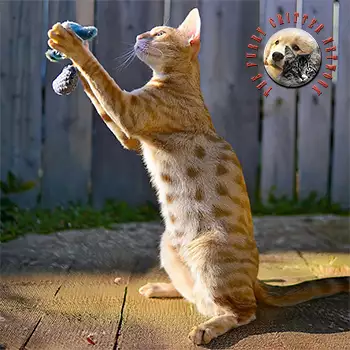

Savannah cats are among the most spatially demanding domestic cat breeds, and their needs scale significantly with generation. An F1 or F2 Savannah can stand over seventeen inches at the shoulder and leap eight feet vertically from a standing position. This means that standard apartment living without significant environmental modification is rarely adequate. At minimum, Savannahs need access to multiple rooms with enough floor space to sprint and enough vertical territory to climb and perch at height.
Vertical space is arguably more important than square footage for this breed. Savannahs are compulsive climbers and will find their way to the highest point in any room regardless of whether you provide designated climbing structures. Ceiling-height cat trees, wall-mounted shelving systems, and catwalks along upper walls transform otherwise unused space into functional territory. Without these, a Savannah will improvise, and that typically means the tops of refrigerators, cabinets, and door frames.
For owners with the option, dedicating an entire room as a cat room can dramatically improve a Savannah's quality of life. This space can be outfitted with climbing walls, running wheels, window perches, and enrichment stations without compromising the aesthetics of the rest of the home. A dedicated room also provides a safe space for the cat during maintenance visits, parties, or any situation where an open door poses an escape risk.
If you live in a smaller space, creativity becomes essential. Floating shelves installed in a staircase pattern along walls, hammocks mounted in window alcoves, and tunnel systems that run along ceiling perimeters can all add functional territory without consuming floor space. The key principle is that Savannahs think in three dimensions, and their environment should reflect that.