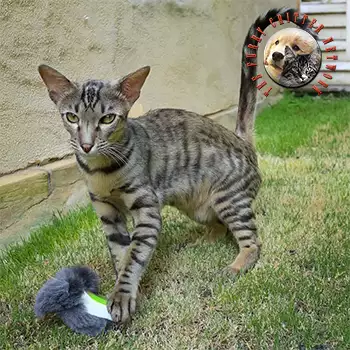

Play Style & Drive

The Oriental Longhair is a relentlessly playful cat whose prey drive and intelligence combine to create one of the most demanding play partners in the domestic cat world. These cats don't simply bat at a toy and walk away — they stalk, ambush, pounce, and carry their captures with genuine intensity. Understanding this play style is essential to selecting toys that hold their interest rather than ending up ignored under the couch within a day.

Their play drive is closely tied to their social nature. Oriental Longhairs prefer interactive play with their humans over solitary amusement, though they are capable of entertaining themselves when given sufficiently engaging toys. A cat that receives 20 to 30 minutes of active, structured play per day is noticeably calmer and less prone to the destructive behaviors — shredding furniture, knocking items off shelves, excessive vocalization — that this breed resorts to when bored.

Age affects play style but doesn't eliminate the need for it. Kittens and young adults are explosive and acrobatic, favoring fast-moving targets that trigger their chase instinct. Senior Oriental Longhairs remain more playful than most breeds well into their later years but may shift toward slower-paced puzzle activities and gentler interactive sessions. Tailoring the toy selection to your cat's current life stage keeps enrichment effective and physically appropriate.

Rotation is key with this breed. Oriental Longhairs are smart enough to lose interest in toys they see every day, regardless of how exciting the toy was initially. Keeping a collection and cycling three or four toys into active use while storing the rest creates a sense of novelty that maintains engagement over time.

Interactive & Puzzle Toys

Puzzle toys are arguably the most important category for the Oriental Longhair because they engage the breed's considerable intelligence. These cats are problem-solvers who genuinely enjoy the process of figuring out how to access a hidden treat or manipulate a mechanism. Simple puzzles with sliding covers or rotating compartments make good starting points, while more complex multi-step designs provide the escalating challenge that keeps these cats invested.

Treat-dispensing balls and wobble toys bridge the gap between physical activity and mental stimulation. As the cat bats or rolls the toy, treats are released at random intervals, reinforcing continued interaction. For Oriental Longhairs, choosing a dispenser with adjustable difficulty settings allows you to increase the challenge as your cat masters each level. A puzzle that's too easy quickly becomes boring; one that's too hard leads to frustration and abandonment.

Interactive toys that require human participation — wand toys with feathered or fabric attachments, laser-style chase toys, and string-based lures — tap directly into the Oriental Longhair's social play preference. Wand toys are particularly effective because they allow you to mimic the erratic movement of prey, triggering a full predatory sequence of stalk, chase, pounce, and capture. Always end interactive sessions with a tangible "catch" so the cat experiences the satisfaction of a completed hunt.

Electronic interactive toys that move on their own can supplement human-led play but should not replace it entirely. Automated laser toys, motorized mice, and app-controlled devices provide stimulation when you're away from home, but an Oriental Longhair that only interacts with mechanical toys will still seek out human attention and may become more demanding rather than less.

Chew Toys & Durability

While cats are not aggressive chewers in the same way dogs are, Oriental Longhairs do engage in moderate chewing behavior, particularly during play. Toys made from thin plastic, lightweight foam, or loosely stitched fabric tend to be destroyed quickly and pose a potential ingestion hazard. Prioritize toys constructed from durable, non-toxic materials that can withstand sustained batting, biting, and bunny-kicking.

Catnip-stuffed toys are perennial favorites, and the quality of both the toy shell and the catnip inside matters. Look for double-stitched seams and tightly woven fabric that resists puncture from claws and teeth. The catnip itself should be organic and free of pesticides — some lower-quality products use stale or adulterated fillers that produce little to no response. Approximately 60 to 70 percent of cats respond to catnip, and Oriental Longhairs that do react tend to respond intensely with rolling, rubbing, and vigorous play.

Silvervine, also known as matatabi, is an effective alternative for cats that don't respond to catnip. Silvervine sticks serve as both a chew object and an attractant, and studies suggest a larger percentage of cats respond to silvervine than to catnip. The sticks are natural, safe for chewing, and can help maintain dental health by mechanically removing soft plaque as the cat gnaws on them.

Inspect chew toys regularly for signs of wear. Any toy with exposed stuffing, detached small parts, loose strings, or cracked plastic should be removed immediately. Oriental Longhairs are thorough in their destruction and curious enough to ingest fragments that other cats might ignore. Replacing worn toys promptly is a simple safety measure that prevents gastrointestinal blockages and choking hazards.

Chase & Aerial Toys

The Oriental Longhair's athletic build — long legs, lean muscle, and exceptional balance — makes them natural aerial performers. Toys that encourage jumping, leaping, and mid-air catches align perfectly with their physical capabilities and provide the vigorous exercise this breed needs. Feather wands flicked through the air, dangling toys suspended from doorframes, and spring-loaded bouncers all trigger the kind of vertical play that Oriental Longhairs crave.

Doorway-mounted bouncing toys that dangle from an elastic cord are effective self-play options. The unpredictable bounce pattern keeps the cat engaged far longer than a stationary toy, and the vertical orientation encourages jumping and reaching. Mount these at a height that requires effort but remains achievable — the toy should challenge your cat, not frustrate it. Check the mounting hardware regularly to ensure it remains secure.

Ball tracks and circuit toys channel the chase instinct along a defined path. Multi-level track designs with balls that spin and rattle inside enclosed channels can hold an Oriental Longhair's attention for extended periods, especially when placed in a high-traffic area where the cat passes by frequently. Some cats learn to bat the ball with one paw while intercepting it with the other at a different point on the track, demonstrating the breed's coordination and strategic thinking.

Flutter toys — lightweight attachments on flexible wires that tremble and move with the slightest air current — mimic insect movement and are irresistible to most Oriental Longhairs. These can be mounted on furniture or cat trees to provide passive stimulation throughout the day. The subtle, lifelike motion triggers hunting behavior without requiring batteries or human involvement, making them an excellent enrichment tool for periods when you're occupied with other tasks.

Comfort & Companion Toys

Oriental Longhairs form strong attachments — to their humans, to other pets, and sometimes to specific objects. It's not uncommon for a cat of this breed to adopt a particular stuffed toy as a companion, carrying it from room to room, grooming it, and sleeping alongside it. Providing a few soft, appropriately sized plush toys gives your cat the opportunity to develop these comforting habits.

The ideal companion toy for an Oriental Longhair is roughly the size of a small prey animal — a mouse or a bird — and constructed from a soft, non-pilling fabric. Some cats prefer toys with a bit of weight to them, which makes the carrying and wrestling experience more satisfying. Avoid toys with glued-on eyes, plastic noses, or ribbon whiskers that could be chewed off and swallowed.

Kickable toys designed for bunny-kicking are another comfort category that serves a physical purpose. These elongated, pillow-like toys are sized for a cat to grab with its front paws and kick vigorously with its hind legs, mimicking the disemboweling motion cats use on captured prey. This behavior is a natural stress release, and providing an appropriate outlet prevents your cat from redirecting it toward hands, feet, or other pets.

For Oriental Longhairs that experience separation anxiety — a common issue in this breed — leaving a worn piece of your clothing near their favorite resting spot can provide significant comfort. The familiar scent acts as a reassuring presence during your absence. Combining this with a companion toy and a puzzle feeder creates a multi-layered enrichment strategy that addresses both emotional and cognitive needs while you're away.

DIY & Budget Options

Some of the most effective toys for Oriental Longhairs cost nothing at all. A crumpled ball of paper, a cardboard box with holes cut in the sides, or a paper bag with the handles removed can provide 30 minutes of intense entertainment. These cats are stimulated by novelty and texture as much as by sophisticated design, and homemade toys allow you to refresh the play environment constantly without financial commitment.

Cardboard boxes deserve special mention because they serve simultaneously as toys, hiding spots, and scratching surfaces. An Oriental Longhair given a large box will explore it, chew the edges, scratch the interior, ambush passing housemates from inside it, and eventually claim it as a sleeping den. Cutting multiple entry holes at different heights turns a simple box into an interactive play structure. Stack or connect multiple boxes to create a tunnel system that can be reconfigured whenever your cat's interest wanes.

DIY puzzle feeders are easy to construct from household materials. A muffin tin with treats placed in the cups and tennis balls or crumpled paper set on top creates a foraging challenge. Toilet paper rolls folded shut at both ends with kibble inside become single-use dispensers that the cat must tear open. An egg carton with treats hidden in random compartments offers a different problem-solving experience. The key is varying the difficulty and design so your Oriental Longhair doesn't learn and dismiss the puzzle too quickly.

Safety considerations apply to homemade toys just as they do to commercial ones. Avoid string, yarn, rubber bands, tinsel, and small items that could be swallowed. Plastic bags and anything with sharp edges should be kept away entirely. Supervise your cat with any new DIY toy until you're confident it won't produce dangerous fragments, and discard homemade toys once they show significant wear.

Always consult a qualified professional before making any health-related decisions. This content is provided for informational reference only and should not replace professional guidance specific to your animal.