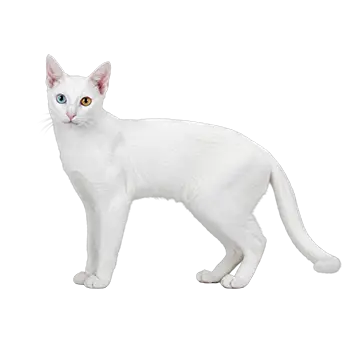

Space Requirements

The Khao Manee is an energetic, curious breed that requires more vertical and horizontal living space than its medium build might suggest. These cats are natural climbers and jumpers who feel most secure when they can survey their territory from elevated vantage points. A well-designed living space for a Khao Manee should include multiple levels of vertical access — cat trees, wall-mounted shelves, or dedicated climbing structures that allow the cat to move freely above floor level.

While Khao Manee cats can adapt to apartment living, they do best in environments where they have access to at least two or three rooms. Confining this breed to a single small room for extended periods can lead to boredom, frustration, and behavioral issues such as excessive vocalization or destructive scratching. If your home is compact, maximizing vertical space becomes even more important to compensate for limited floor area.

Each Khao Manee should have access to their own set of core resources — a feeding station, a water source, a litter box, a scratching surface, and a resting spot — without having to compete or share with other pets. This resource distribution is especially critical in multi-cat homes where territorial stress can develop around bottleneck areas. Place resources in different zones of the home rather than clustering them in a single room.

Window access is a significant quality-of-life feature for Khao Manee cats. They are highly observant and will spend considerable time watching outdoor activity. A sturdy window perch or shelf positioned near a window with a view provides hours of passive enrichment and satisfies their strong surveillance instincts.

Cat Trees & Climbing Structures

A quality cat tree is arguably the single most important piece of furniture you can provide for a Khao Manee. Look for structures that are tall enough to reach at least five feet, with multiple platforms at staggered heights. The base must be wide and heavy enough to remain stable when a full-grown cat launches itself from the top — wobbling or tipping cat trees are safety hazards and will quickly be abandoned by a cautious cat.

Construction materials matter both for durability and comfort. Solid wood or thick engineered wood posts provide the best stability, while sisal rope wrapping on vertical posts serves double duty as a climbing surface and scratching substrate. Avoid cat trees covered entirely in carpet, as the looped fibers can catch claws and the material traps odors over time. Removable, washable cushion covers on platforms are a practical feature that extends the life of the product.

Wall-mounted shelving systems and cat walkways offer an excellent alternative or supplement to traditional cat trees, particularly in smaller homes. These modular systems can be configured to create climbing routes along walls and across rooms, dramatically expanding your Khao Manee's usable territory without consuming floor space. Ensure all wall-mounted components are anchored into studs and rated for well above your cat's weight.

For Khao Manee households, placing the cat tree near a window creates a combined climbing and observation station that maximizes the enrichment value of both features. Avoid placing cat trees in isolated corners or low-traffic rooms — this social breed prefers to be near household activity even when perched at a height.

Beds & Sleeping Areas

Khao Manee cats typically choose multiple sleeping locations throughout the home, rotating between them based on time of day, temperature, and social dynamics. Rather than investing in a single premium bed, consider providing three or four smaller, comfortable resting spots distributed throughout your living space. Enclosed cave-style beds, bolstered donut beds, and flat heated pads each serve different preferences that may shift with the seasons.

Fabric choice is an important consideration for white-coated cats. Dark-colored bedding will visibly collect white fur, though this is a cosmetic concern rather than a functional one. More importantly, choose bed materials that are machine-washable and quick-drying, as regular laundering prevents the buildup of skin oils and dander. Microfiber, fleece, and sherpa fabrics are popular choices that offer softness and easy maintenance.

Heated beds or self-warming pads that reflect body heat can be particularly appealing to Khao Manee cats, especially in cooler climates. Short-coated breeds like the Khao Manee lack the insulating undercoat that long-haired breeds rely on, making them more sensitive to temperature drops. If using an electrically heated bed, select one with an automatic shutoff feature and a chew-resistant cord.

Elevated sleeping options — such as hammock-style beds that attach to cat trees or window-mounted sleeping shelves — align well with the Khao Manee's preference for height. Many cats in this breed will choose an elevated sleeping spot over a floor-level bed given the choice, as the height provides both warmth (heat rises) and a sense of security.

Outdoor Enclosures

Catios — enclosed outdoor patios designed for cats — provide an excellent way to give your Khao Manee safe access to fresh air, sunlight, and outdoor stimulation without the risks associated with free roaming. This is particularly important for Khao Manee cats, whose striking white coat and unusual eyes can make them targets for theft, and whose light skin is more susceptible to UV damage than that of pigmented cats.

When selecting or building a catio, prioritize sturdy construction with welded wire or heavy-gauge mesh that cannot be breached by predators or chewed through by the cat. The enclosure should include shaded areas to protect against sun exposure, as well as shelves or platforms at varying heights to satisfy climbing instincts. A direct access point from a window or door via a cat flap or tunnel is ideal, allowing your Khao Manee to move between indoors and the catio freely.

Portable mesh enclosures and pop-up cat tents offer a budget-friendly alternative for supervised outdoor time. These are not suitable for unsupervised use, as they can be knocked over by wind or compromised by a determined cat, but they work well for patio or balcony sessions where you are present. Ensure any portable enclosure has a secure zip closure and reinforced seams.

If building a permanent catio, consider including cat-safe plants like cat grass, catnip, valerian, or silver vine within the enclosure. These provide additional sensory enrichment and foraging opportunities. Avoid toxic plants such as lilies, azaleas, and oleander, which can be fatal if ingested. A small water feature or fountain within the catio can also enhance the environment and encourage hydration.

Climate Considerations

The Khao Manee's single-layer short coat provides minimal insulation, making this breed more sensitive to temperature extremes than double-coated or long-haired cats. In colder climates, ensure your home maintains a comfortable ambient temperature and provide warm resting options such as heated beds, thermal mats, or cozy enclosed sleeping spots. Drafty areas near doors and windows should be addressed with draft excluders or by simply avoiding placing cat beds in those zones.

In warmer climates, the Khao Manee's white coat and pink skin create a unique vulnerability to sunburn and UV-related skin damage, particularly on the ears, nose, and areas with sparse fur coverage. Limit direct sun exposure during peak UV hours and consider applying pet-safe sunscreen to vulnerable areas if your cat spends time in a catio or near sunny windows. UV-filtering window films can reduce exposure without blocking the visual enrichment your cat derives from window gazing.

Humidity levels also affect feline comfort and health. Very dry indoor air — common in homes with forced-air heating during winter — can cause dry skin, increased static electricity in the coat, and respiratory irritation. A room humidifier in the areas where your Khao Manee spends the most time can alleviate these issues. Conversely, excessively humid environments can promote fungal growth in bedding and litter areas, so aim for a relative humidity range of 40–60 percent.

Air quality matters as well. Avoid using strong chemical cleaners, air fresheners, scented candles, or essential oil diffusers in rooms your cat frequents. Cats are highly sensitive to airborne chemicals and volatile organic compounds, and the Khao Manee's social nature means they spend a lot of time in shared living spaces where these products are most commonly used.

Multi-Pet Households

Khao Manee cats are generally sociable and can coexist well with other cats and cat-friendly dogs, but successful multi-pet housing requires thoughtful resource planning. The cardinal rule is to provide one of each key resource per cat, plus one extra — so a two-cat household should have three litter boxes, at least two feeding stations, and multiple resting and scratching options. This prevents resource guarding and reduces territorial tension.

Vertical territory becomes especially important in multi-pet homes. Cats resolve spatial conflicts by occupying different vertical levels, so having ample high perches, mid-level shelves, and floor-level hiding spots allows each animal to claim space without direct confrontation. The Khao Manee's confident personality usually places them toward the top of the vertical hierarchy, but every cat should have access to elevated resting spots.

When introducing a new pet to a Khao Manee household, a separate confinement room is essential for the initial adjustment period. This room should be fully equipped with its own litter box, food and water, scratching post, and comfortable resting area. Gradual introduction through scent swapping, visual barriers, and supervised encounters typically produces the best results and prevents the territorial stress that can arise from an abrupt introduction.

Noise and activity levels are another consideration in multi-pet homes. The Khao Manee is a vocal breed that may not pair well with extremely timid or noise-sensitive companion animals. Conversely, their social nature means they often bond strongly with compatible housemates and can experience separation anxiety if left alone for extended periods. If your household includes a single Khao Manee with no other pets, consider whether your schedule provides enough social interaction or whether a feline companion might benefit your cat's wellbeing.

Always consult a qualified professional before making any health-related decisions. This content is provided for informational reference only and should not replace professional guidance specific to your animal.