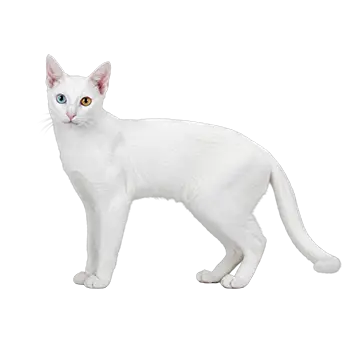

Collars, Harnesses & Leashes

A well-fitted breakaway collar is the most fundamental safety accessory for any Khao Manee. Breakaway collars are designed with a clasp that releases under pressure, preventing strangulation if the collar catches on furniture, branches, or fencing. This safety mechanism is non-negotiable for cats — standard buckle collars that do not release can create life-threatening situations. Choose a lightweight collar that sits snugly enough to prevent slipping over the head but allows two fingers to slide comfortably beneath it.

For Khao Manee owners interested in supervised outdoor excursions, a harness-and-leash combination is far safer and more secure than a collar for walking. Cats can slip out of collars with relative ease, but a properly fitted vest-style or figure-eight harness distributes pressure across the chest and shoulders, providing control without risking neck injury. Introduce the harness indoors first, allowing your cat to wear it for short periods with positive reinforcement before attempting outdoor walks.

Leash selection for cat walking differs from dog walking in important ways. A lightweight, non-retractable leash in the four-to-six-foot range provides enough freedom for exploration without creating the tangling risks of a longer line. Retractable leashes are generally not recommended for cats, as the sudden tension changes can startle a cat and trigger a panic response. Bungee-style leashes with some built-in stretch offer a gentle compromise that absorbs sudden movements.

For the Khao Manee's striking white appearance, collar and harness color is a matter of personal preference, but reflective or light-colored materials offer a practical safety advantage during low-light conditions. If your cat will be wearing a collar continuously, opt for materials that will not stain the white fur — some dyed fabrics can transfer color to light coats, particularly when wet.

Grooming Tools

The Khao Manee's short, single-layer coat is one of the easiest to maintain among cat breeds, but regular grooming remains important for skin health, shedding management, and bonding. A fine-toothed metal comb or a soft rubber grooming mitt used once or twice a week is typically sufficient to remove loose hair and distribute natural skin oils. Avoid stiff wire slicker brushes, which are designed for longer or denser coats and can irritate the Khao Manee's close-lying fur and sensitive skin.

Nail maintenance is an essential grooming task that protects both your cat and your furniture. A pair of sharp, guillotine-style or scissor-style cat nail clippers should be part of every Khao Manee owner's toolkit. Trim the tips of the nails every two to three weeks, being careful to avoid the pink quick visible inside the translucent nails. If your cat is resistant to nail trimming, a scratch-pad-style nail file board can supplement clipping by passively wearing down the nail tips during play.

Dental care is frequently overlooked but critically important for long-term feline health. A cat-specific toothbrush — either a small finger brush or an angled brush with soft bristles — paired with enzymatic cat toothpaste should be used several times per week. Never use human toothpaste, which contains fluoride and foaming agents that are toxic to cats. Dental wipes offer an easier alternative for cats who resist brushing, though they are less effective at reaching below the gum line.

Ear cleaning is another routine task, particularly for white cats who may be more prone to visible wax accumulation. A gentle ear cleaning solution applied to a cotton ball is the safest method — never insert cotton swabs into the ear canal. Khao Manee cats with blue eyes should receive regular ear checks from a veterinarian, as congenital deafness occurs at higher rates in blue-eyed white cats and may affect how the cat responds to ear cleaning.

Bowls & Feeders

The material, shape, and placement of your Khao Manee's food and water bowls have a meaningful impact on eating habits and comfort. Stainless steel and ceramic bowls are the preferred choices — both are easy to sanitize, resistant to bacterial buildup, and do not retain odors. Plastic bowls should be avoided, as they scratch easily, harbor bacteria in surface imperfections, and can cause feline chin acne in sensitive cats through prolonged contact.

Bowl shape matters more than many owners realize. Wide, shallow dishes that do not press against the cat's whiskers are strongly recommended. Whisker fatigue — the overstimulation caused by whiskers repeatedly pressing against the sides of a deep, narrow bowl — can cause discomfort and lead to food refusal or messy eating behaviors. A saucer-style bowl or a whisker-friendly design with gently sloped sides accommodates the Khao Manee's facial structure comfortably.

Water intake is a persistent challenge for cats, and providing an appealing drinking setup can significantly improve hydration. Many Khao Manee cats prefer running water to a stagnant bowl, making a circulating water fountain a worthwhile investment. Ceramic or stainless steel fountains with replaceable charcoal filters keep water fresh and encourage more frequent drinking. Place the water source away from the food bowl and litter box — cats instinctively avoid drinking near food sources or waste areas.

Elevated feeding stations that raise bowls to a comfortable height can improve posture during meals and may reduce vomiting in cats prone to eating too quickly. A raised platform of four to six inches works well for most medium-sized cats. For multi-cat households, microchip-activated feeders that open only for a specific cat can prevent food theft and ensure each animal receives the correct diet and portion.

Travel Gear

A sturdy, well-ventilated carrier is essential for veterinary visits, travel, and emergency evacuation. Hard-shell carriers with a top-loading door in addition to the standard front opening are particularly practical for cats who resist being placed through a front door — you can gently lower the cat in from above rather than pushing them through headfirst. The carrier should be large enough for your Khao Manee to stand, turn around, and lie down comfortably, but not so spacious that the cat slides around during transport.

For car travel, secure the carrier on the back seat using the seatbelt threaded through the handle or a carrier-specific strap system. A carrier that is free to slide across the seat during braking or turning creates a stressful and potentially dangerous experience. Lining the carrier floor with an absorbent pad and a familiar-smelling blanket or worn t-shirt helps reduce travel anxiety and contains any motion-sickness incidents.

For air travel, check airline specifications well in advance, as cabin-approved carrier dimensions vary between airlines and are strictly enforced. Soft-sided carriers that conform to under-seat dimensions are typically required for in-cabin travel. Ensure the carrier has adequate ventilation mesh on multiple sides and a leak-proof bottom. Familiarize your Khao Manee with the travel carrier weeks before the trip by leaving it open in the home with treats and bedding inside.

Portable litter solutions — collapsible litter boxes with disposable liners, or compact travel litter kits — are essential for longer trips. Pair these with a small bag of your cat's regular litter to maintain familiarity. A collapsible water bowl and a measured portion of your cat's regular food in a sealed container complete the travel kit. For cats who experience significant travel anxiety, discuss calming supplements or pheromone sprays with your veterinarian before the trip.

Safety & ID

Microchipping is the single most reliable form of permanent identification for your Khao Manee. A microchip — a rice-grain-sized transponder injected beneath the skin between the shoulder blades — provides a unique identification number that can be read by any universal scanner at veterinary offices and shelters. Unlike collars and tags, a microchip cannot fall off, be removed, or become illegible. Ensure your contact information in the microchip registry is always current, including a secondary contact number.

A visible ID tag on your cat's breakaway collar serves as the first line of identification if your Khao Manee escapes. The tag should include your cat's name, your phone number, and any critical medical information such as ongoing medication needs. Slide-on tags that attach flat against the collar are quieter and less likely to catch on objects than dangling pendant-style tags. Some owners opt for collars with the identification information embroidered or engraved directly into the collar material.

Window and balcony safety is a critical concern for any indoor cat, and the Khao Manee's curious and athletic nature makes this especially important. Secure all windows with sturdy, cat-proof screens that cannot be pushed out by a determined cat, and install balcony netting if your cat has access to any elevated outdoor space. Standard insect screens are not strong enough to withstand a cat's weight or persistent pushing and should be reinforced or replaced with purpose-built pet screens.

Poison prevention is an ongoing safety consideration. Common household hazards include lilies (all parts of which are fatally toxic to cats), cleaning products, human medications, essential oils, and small objects that could be swallowed. Keep all medications in closed cabinets, switch to cat-safe cleaning products in areas your Khao Manee frequents, and be aware that this breed's intelligence and dexterity can allow them to open loosely latched cabinets and drawers.

Seasonal Gear

For Khao Manee cats with catio access or supervised outdoor time, seasonal considerations shape the gear you need. In winter, a lightweight fleece or knit sweater can provide additional warmth for short-coated cats who enjoy spending time in cooler environments. Not all cats tolerate clothing, so introduce any garment gradually with positive reinforcement and never force a stressed cat into a sweater. Ensure the garment fits snugly without restricting movement and cannot be chewed or ingested.

Summer brings specific risks for the white-coated Khao Manee. Pet-safe sunscreen formulated for cats should be applied to the ear tips, nose bridge, and any areas of sparse fur coverage before outdoor exposure. Avoid sunscreens containing zinc oxide or salicylates, which are toxic to cats. Cooling mats — gel-filled pads that absorb body heat without requiring refrigeration or electricity — provide a comfortable resting surface during hot weather and can be placed inside a catio, on a window perch, or on the floor.

Seasonal shedding, while lighter in the Khao Manee than in double-coated breeds, does occur and can be managed with increased grooming frequency during spring and fall transitions. A lint roller or reusable fabric brush becomes an essential personal accessory for Khao Manee owners, as white fur is conspicuous on dark clothing and upholstery. Washable furniture throws in areas where your cat likes to rest can simplify cleanup during heavier shedding periods.

Holiday seasons introduce temporary hazards that require seasonal vigilance. Tinsel, ribbon, ornament hooks, and string lights are all attractive to cats and dangerous if ingested or entangled. Poinsettias, holly, and mistletoe are toxic to varying degrees. If your Khao Manee is allowed near a holiday tree, anchor it securely to prevent toppling and consider skipping tinsel and breakable ornaments on the lower branches. Noise-sensitive Khao Manee cats may also benefit from a quiet retreat space during firework-heavy holidays.

Always consult a qualified professional before making any health-related decisions. This content is provided for informational reference only and should not replace professional guidance specific to your animal.