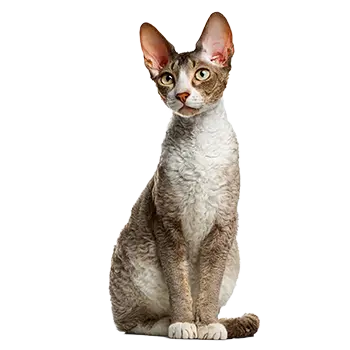

Play Style & Drive

The Cornish Rex is often described as the most dog-like of cat breeds when it comes to play, and this reputation is well earned. These cats retain a kitten-like enthusiasm for play well into adulthood and even old age, displaying an energy level and persistence that can catch first-time owners off guard. Understanding the breed's play style is the first step toward selecting toys that will actually hold their attention.

This breed is a natural fetcher. Many Cornish Rex cats will spontaneously retrieve small thrown objects and bring them back for another toss, a behavior that can be encouraged and refined with practice. They are also exceptional jumpers and climbers, capable of impressive vertical leaps from a standstill. Toys that encourage aerial pursuit — items tossed in the air, dangled from above, or bounced off walls — tap directly into the breed's athletic strengths.

The Cornish Rex is also notably intelligent, with a problem-solving aptitude that demands mental stimulation alongside physical exercise. A toy that presents no challenge will be abandoned quickly, while one that requires the cat to figure out a mechanism, manipulate a component, or strategize an approach will hold interest for much longer. This breed thrives on novelty and can grow bored with the same toys if they are left out continuously.

Play sessions for the Cornish Rex should be active and engaging, ideally involving direct interaction with the owner. While this breed can entertain itself to some extent, it strongly prefers cooperative play. Two or three focused play sessions of fifteen to twenty minutes daily, supplemented by self-directed enrichment toys, will meet most Cornish Rex cats' needs and help prevent the destructive boredom behaviors that can develop in understimulated cats.

Interactive & Puzzle Toys

Interactive toys are the cornerstone of Cornish Rex enrichment. Wand toys with feathered, furry, or ribbon attachments are universally popular with this breed, as they simulate the erratic movement of prey and allow the cat to engage in the full predatory sequence of stalking, chasing, pouncing, and capturing. Vary the movement pattern — dragging along the floor, flicking through the air, hiding behind furniture — to keep the game challenging.

Puzzle feeders are especially well-suited to the Cornish Rex's intelligence. These devices require the cat to manipulate sliders, lift covers, or paw treats out of compartments, combining mental stimulation with a food reward. Start with simpler puzzles and progress to more complex designs as the cat masters each level. Rotating between different puzzle feeders prevents the cat from memorizing solutions and losing interest.

Track-and-ball toys, where a ball circulates inside an enclosed track, provide self-directed entertainment that many Cornish Rex cats enjoy. Models with multiple levels or curved tracks that cause unpredictable ball movement tend to hold attention longer than simple circular designs. Some versions incorporate illuminated or textured balls that add sensory variety to the experience.

Electronic interactive toys that move autonomously can supplement owner-led play sessions. Robotic mice, automated laser patterns, and motion-activated toys provide stimulation when the owner is busy or away from home. However, these should complement rather than replace interactive play with the owner, as the social bonding aspect of play is as important to the Cornish Rex as the physical activity itself.

Chew Toys & Durability

While cats are not typically heavy chewers in the way dogs are, the Cornish Rex does enjoy gnawing and carrying toys in its mouth. Chew-appropriate toys made from durable rubber, woven fabric, or compressed catnip serve this purpose well. Avoid toys with small parts that could be chewed off and swallowed, as the Cornish Rex's enthusiastic play style can disassemble poorly constructed toys quickly.

Catnip toys are a perennial favorite, and the Cornish Rex tends to respond strongly to catnip. Look for toys with refillable catnip compartments, as the potency of catnip diminishes over time. Silvervine and valerian root are alternative attractants that can elicit similar responses in cats that are less sensitive to traditional catnip, and rotating between these different attractants keeps the novelty factor high.

Durability is a genuine concern with this breed. The Cornish Rex's active play style means that flimsy toys will be destroyed in short order, potentially creating choking hazards or leaving small components scattered around the home. Invest in well-constructed toys with reinforced seams, securely attached components, and non-toxic materials. Inspect toys regularly and retire any that show significant wear or have exposed stuffing.

Kicker toys — elongated plush toys designed for the cat to grab with the front paws and kick with the hind legs — are excellent for the Cornish Rex. This play behavior mimics the prey-subduing motion cats use instinctively, and the Cornish Rex's strong hind legs make it a particularly vigorous kicker. Choose kicker toys with sturdy fabric and dense filling that can withstand repeated bunny-kicking sessions.

Fetch & Active Play Toys

The Cornish Rex's natural inclination to fetch makes it uniquely suited to toys designed for retrieval games. Small, lightweight balls — particularly crinkle balls, foam balls, and soft practice golf balls — are ideal for indoor fetch sessions. The unpredictable bounce patterns of irregularly shaped balls add an extra layer of challenge that this breed enjoys. Keep a supply of these inexpensive toys on hand, as they tend to roll under furniture and disappear regularly.

Spring-loaded toys and bouncing toys that move unpredictably when batted satisfy the breed's love of fast-moving targets. These toys simulate the darting movement of small prey and can keep a Cornish Rex engaged in self-directed play for extended periods. Place them on hard floors where they bounce and skitter most effectively, as carpeted surfaces dampen the action.

Tunnel toys provide excellent active play opportunities for the Cornish Rex. Collapsible fabric tunnels with crinkly linings appeal to the breed's love of speed and enclosed exploration. Multi-section tunnels with branching paths and peek-a-boo holes add complexity. For multi-cat households, tunnels become social play infrastructure where cats can chase each other through the passages.

Consider rotating active play toys on a weekly basis rather than leaving the entire collection available at all times. The Cornish Rex responds strongly to novelty, and a toy that was ignored for weeks can become the favorite again after a period of absence. Store toys in a sealed container with catnip to refresh their appeal, and reintroduce them in small batches to maintain excitement.

Comfort & Companion Toys

Despite its high energy, the Cornish Rex is also an intensely affectionate breed that seeks comfort and companionship during rest periods. Soft plush toys that the cat can curl up with, groom, or knead provide emotional comfort, particularly for cats that spend time home alone. Some Cornish Rex cats develop attachments to specific comfort toys and will carry them from room to room or sleep with them consistently.

Heated plush toys are especially appropriate for the Cornish Rex given the breed's constant search for warmth. Microwaveable heat packs designed for pet use can be placed inside or beneath a plush toy to create a warm companion that the cat will gravitate toward during naps. These are particularly useful during cooler months or in air-conditioned homes where the cat might otherwise seek warmth in inconvenient locations.

For Cornish Rex cats that experience separation anxiety — which is more common in this breed than in less people-oriented cats — toys with heartbeat simulators or calming pheromone-infused materials can provide soothing comfort during the owner's absence. These products are most effective when introduced gradually during positive experiences rather than only appearing when the owner leaves.

The social nature of the Cornish Rex means that the best companion for this breed is often another cat. If adding a second pet is not feasible, maintaining a diverse collection of comfort toys and ensuring that the cat has access to the owner's scent through worn clothing or a designated blanket can help bridge the gap. Window perches with bird feeder views also provide companionship-adjacent stimulation for cats that enjoy observing wildlife.

DIY & Budget Options

Some of the most effective Cornish Rex toys cost little or nothing to produce. Crumpled paper balls are a classic favorite — the crinkling sound and lightweight structure make them perfect for batting, chasing, and carrying. Use plain paper without ink-heavy printing, and replace the balls when they become soggy or torn. Aluminum foil balls offer similar appeal with a different texture and sound, though supervise play to ensure the cat does not chew and ingest foil pieces.

Cardboard boxes remain one of the most universally beloved cat toys, and the Cornish Rex is no exception. Cut entrance and exit holes in various positions to create exploratory structures, and connect multiple boxes with short tunnels made from paper bags with the handles removed. These disposable play structures can be refreshed weekly at no cost, and the novelty of a new configuration keeps the experience interesting.

DIY puzzle feeders can be constructed from common household items. A muffin tin with treats placed in the cups and covered with tennis balls or crumpled paper creates an engaging foraging challenge. Cardboard tubes from paper towel rolls, with the ends partially folded closed and a few treats placed inside, provide a simple but effective puzzle. Egg cartons with treats hidden in the compartments offer another variation that most cats figure out quickly, making them a good starter puzzle.

Homemade wand toys can be assembled from a wooden dowel, a length of string, and a feather, fabric strip, or crinkled paper attachment. Ensure that string toys are used only during supervised play sessions and stored out of reach afterward, as ingested string can cause serious intestinal complications in cats. Similarly, any DIY toy should be inspected for small detachable parts, sharp edges, or toxic materials before offering it to the cat.

Always consult a qualified professional before making any health-related decisions. This content is provided for informational reference only and should not replace professional guidance specific to your animal.