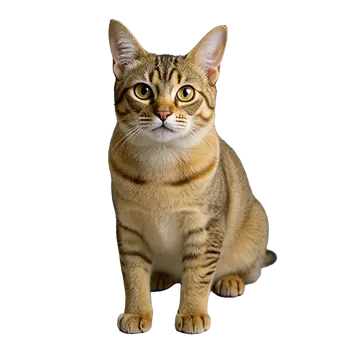

Activity & Health Monitors

Wearable activity monitors designed for cats have matured considerably in recent years, offering owners a window into their Asian Semi-longhair's daily movement patterns, sleep cycles, and overall wellness trends. These devices typically attach to the collar and use accelerometers to track metrics like steps, active minutes, calories burned, and rest quality. Over time, the data establishes a baseline that makes it easier to spot deviations — a sudden drop in activity or change in sleep patterns can be an early indicator of illness or pain that might otherwise go unnoticed.

The most useful health monitors go beyond simple step counting to include behavioral analysis. Advanced models track scratching frequency, grooming duration, and eating patterns, compiling the data into trend reports accessible through a companion smartphone app. For the Asian Semi-longhair, changes in grooming behavior can be particularly informative, as this breed maintains a relatively consistent grooming routine when healthy. An increase in grooming may suggest skin irritation or stress, while a decrease can signal pain or illness.

Battery life and device weight are important practical considerations when choosing a monitor for your cat. A device that needs charging every two days creates a compliance problem — the more frequently you need to remove and recharge it, the more likely you are to stop using it altogether. Look for monitors with battery life of at least two weeks, and ensure the device is lightweight enough that your cat is unaware of its presence on the collar.

Data privacy is worth considering as well. Most pet health monitors transmit data to cloud servers for processing and storage, and the privacy policies governing that data vary by manufacturer. Review how your cat's health data is stored, whether it is shared with third parties, and whether you can export or delete it. While this may seem like a minor concern, the data can be quite detailed, and understanding who has access to it is a reasonable precaution.

GPS & Location Tracking

GPS trackers for cats provide real-time location data, giving owners peace of mind whether their Asian Semi-longhair has supervised outdoor access or they simply want a safety net in case of an accidental escape. These devices attach to the collar and communicate location via GPS satellites, cellular networks, or a combination of both. Most trackers offer geofencing features that send an alert to your phone if your cat leaves a predefined safe zone, allowing you to respond immediately rather than discovering the escape hours later.

Accuracy and update frequency vary significantly between devices. Cellular-based GPS trackers tend to provide the most precise outdoor location data, typically within a few meters, and can update every few seconds during active tracking. Bluetooth-based trackers are less expensive and do not require a subscription, but their range is limited to roughly 30 to 100 feet and they rely on a network of nearby devices to relay location data over longer distances.

Size and weight are particularly important for cat GPS trackers because cats are more sensitive to collar weight than dogs. A tracker that weighs more than about 30 grams can be cumbersome for a medium-sized cat like the Asian Semi-longhair, affecting movement and comfort. The smallest modern GPS trackers weigh under 25 grams and are roughly the size of a small coin, making them unobtrusive enough for daily wear without impacting your cat's natural behavior.

Subscription costs are an ongoing consideration with cellular GPS trackers, as they require a data plan to transmit location information. Monthly fees typically range from a few dollars to around fifteen dollars depending on the service level and update frequency. Factor this recurring cost into your decision, and compare it against the one-time cost of Bluetooth alternatives to determine which approach makes sense for your situation and your cat's lifestyle.

Smart Feeders & Water Devices

Smart feeders automate portion-controlled meal delivery on a programmable schedule, which is particularly useful for Asian Semi-longhair owners who work long hours or want to maintain consistent feeding times. These devices can be programmed to dispense specific amounts of dry food at set intervals throughout the day, preventing overfeeding and reducing the begging behavior that often develops when cats learn to associate their owner's presence with food availability.

More advanced smart feeders include features like microchip or RFID recognition, which allows the feeder to open only for a specific cat. This technology is invaluable in multi-cat households where one cat requires a prescription diet or where portion control is needed for an overweight cat while a healthy-weight companion eats freely. The feeder reads the cat's microchip or a tag on its collar and opens the lid only for the authorized cat, closing again when that cat walks away.

Smart water fountains add connectivity to the already beneficial concept of circulating water. Wi-Fi-enabled fountains can track daily water consumption, send filter replacement reminders to your phone, and alert you if water levels drop below a safe threshold. For the Asian Semi-longhair, consistent access to fresh, filtered water supports kidney and urinary tract health, and the consumption tracking feature helps you identify whether your cat is drinking enough — a metric that is otherwise very difficult to monitor.

Reliability should be your primary concern when selecting any automated feeding or watering device. A smart feeder that jams, loses its Wi-Fi connection, or runs through batteries quickly is worse than no feeder at all, because your cat may miss meals while you assume the device is functioning. Look for models with manual backup options — a physical button or mechanical override that dispenses food even if the electronics fail — and read user reviews focused specifically on long-term reliability rather than initial setup impressions.

Cameras & Home Monitoring

Pet cameras allow you to observe your Asian Semi-longhair remotely, providing peace of mind during work hours and insight into your cat's behavior when no one is home. Basic models offer live video streaming through a smartphone app, while more feature-rich cameras include two-way audio, night vision, motion detection alerts, and even built-in treat dispensers. Watching how your cat spends its time alone can reveal behavioral patterns — excessive sleeping, pacing, vocalization, or destructive behavior — that may indicate boredom, anxiety, or health issues.

Camera placement affects what you can observe and how useful the footage will be. Positioning a camera in the room where your cat spends the most time — usually a living area with access to windows and resting spots — gives you the most representative view of daily behavior. A second camera near the litter box area can help monitor elimination habits, which are one of the earliest indicators of urinary issues, digestive problems, or stress in cats.

Two-way audio features let you speak to your cat remotely, which some Asian Semi-longhairs respond to positively. This breed tends to be vocally responsive and may approach the camera when they hear their owner's voice, providing a brief moment of connection during a long day apart. However, some cats find disembodied voices confusing or unsettling, so observe your cat's reaction before relying on this feature as a comfort tool.

Motion-activated recording and cloud storage allow you to review your cat's activity in time-lapse format without watching hours of live footage. Many pet cameras now include basic AI that can distinguish between a cat moving through the frame and other motion sources like changing light or blowing curtains, reducing false alerts. Some models even claim to recognize specific behaviors like eating, playing, or sleeping, though the accuracy of these classifications varies.

Training Technology

Technology-assisted training tools can complement traditional methods for shaping behavior in your Asian Semi-longhair. Automated clicker training devices pair a consistent click sound with treat dispensation, allowing your cat to make the association between a desired behavior and a reward even when you are not physically present to deliver the reinforcement. This approach is particularly effective for teaching basic behaviors like coming when called or using a specific scratching post.

Motion-activated deterrent devices are useful for keeping cats away from specific areas or surfaces without requiring your direct involvement. These devices detect movement and respond with a harmless burst of compressed air, an ultrasonic tone, or a brief spray of water. Placing one on a kitchen counter, dining table, or other off-limits surface provides consistent feedback every time the cat jumps up, regardless of whether you are home. The Asian Semi-longhair is intelligent enough to learn the boundary quickly, often after just a few encounters with the deterrent.

Automated laser toys and app-controlled play devices can reinforce exercise routines, but they should be used thoughtfully as training tools rather than substitutes for human interaction. Programming an automated toy to activate at specific times can help establish a daily activity routine, which is particularly useful for indoor cats that might otherwise become sedentary. Pairing the automated play session with a meal creates a hunt-eat-groom-sleep cycle that mirrors natural feline behavior patterns.

Litter box training technology has advanced as well, with self-cleaning boxes that automatically rake, rotate, or flush waste after each use. While these devices are more convenience products than training tools per se, they maintain a consistently clean box that encourages reliable litter box use. Some cats are initially startled by the mechanical noise or movement, so choosing a model with a delayed activation cycle that waits several minutes after the cat exits gives the cat time to move away before the cleaning mechanism engages.

Veterinary Telehealth

Veterinary telehealth platforms have expanded access to professional guidance for cat owners, allowing you to consult with a licensed veterinarian through video calls, text chat, or photo-sharing apps from your home. For the Asian Semi-longhair, telehealth is particularly useful for non-emergency situations where a vet's opinion would be helpful but a physical visit may not be immediately necessary — questions about dietary changes, minor behavioral shifts, skin or coat concerns, or medication side effects can often be addressed remotely.

The primary advantage of telehealth is accessibility. Late-night concerns, questions that arise on weekends or holidays, and situations where transportation to a clinic is difficult can all be addressed more quickly through a telehealth consultation than by waiting for the next available in-person appointment. Many telehealth services operate around the clock, providing reassurance and professional guidance when your regular veterinarian's office is closed.

Telehealth does have meaningful limitations. A veterinarian cannot perform a physical examination, draw blood, take X-rays, or run diagnostic tests remotely. This means telehealth is best suited for triage — helping you determine whether a symptom requires an urgent clinic visit, a scheduled appointment, or simple home monitoring — rather than for definitive diagnosis and treatment. A good telehealth veterinarian will be transparent about these limitations and will recommend an in-person visit whenever the situation warrants one.

When choosing a telehealth service, verify that the veterinarians on the platform are licensed in your jurisdiction, as licensing requirements vary by region. Some services offer per-consultation pricing while others operate on a monthly or annual subscription model. If your cat has chronic health conditions or you anticipate using the service frequently, a subscription may be more cost-effective. Keep records of your telehealth consultations and share them with your primary veterinarian to ensure continuity of care across both in-person and remote interactions.

Always consult a qualified professional before making any health-related decisions. This content is provided for informational reference only and should not replace professional guidance specific to your animal.