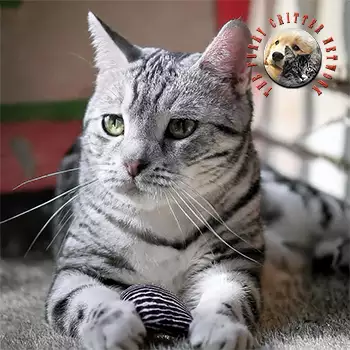

Play Style & Drive

The American Wirehair has a moderate play drive that blends curiosity with a relaxed temperament. These cats enjoy interactive play sessions but are generally not as hyperactive or demanding as some high-energy breeds. They tend to engage in focused bursts of activity — stalking, pouncing, and batting — followed by contented rest periods. Understanding this rhythm is key to selecting toys that hold their interest without overwhelming them.

This breed retains strong natural hunting instincts, and play that mimics the predatory sequence — detect, stalk, chase, pounce, capture — tends to be the most satisfying. Toys that move unpredictably, mimic the motion of small prey, or offer a satisfying "catch" at the end of a session tap into these instincts and provide both physical exercise and mental stimulation.

The American Wirehair's calm nature means it may not initiate play as aggressively as other breeds, but this should not be mistaken for disinterest. Many Wirehairs are quietly playful and will engage enthusiastically when the right toy is presented. Regular play sessions — even just ten to fifteen minutes twice a day — help prevent boredom, manage weight, and strengthen the bond between cat and owner.

Age and individual personality should guide toy selection. Kittens and younger adults tend to favor fast-moving, unpredictable toys, while older Wirehairs may prefer slower-paced interactive play or independent puzzle toys that reward patience rather than speed.

Interactive & Puzzle Toys

Interactive toys that require the cat to solve a problem or manipulate an object to access a reward are excellent enrichment tools for the American Wirehair. Puzzle feeders — which require the cat to push, slide, or paw at compartments to release kibble or treats — engage the brain and slow down eating at the same time. These are particularly valuable for indoor cats that lack the mental stimulation of outdoor exploration.

Treat-dispensing balls and wobble toys offer a simpler but effective form of interactive play. The cat bats the toy around, and treats fall out at random intervals, reinforcing continued engagement. For the American Wirehair, which is food-motivated but not obsessively so, these toys provide a satisfying activity without causing frustration.

Multi-level puzzle boards with sliding covers, rotating discs, and hidden compartments represent the higher end of feline puzzle design. These boards can be adjusted in difficulty as the cat masters each level, extending the useful life of the product. Starting at the easiest setting and gradually increasing complexity keeps the challenge balanced and rewarding.

Wand toys with feathers, fabric strips, or small plush attachments remain one of the most effective interactive options because they involve the owner directly. The unpredictable movement of a wand toy closely mimics live prey behavior and gives the cat a satisfying chase-and-capture experience. For the American Wirehair, sessions of five to ten minutes with a wand toy provide excellent cardiovascular exercise and mental engagement.

Scratching & Claw Maintenance Toys

Scratching is a fundamental feline behavior that serves multiple purposes: claw maintenance, territorial marking, stretching, and stress relief. Providing appropriate scratching surfaces is both an enrichment strategy and a furniture protection measure. The American Wirehair, like most cats, will scratch daily, and having designated scratching stations throughout the home channels this behavior productively.

Scratching posts come in several material types, and most cats develop a preference. Sisal rope is among the most popular and durable options, offering a satisfying texture that withstands heavy use. Corrugated cardboard scratchers are inexpensive and widely enjoyed but require more frequent replacement. Some cats prefer carpet-covered surfaces, though these can inadvertently train the cat to scratch carpeted floors and furniture.

Both vertical and horizontal scratching options should be available. Some cats prefer to reach up and scratch vertically, stretching their spine and shoulders, while others favor a horizontal or angled surface where they can dig in with their front claws while crouching. Providing both orientations ensures the cat's scratching needs are fully met regardless of preference.

Placement matters significantly. Scratching posts positioned near sleeping areas see heavy use because cats often stretch and scratch immediately after waking. Posts placed near furniture the cat has previously targeted also help redirect the behavior. A scratching surface that is too short, too wobbly, or tucked away in a corner will likely be ignored in favor of a sofa arm or door frame.

Chase & Motion Toys

Toys that move independently or respond to the cat's touch are highly engaging for the American Wirehair's moderate prey drive. Battery-operated mice, rolling balls with internal motors, and laser-style electronic toys that project moving patterns on the floor all trigger the chase instinct. These toys are especially useful for solo play when the owner is away or occupied.

Track toys — circular or figure-eight channels containing a ball that the cat bats around the track — are a low-maintenance option that many cats find endlessly entertaining. The ball's motion within the confined track provides just enough unpredictability to sustain interest without the ball rolling under furniture and out of reach. Multi-level track designs add complexity and visual interest.

Spring-mounted toys that wobble and bounce back when swatted provide a satisfying physical feedback loop. The cat strikes the toy, it moves unpredictably, and the cat can immediately re-engage. These durable, simple toys require no batteries and minimal maintenance, making them a reliable addition to any toy rotation.

Automated toys should supplement, not replace, interactive play with the owner. No motorized mouse can replicate the social bonding and responsive feedback of a wand toy session or a game of fetch with a crinkle ball. Use electronic toys to fill gaps in the day, but prioritize hands-on play for at least a portion of the cat's daily enrichment.

Comfort & Companion Toys

While often associated with kittens, comfort toys can benefit American Wirehairs of all ages. Small, soft plush toys serve as objects the cat can carry, groom, knead, and sleep alongside. These behaviors tap into nurturing and self-soothing instincts that persist well into adulthood. Cats that live alone or spend long hours without human company often form attachments to a favorite plush toy.

Catnip-stuffed toys provide an additional layer of engagement for the majority of cats that are sensitive to nepetalactone, the active compound in catnip. A catnip toy typically triggers a sequence of sniffing, rubbing, rolling, and energetic play lasting five to fifteen minutes, followed by a period of relaxed contentment. Not all cats respond to catnip — sensitivity is genetic and affects roughly 50 to 70 percent of the cat population.

Silvervine and valerian root are alternative stimulants that may appeal to cats unresponsive to catnip. Silvervine in particular has been shown to elicit a response in many cats that ignore catnip entirely. Toys infused with these substances expand the enrichment options available and can reinvigorate interest in a familiar toy collection.

Rotating comfort toys in and out of availability helps maintain novelty. Store half of the cat's toys out of sight for a week or two, then swap them back in while retiring the current set. This simple rotation strategy makes each reintroduction feel like a new discovery and prevents the cat from losing interest in its entire toy collection at once.

DIY & Budget Options

Some of the most engaging cat toys cost nothing at all. A crumpled ball of paper, a cardboard box, or a paper grocery bag with the handles removed can provide surprising entertainment for an American Wirehair. Cats are attracted to novel textures, enclosed spaces, and objects that make interesting sounds when batted around — all of which can be sourced from common household items.

Cardboard boxes deserve special mention as perhaps the most universally beloved cat enrichment item. Cut entry holes in the sides of a large box, add a smaller box inside for a second level, and scatter a few treats within to create an instant exploration station. Boxes satisfy the cat's desire for enclosed hiding spaces while providing a surface for scratching and climbing.

DIY puzzle feeders can be assembled from muffin tins, egg cartons, and toilet paper tubes. Place treats inside the compartments and cover them with tennis balls or crumpled paper, requiring the cat to problem-solve for its reward. These homemade puzzles are endlessly customizable and can be adjusted in difficulty as the cat learns to master each configuration.

While DIY toys are a great supplement, safety should always come first. Remove any staples, tape, string, rubber bands, or small parts that could be swallowed or cause injury. String and ribbon are common choking and intestinal blockage hazards and should only be used during supervised play, never left out for independent access. Regularly inspect all toys — homemade and store-bought — for wear and replace them before they become a safety risk.

Always consult a qualified professional before making any health-related decisions. This content is provided for informational reference only and should not replace professional guidance specific to your animal.