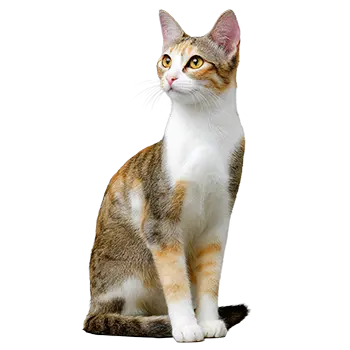

Play Style & Enrichment Needs

The Aegean cat brings a distinctly predatory play style rooted in its history as a working mouser and opportunistic hunter along the Cycladic coastline. This is a breed that naturally stalks, pounces, and manipulates objects with its paws, and its play sessions often follow a recognizable hunt sequence: visual fixation, slow approach, explosive pounce, and a concluding grab-and-bite. Understanding this sequence is key to selecting toys that genuinely satisfy the Aegean rather than merely amuse it for a few minutes.

Mental stimulation is as important as physical exercise for this breed. The Aegean is an observant, problem-solving cat that becomes bored quickly with toys that offer no challenge or variation. A toy that moves in the same pattern every time or that the cat can immediately "catch" without effort will lose its appeal within days. The most effective enrichment products introduce unpredictability — erratic movement, hidden rewards, or multi-step puzzles that require the cat to figure out a strategy.

The social nature of the Aegean also shapes its play preferences. Unlike more independent breeds that are content to entertain themselves, the Aegean often prefers interactive play sessions with its human companions. Toys that facilitate shared play — wand toys, laser pointers used alongside a physical catch target, or fetch-style toys — tend to generate more engagement than purely solo amusement devices. This does not mean the Aegean cannot play alone, but interactive sessions should form the core of the daily enrichment routine.

A minimum of two dedicated play sessions per day, each lasting 15–20 minutes, is a reasonable baseline for an adult Aegean. Kittens and young adults may need significantly more. Play sessions are most effective when scheduled before meals, mimicking the natural hunt-catch-eat-groom-sleep cycle that governs feline behavior in the wild. This sequencing satisfies the cat's predatory instincts and promotes a calm, contented state after eating.

Interactive Wand & Feather Toys

Wand toys are the single most effective play tool for the Aegean. A well-made wand toy consists of a flexible rod, a durable string or cord, and an attachment that mimics prey — feathers, fabric strips, or fur-like materials that flutter and dart unpredictably when the owner moves the wand. The magic of wand play lies in the human's control over the toy's behavior, which allows for the kind of erratic, lifelike movement that triggers the Aegean's full predatory sequence.

Effective wand play requires technique, not just equipment. The toy should move away from the cat, not toward it — prey flees, it does not approach. Alternate between slow, creeping movements that build suspense and quick darts that trigger a pounce. Allow the cat to catch the toy periodically; a hunt that never succeeds is frustrating rather than enriching. After a catch, let the toy "struggle" briefly before going still, then restart the sequence. This mirrors the rhythm of a real hunt and keeps the Aegean deeply engaged.

Feather attachments are perennial favorites, but they are also consumable. Many Aegeans will shred a feather attachment within a few sessions, and loose feather components can present a choking hazard or cause intestinal blockage if swallowed. Inspect attachments before every play session and discard any that are coming apart. Keeping several replacement attachments on hand avoids disruption to the play routine. Some manufacturers offer subscription packs with rotating attachment styles, which also introduces novelty.

Wand toys should always be stored out of the cat's reach between sessions. Unsupervised play with wand toys creates a risk of string or cord entanglement, which can cause serious injury. Additionally, leaving the toy out continuously diminishes its novelty value. The wand should appear as a special event — brought out, used with full engagement, and then put away. This approach maintains the toy's excitement value for months or even years, which is difficult to achieve with toys that are always available.

Puzzle Feeders & Foraging Toys

Puzzle feeders are exceptionally well-suited to the Aegean's intelligence and food motivation. These devices require the cat to manipulate an object — sliding panels, rotating compartments, lifting cups, or pushing balls through a maze — to access a food reward. For a breed that evolved as a resourceful forager, puzzle feeders recreate a meaningful cognitive challenge that eating from a standard bowl does not provide.

Introduction should be gradual. Start with the simplest difficulty setting — many puzzle feeders have adjustable levels — and allow the cat to succeed quickly and build confidence. An Aegean that struggles repeatedly with an overly difficult puzzle may abandon it entirely. Once the cat masters the basic configuration, increase the complexity incrementally. A well-designed puzzle feeder can be adjusted upward in difficulty multiple times, extending its useful life and maintaining the cat's interest.

Stationary puzzle boards and rotating-disc feeders work well for meal replacement, where a portion or all of the cat's daily kibble is dispensed through the puzzle rather than a bowl. Rolling treat-dispensing balls serve a different purpose — they encourage physical activity alongside mental engagement, as the cat must bat and chase the ball to release food. For an Aegean, combining both types provides variety: a stationary puzzle for focused problem-solving at mealtime and a rolling dispenser for more active foraging throughout the day.

DIY foraging enrichment can supplement commercial products at minimal cost. Hiding small portions of kibble in egg cartons, muffin tins with tennis balls on top, or crumpled paper inside a box creates novel foraging opportunities that challenge the cat's senses. The Aegean's curiosity ensures it will investigate new arrangements, and rotating homemade setups every few days prevents habituation. The key is ensuring all materials are non-toxic and too large to be swallowed.

Solo & Automated Toys

While the Aegean prefers interactive play with humans, having a selection of quality solo toys ensures the cat has enrichment options during the hours when its family is away or occupied. The best solo toys for this breed are those that incorporate movement, sound, or unpredictability — static plush mice left on the floor will be ignored once the novelty wears off.

Motion-activated toys that respond to the cat's touch or proximity are among the most effective solo options. Products that mimic the movement of insects, mice, or fish beneath a fabric cover can hold an Aegean's attention for extended periods because the movement is never identical twice. Battery-operated toys with irregular movement patterns are preferable to those with repetitive, predictable cycles. Even clever cats will quickly solve a predictable pattern and lose interest.

Electronic laser toys that project a moving dot across the floor and walls in randomized patterns can be useful for keeping an Aegean active during solo time. However, laser play should always be paired with a physical toy or treat that the cat can catch to provide a satisfying conclusion. Playing with a laser alone — where the cat can never actually capture the target — can create frustration and obsessive behavior over time. Some automated laser toys include a treat-dispensing component specifically to address this limitation.

Simple toys should not be underestimated despite their lack of technology. Crinkle balls, spring coils, and small balls that roll unpredictably on hard floors can provide surprisingly durable entertainment for a playful Aegean. The key is rotation: rather than leaving all toys available simultaneously, keep most in storage and rotate a few different ones into the environment every three to four days. This approach leverages the novelty effect — a toy that has been absent for a week feels new again when it reappears.

Water-Based Enrichment

The Aegean is one of the few cat breeds with a documented affinity for water, a trait likely developed through generations of living alongside fishermen and coastal harbors. While not every individual Aegean will enjoy water play, many show a fascination with running water, dripping faucets, and shallow pools that sets them apart from the typical feline aversion to getting wet. This creates a unique enrichment opportunity that is worth exploring with your cat.

A shallow, sturdy container filled with one to two inches of water and a few floating objects — ping-pong balls, rubber ducks, or small floating toys — can provide extended entertainment for a water-curious Aegean. Place the container on a waterproof mat or in a bathtub to manage splashing. Some Aegeans will fish objects out of the water with their paws, swat at the surface, or simply watch the movement of floating items with intense concentration. Introducing ice cubes to the water adds an additional sensory dimension as they melt and drift.

Running water fountains designed for cats serve double duty as both enrichment devices and hydration tools. Many Aegeans are more attracted to moving water than still water in a bowl, and a fountain that produces a visible stream or waterfall effect can encourage increased water intake while also providing a source of visual and auditory stimulation. Multi-stream fountains that create different water flow patterns tend to hold interest longer than single-stream models.

Safety considerations for water play are straightforward but important. Never leave a cat unsupervised around containers of water deep enough to submerge its head. Stagnant water in play containers should be changed daily to prevent bacterial growth. Cats that play in water will need their paws dried afterward in cooler weather to prevent chilling. Waterproof or water-resistant mats placed beneath water play stations protect flooring from damage and reduce cleanup time. If your Aegean shows no interest in water play after a few introductions, accept the preference and focus enrichment resources on land-based activities — not every individual in the breed carries the water-loving trait.

Catnip & Sensory Toys

Catnip and other plant-based attractants can add a compelling sensory layer to the Aegean's toy collection. Catnip, the dried leaves and stems of Nepeta cataria, triggers a euphoric response in approximately 60–70% of cats due to a hereditary sensitivity to nepetalactone, the plant's active compound. The response typically includes rolling, rubbing, head shaking, and short bursts of hyperactive play lasting five to fifteen minutes, followed by a temporary refractory period during which the cat is immune to the effect.

Silver vine (Actinidia polygama) is gaining recognition as a potent alternative to catnip, and some studies suggest it may trigger a response in cats that are unaffected by catnip. Silver vine sticks can be offered as both a chewing toy and a sensory experience, combining dental benefits with behavioral enrichment. Tatarian honeysuckle wood and valerian root are additional plant-based attractants that affect some cats, though their appeal is less consistent across the general population.

Catnip-infused toys come in a wide range of forms, from simple fabric pouches to elaborate kick toys shaped like prey animals. For an Aegean, larger kick toys that the cat can grab with its front paws and rake with its hind legs provide an outlet for the bunny-kick behavior that is a natural part of the feline attack sequence. The catnip should be contained in a durable inner pouch to prevent the cat from ingesting large quantities, which can cause mild gastrointestinal upset.

Texture-focused sensory toys round out the enrichment palette. Toys that incorporate multiple textures — smooth, rough, crinkly, soft — in a single item appeal to the tactile curiosity that the Aegean brings to its exploration of objects. Fabric toys with sewn-in crinkle material are popular because the sound generated during play mimics the rustling of small prey in undergrowth. Rubber or silicone toys with varied surface textures can also satisfy the cat's instinct to manipulate objects with its paws and mouth.

Toy Safety & Maintenance

Toy safety begins with material inspection. Before offering any toy to an Aegean, examine it for small parts that could be bitten off and swallowed — button eyes, plastic noses, ribbon tails, glued-on decorations, and bell clappers are all potential choking hazards or foreign body risks. Toys marketed for cats should meet safety standards, but manufacturing quality varies widely, and even well-made toys degrade with use. Regular inspection and timely disposal of damaged toys is the most reliable safety practice.

String, yarn, ribbon, and elastic cords are among the most dangerous materials for cats. If swallowed, linear foreign bodies can bunch up in the intestines, causing a life-threatening condition that almost always requires surgical intervention. Wand toy strings, shoelace-style toys, and decorative ribbons should be used only under direct supervision and stored securely when not in active use. The Aegean's intelligence and dexterity make it especially capable of accessing toys stored in unsecured drawers or cabinets.

Cleaning toys regularly extends their life and prevents bacterial accumulation. Fabric toys can typically be machine washed in a mesh laundry bag on a gentle cycle and air dried. Rubber and silicone toys can be scrubbed with warm water and a mild dish soap, then rinsed thoroughly. Electronic and battery-operated toys should be wiped down with a damp cloth; batteries should be checked periodically and replaced before they leak. Puzzle feeders that contact food should be washed after every use to prevent mold and bacteria growth in crevices.

Establishing a toy budget and replacement schedule prevents both overspending and under-enrichment. A practical approach is to maintain a core collection of approximately 8–12 toys across different categories — wand attachments, puzzle feeders, solo toys, and sensory items — with rotating availability. Replace consumable items like feather attachments and cardboard scratchers as needed, and retire any toy that shows significant wear or damage. Investing in a few well-made, durable toys typically provides more value than accumulating a large number of cheap, disposable options.

Always consult a qualified professional before making any health-related decisions. This content is provided for informational reference only and should not replace professional guidance specific to your animal.