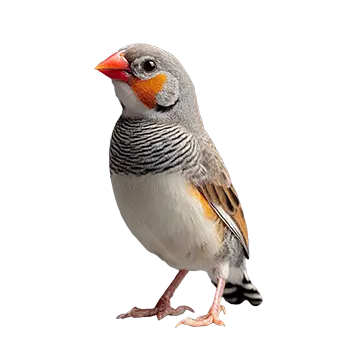

Understanding Finch Enrichment

Enrichment for Zebra Finches operates on fundamentally different principles than enrichment for parrots and other hookbill species. Finches rarely manipulate objects with their feet, do not chew wood or leather recreationally, and show minimal interest in puzzle mechanisms that require physical manipulation to solve. Their enrichment needs are rooted instead in flight, social interaction, foraging behavior, auditory stimulation, and visual novelty. An effective enrichment strategy for Zebra Finches engages these natural behavioral channels rather than attempting to replicate the object-play that dominates parrot enrichment catalogs.

The social structure of Zebra Finches itself constitutes one of the most powerful forms of enrichment available. These are colonial birds that communicate constantly through contact calls, courtship songs, and subtle body language. A solitary Zebra Finch is a deprived Zebra Finch, regardless of how many toys occupy its cage. The single most important enrichment decision an owner can make is to keep at least two birds together, and ideally a small group, so that the full range of social behaviors can be expressed. No manufactured toy replicates the stimulation that comes from interacting with conspecifics.

Beyond social companionship, environmental variety drives much of what keeps captive finches behaviorally healthy. In the wild, Zebra Finches encounter a constantly changing landscape of vegetation, seed availability, weather patterns, and flock composition. Captive environments are static by comparison, which can produce boredom-related behaviors such as excessive sleeping, repetitive pacing, or feather condition decline. Introducing changes to the cage environment on a regular basis, whether through toy rotation, perch rearrangement, or novel food presentation methods, provides the low-level environmental unpredictability that keeps finches alert and engaged.

It is worth noting that Zebra Finches can also be over-stimulated or stressed by excessive environmental change. Introducing too many novel items at once, rearranging the entire cage layout in a single session, or placing large, brightly colored objects in a small cage can produce fear responses rather than curiosity. The goal is gradual, moderate novelty introduced at a pace that encourages exploration rather than alarm. Observing each bird's reaction to new items and removing anything that provokes sustained avoidance or stress is an essential part of responsible enrichment management.

Swings and Motion Toys

Swings are among the most universally enjoyed enrichment items for Zebra Finches and represent an excellent starting point for owners new to finch toy selection. A quality finch swing consists of a thin wooden or bamboo dowel suspended by chains or ropes from a hook or bracket, sized to accommodate a bird that weighs roughly twelve grams and has a foot span of less than half an inch. The swing should move freely in response to the bird's weight and shifting balance, providing a dynamic perching experience that engages the bird's vestibular system and core muscles in ways that a stationary perch does not.

Sizing is critically important when selecting swings for Zebra Finches. Many commercially available bird swings are designed for cockatiels or small parrots and feature perch diameters and overall dimensions that are far too large for finches. A finch-appropriate swing has a perching bar diameter of approximately three-eighths of an inch and an overall frame that fits comfortably within the cage without dominating the flight space. Oversized swings are not merely awkward for finches to use but also consume valuable cage real estate that would be better allocated to open flight paths.

Motion-based enrichment extends beyond traditional swings. Spiral perches made from flexible rope or wire with wrapped fiber offer an undulating perching surface that shifts slightly under the bird's weight, providing a gentle balance challenge. Boing-style coiled rope perches, when available in finch-appropriate diameters, create a bouncing effect as the bird moves along their length. These motion elements are particularly valuable in cages housing single pairs, where the physical interaction dynamics of a larger flock are absent and additional sources of physical stimulation help compensate.

Placement of swings and motion toys should preserve the central flight corridor of the cage. Mounting a swing near one end of the cage and slightly above the midpoint height gives the bird an appealing high perch without blocking the flight path between the cage's two ends. Avoid positioning swings directly above food or water dishes, as the swinging motion disperses seed husks and the birds may soil the food below. Most Zebra Finches will begin using a new swing within a day or two of installation, though some initially cautious individuals may take up to a week to investigate and claim the new addition.

Foraging and Food-Based Enrichment

Foraging enrichment transforms the passive act of eating from a dish into an active, problem-solving behavior that occupies time and engages the bird's natural food-seeking instincts. In the wild, Zebra Finches spend a significant portion of their day searching for, identifying, and extracting seeds from grass heads and ground litter. Captive birds that receive all their food in an open dish complete their daily feeding in a fraction of the time their wild counterparts spend, leaving hours of unoccupied waking time that would otherwise be filled with foraging activity.

The simplest and most effective foraging enrichment for Zebra Finches involves presenting food in formats that require work to access. Spray millet hung from the cage top or clipped to the bars forces the birds to cling and reach while extracting individual seeds from the stalk, engaging balance, grip strength, and fine motor coordination simultaneously. Dried seed heads from bird-safe grasses provide an even more naturalistic foraging experience and can be gathered from pesticide-free fields or purchased from specialty suppliers. Scattering a small portion of the daily seed ration across a shallow tray filled with clean, dry moss or crinkled paper encourages the birds to dig and sort through substrate to find individual seeds.

Commercial foraging devices designed for finches are less common than those marketed for parrots, but several effective options exist. Small acrylic foraging wheels with seed-sized openings allow finches to roll the device and retrieve seeds one at a time as they align with the exit holes. Wiffle-ball-style containers filled with seed and hung from the cage bars create a similar challenge at minimal cost. Stainless steel skewers designed for threading vegetable pieces and leafy greens present fresh foods in a format that requires the bird to pull, tear, and manipulate rather than simply pecking from a dish.

Rotating foraging methods is as important as rotating the devices themselves. A bird that encounters the same foraging challenge every day will eventually treat it as routine, losing the cognitive engagement that made it enriching in the first place. Alternating between scatter feeding, spray millet, foraging devices, and novel food presentations on a weekly cycle maintains the element of novelty. Some keepers designate specific days for specific foraging methods, creating a predictable but varied weekly routine that balances the birds' need for both novelty and a sense of environmental stability.

Mirrors and Visual Stimulation

Mirrors occupy a complicated position in finch enrichment. Zebra Finches generally respond positively to mirrors, approaching their reflection with curiosity, vocalizing toward it, and sometimes displaying courtship behaviors directed at the reflected image. For a lone bird that cannot be kept with a companion, a mirror provides a visual social stimulus that may partially offset the absence of a real flock mate. However, mirrors are a poor substitute for genuine social interaction and should never be used as justification for keeping a single finch when adding a second bird is feasible.

In group-housed finches, mirrors serve a different function. Rather than providing simulated companionship, they add visual complexity and novelty to the cage environment. A small mirror placed at an angle on the cage wall creates the illusion of additional space and additional birds, which can increase overall activity levels and vocalization. Some Zebra Finches, particularly males, will sing toward their reflection with the same intensity they direct at a real audience, providing vocal exercise and behavioral enrichment. Mirrors that are repositioned periodically maintain their novelty value longer than those left in a fixed position indefinitely.

Safety considerations for mirrors are straightforward but important. Mirrors must be securely mounted with no sharp edges, loose hardware, or gaps where a bird's foot or beak could become trapped. Glass mirrors should be avoided in favor of polished stainless steel or acrylic mirror surfaces, which are shatterproof and lighter in weight. The mirror should be small enough that it does not overwhelm the cage interior or create confusing reflections that disorient the birds during flight. A mirror roughly two to three inches in diameter provides adequate visual stimulation without dominating the environment.

Beyond mirrors, other forms of visual stimulation contribute to an enriched environment. A window view that lets the birds observe outdoor activity, passing birds, moving foliage, and changing light conditions provides ever-changing visual input that no static toy can replicate. Playing nature videos or displaying a tablet screen showing slow-moving natural footage near the cage has gained popularity among finch keepers, though the evidence for its enrichment value is anecdotal. Zebra Finches do seem to attend to visual movement on screens, but whether this represents genuine engagement or simple startle response is difficult to assess. Positioning the cage where the birds can observe household activity provides reliable, naturalistic visual stimulation without the need for electronic supplements.

Natural and DIY Enrichment

Some of the most effective enrichment for Zebra Finches costs little or nothing and comes directly from the natural environment. Fresh branches from bird-safe trees, complete with leaves, buds, and bark, serve simultaneously as perches, chewing substrates, foraging opportunities, and visual novelty. Apple, willow, hawthorn, and birch branches are all safe options that Zebra Finches will explore thoroughly, picking at bark, nibbling leaf buds, and investigating any insects or seed husks caught in the branch structure. The branches should be washed and inspected for parasites before introduction but do not need to be sterilized, as the minor microbial diversity they carry is generally beneficial for birds housed in otherwise sterile environments.

Grass tussocks pulled from pesticide-free ground and placed in the cage floor provide a rich foraging substrate. Zebra Finches will spend considerable time working through the grass roots and soil, picking out small seeds, grit particles, and invertebrates exactly as they would in the wild. This type of enrichment is particularly valuable for aviary-housed birds but can be adapted for cage use by placing a small section of turf in a shallow tray that contains any loose soil. Replace the turf every few days before it dries out and loses its appeal.

DIY enrichment projects allow keepers to create custom foraging and exploration items at minimal cost. Threading pieces of millet spray, safe leafy greens, and edible flowers onto a natural fiber string creates a garland that can be draped across the cage, encouraging the birds to fly from point to point while foraging along its length. Loosely crumpled balls of plain, unbleached paper with a few seeds tucked inside provide a disposable foraging toy that finches will investigate, roll, and tear apart. Small bundles of dried grasses tied together and hung from the cage bars give the birds material to pull and tug at, satisfying a mild destructive instinct without requiring expensive replaceable toy components.

Nesting material offered outside of breeding season provides enrichment through a behavior Zebra Finches are strongly motivated to perform. Even unpaired birds or same-sex groups will collect, transport, and arrange nesting fibers if given the opportunity. Offering a small container of coconut fiber, dried grass, or sisal fiber near a perch lets the birds engage in the satisfying sequence of selecting, carrying, and placing material, which provides both physical and psychological enrichment. Keepers who wish to prevent actual breeding can provide the nesting material without a nest box, allowing the behavioral outlet without the reproductive trigger.

Rotation and Maintenance

Toy rotation is the cornerstone of a sustainable enrichment program because even the most engaging item loses its novelty after continuous exposure. Zebra Finches habituate to static environments relatively quickly, and a toy that generated enthusiastic investigation on its first day may be completely ignored within a week. Rotating items in and out of the cage on a weekly or biweekly cycle restores their novelty each time they reappear and keeps the birds' environment perceptually fresh without requiring a constantly expanding inventory of toys.

A practical rotation system involves maintaining a working inventory of eight to twelve enrichment items and keeping only three or four in the cage at any given time. The remaining items are stored and cycled in on a staggered schedule, so that one item is swapped out and a different one introduced every few days. This approach ensures that no single change is dramatic enough to provoke a stress response while providing a steady stream of minor environmental updates that maintain the birds' curiosity. A simple written log of what went in and what came out on which date prevents inadvertent repetition and helps identify which items generate the most consistent engagement.

Cleanliness is essential for any toy or enrichment item that remains in the cage. Swings, mirrors, and other permanent installations should be wiped down weekly and checked for damage. Foraging devices and food-contact toys require more frequent cleaning to prevent bacterial and fungal growth, particularly in warm or humid environments. Natural materials such as branches and grass tussocks have a limited usable life and should be replaced when they become dried out, soiled, or structurally degraded. Any toy showing signs of rust, fraying, sharp edges, or compromised structural integrity should be retired immediately rather than left in place.

Observing bird behavior in response to enrichment items provides the most reliable guidance for refining the rotation strategy. Birds that immediately approach and interact with a new item are demonstrating positive engagement. Birds that avoid a new item for more than two or three days may find it intimidating or simply uninteresting, and it should be replaced with something different. Individual preferences vary between birds, so a toy that one finch ignores may become another's favorite. Paying attention to these individual responses and tailoring the enrichment program accordingly produces better welfare outcomes than a rigid, one-size-fits-all rotation schedule.

Toys and Items to Avoid

Not every product marketed as a bird toy is appropriate or safe for Zebra Finches, and discernment in the toy aisle is an important part of responsible ownership. The most common category of inappropriate toys is those designed for parrots and simply relabeled or downsized for finches without genuine consideration of how finches interact with objects. Toys featuring heavy chains, thick rope, or large bells are designed for birds that grip, chew, and manipulate with powerful beaks and dexterous feet. Finches lack these capabilities, and oversized toys become dead weight in the cage that consumes space without providing functional enrichment.

Jingle bells and small metallic components present a specific hazard. Zebra Finches can catch their tiny toes or claws in the slot of a jingle bell, leading to injury or panic-induced wing damage as the bird struggles to free itself. Any toy with openings or gaps that could trap a finch's foot, beak, or head should be excluded. Testing a potential toy by attempting to insert a pencil tip or similar small object into any gap or crevice helps identify entrapment risks before the toy reaches the cage.

Toys with lead-based components, zinc-coated hardware, or painted surfaces of unknown composition pose toxicity risks. While Zebra Finches do not chew toys as aggressively as parrots, they do contact surfaces with their beaks during exploration, and even low-level chronic exposure to heavy metals can accumulate over months into a toxic burden in a bird with a body mass of barely twelve grams. Purchasing toys from reputable avian product manufacturers and avoiding unbranded imported items from sources that do not disclose materials helps mitigate this risk.

Scented products, including scented wood blocks, aromatic fiber bundles, and perfumed nesting materials, should be avoided entirely. The avian respiratory system is extraordinarily sensitive to airborne chemicals, and fragrances that are pleasant or imperceptible to humans can cause respiratory irritation or toxicity in birds. This sensitivity extends to essential oils, air fresheners, and scented candles used in the same room as the cage. Enrichment items for Zebra Finches should be inert, unscented, and composed of materials whose safety for avian contact has been established through long use in the avicultural community.

Always consult a qualified professional before making any health-related decisions. This content is provided for informational reference only and should not replace professional guidance specific to your animal.