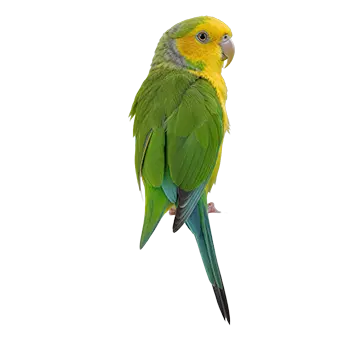

Yellow-Faced Parrotlets are among the smallest true parrots, but their housing requirements are disproportionately large relative to their body size. These birds are extraordinarily active, capable of rapid horizontal flight bursts and acrobatic climbing that demands generous space. The minimum recommended cage size for a single Yellow-Faced Parrotlet is 24 inches long by 18 inches wide by 24 inches tall, though experienced keepers routinely advocate for larger enclosures. A flight cage measuring 30 inches or more in length gives the bird meaningful room to fly short distances between perches, which is essential for cardiovascular health and muscle maintenance.
Cage shape matters as much as total volume. Parrotlets are horizontal flyers rather than vertical climbers, so wide, rectangular cages are far more functional than tall, narrow designs. Round cages are universally discouraged by avian behaviorists because they eliminate corners, which small parrots use as resting and security spots, and the converging bars at the top create pinch points that can trap toes and beaks. A rectangular or square cage with a flat top provides usable space both inside and on the roof, where many parrotlets enjoy spending supervised time.
For owners who keep a bonded pair, the minimum dimensions should increase to at least 30 inches long by 20 inches wide by 24 inches tall. Yellow-Faced Parrotlets can be territorial, and even bonded pairs benefit from enough space to retreat from each other when needed. Crowded housing is one of the most common triggers for aggression and feather-destructive behavior in parrotlets, so erring on the side of a larger enclosure pays dividends in behavioral health over the bird's lifetime.
Flight cages and small indoor aviaries represent the premium end of parrotlet housing. These enclosures, which may span four feet or more in length, allow true flight rather than merely hopping between perches. For owners with the space to accommodate one, a flight cage transforms the bird's daily activity level and provides enrichment opportunities that are impossible in a standard cage. Many keepers use a smaller sleeping cage in a quiet room and a larger flight enclosure in the living area, giving the bird the best of both environments.