
Nutritional Needs

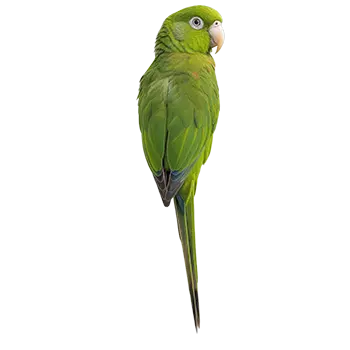
White-Eyed Conures are active, medium-sized parrots native to the forests and woodlands of South America, where they forage on a naturally diverse diet of fruits, seeds, flowers, and occasional insects. In captivity, replicating this nutritional breadth requires deliberate planning. Their high energy expenditure through climbing, flying, and play demands a diet rich in complex carbohydrates, moderate in healthy fats, and consistently supported by a full spectrum of vitamins and minerals. A nutritionally deficient diet in this species tends to manifest first as dull plumage and lethargy, progressing to more serious immune and organ dysfunction if left uncorrected.

Protein requirements for White-Eyed Conures are moderate compared to larger parrot species but should not be overlooked. Amino acids from quality protein sources support feather growth, muscle maintenance, and immune function. During molting periods, protein demands increase noticeably, and owners should adjust the diet to include additional legumes, sprouted seeds, or small quantities of cooked egg to support the intensive process of feather regeneration. Juvenile birds and breeding pairs also have elevated protein needs that a standard maintenance diet may not fully address.

Vitamin A is a critical nutrient for this species, as it is for most parrots. White-Eyed Conures fed predominantly on seed mixes are particularly vulnerable to vitamin A deficiency, which compromises the integrity of mucous membranes throughout the respiratory and digestive tracts. Beta-carotene-rich vegetables like sweet potatoes, carrots, and red bell peppers serve as natural precursors that the body converts to active vitamin A. Incorporating these foods regularly provides a safer pathway to adequate vitamin A levels than synthetic supplementation, which carries a risk of toxicity at high doses.

Calcium and phosphorus must be maintained in proper ratio for skeletal health and normal nerve and muscle function. While White-Eyed Conures are not as acutely prone to hypocalcemia as some African species, a chronic calcium shortfall can still lead to weakened bones, poor egg formation in breeding hens, and general metabolic disruption. Dark leafy greens, particularly kale, broccoli leaves, and bok choy, offer bioavailable calcium that complements what a formulated pellet provides.

What to Look For

Selecting the right food products for a White-Eyed Conure begins with understanding how to read ingredient panels and distinguish genuinely nutritious formulations from those that rely on fillers and marketing claims. The first three ingredients on any pellet or seed mix label tell the most important story. Whole grains, legume meals, and vegetable ingredients in the top positions indicate a product built on nutritional substance. Products that lead with ground corn, soybean meal, or sugar are using inexpensive bulking agents that deliver calories without proportional nutritional value.

Artificial colors are pervasive in the bird food market and serve no dietary purpose whatsoever. They exist solely to make products visually appealing to human buyers. Some avian veterinarians have raised concerns about long-term exposure to certain synthetic dyes, and at minimum they can encourage selective eating when a bird learns to pick out only the brightly colored pieces. Naturally colored pellets made from real vegetable and fruit ingredients are the better choice for any conure owner prioritizing health over shelf appeal.

Freshness is an underappreciated factor in bird food quality. Pellets and seed mixes lose nutritional value over time as fats oxidize and vitamins degrade. Purchasing from retailers with high turnover, checking manufacture or expiration dates, and storing opened food in airtight containers away from heat and light all help preserve the nutritional integrity of the product. Buying in bulk may seem economical, but if the food sits for months before being consumed, the savings come at a nutritional cost.

For owners considering specialty or prescription diets, veterinary guidance is essential. Some White-Eyed Conures develop sensitivities to specific ingredients or have health conditions that require modified nutrient profiles. Products marketed as hypoallergenic or therapeutic should be evaluated on their actual formulation rather than their label claims, and any significant dietary change should be discussed with an avian veterinarian who can monitor the bird's response through weight checks and bloodwork.

Recommended Pellet Types

Formulated pellets should constitute approximately fifty to sixty percent of a White-Eyed Conure's daily food intake. This species does well on pellets designed for small to medium parrots, with a pellet size that is easy to grip and manipulate with their moderately sized beaks. Oversized pellets intended for macaws or cockatoos can frustrate smaller conures and lead to excessive waste, while pellets designed for budgies or finches may be too small to engage their interest and do not provide an adequate chewing experience.

Cold-pressed and extruded pellets represent two of the most common manufacturing methods on the market. Cold-pressed pellets are formed under pressure without high heat, which preserves more of the heat-sensitive vitamins and enzymes present in the raw ingredients. Extruded pellets are cooked under controlled temperature and pressure, producing a uniform, shelf-stable product that many birds find palatable. Both methods can yield excellent products, and the specific formulation matters more than the manufacturing process alone.

Organic pellets have gained a significant following among conscientious bird owners, and for good reason. Organic certification ensures that the grains, fruits, and vegetables used in the formulation were grown without synthetic pesticides or genetically modified organisms. For a small bird like a White-Eyed Conure, whose body weight means that even trace chemical exposures represent a proportionally larger dose than they would for a human, the reduced chemical load of organic ingredients is a meaningful consideration.

Some manufacturers produce conure-specific or New World parrot formulations that account for the particular dietary patterns of species originating in Central and South American ecosystems. These formulations often include tropical fruit components, slightly higher fat content to reflect the calorie-dense seeds and nuts available in their native range, and vitamin profiles tuned to species that evolved under equatorial light conditions. While a high-quality general parrot pellet will meet basic nutritional requirements, a species-targeted formulation can offer a closer approximation of the ideal nutrient balance.

Fresh Foods and Cooking Mixes

Fresh foods form the nutritional complement to a pellet-based diet and provide the variety that keeps a White-Eyed Conure engaged at mealtimes. In the wild, these birds encounter dozens of different food items across seasons, and captive diets that rotate through a wide selection of vegetables, fruits, grains, and legumes come closest to satisfying both nutritional needs and the psychological drive for novelty. A bird that eats the same three vegetables every day is missing micronutrients that a broader rotation would provide.

Dark leafy greens should anchor the fresh food offering. Kale, Swiss chard, collard greens, dandelion greens, and mustard greens all provide calcium, iron, and vitamin K in forms that are readily absorbed. These can be offered raw, lightly steamed, or finely chopped and mixed into grain-based dishes. Rotating among several types of greens throughout the week ensures that no single plant's particular antinutrient profile, such as the oxalates in spinach, accumulates to problematic levels.

Cooked grain and legume mixes provide excellent energy and protein. Quinoa, brown rice, barley, lentils, split peas, and mung beans can be cooked in bulk and refrigerated for several days or frozen in portion-sized amounts. Commercial bird-specific cooking mixes offer a convenient starting point, though homemade blends allow more precise control over ingredients and proportions. When evaluating commercial mixes, prioritize those with whole, recognizable ingredients and avoid products containing added salt, sugar, or artificial preservatives.

Sprouted seeds bridge the gap between the fat-heavy nutrition of dry seeds and the micronutrient density of fresh vegetables. During germination, the seed's fat stores are converted into vitamins, enzymes, and plant proteins, creating a living food that is significantly more nutritious than its dry counterpart. Mung beans, sunflower seeds, buckwheat, and radish seeds all sprout easily and are well-accepted by most conures. The sprouting process requires careful hygiene, with seeds rinsed multiple times daily and any batches showing mold or off odors discarded immediately to prevent bacterial or fungal illness.

Treats and Supplements

Treats play an important role in the daily life of a White-Eyed Conure, serving as tools for training reinforcement, relationship building, and mental stimulation. The most effective treats are those the bird values highly but receives in controlled quantities, preventing the nutritional imbalance that results from unlimited access to calorie-dense favorites. Sunflower seeds, safflower seeds, pine nuts, and small pieces of walnut or almond are universally popular with this species and can be portioned out as rewards during training sessions or tucked into foraging toys for enrichment.

Nutrient-dense treats that double as dietary supplements represent the ideal intersection of reward and nutrition. Small pieces of dried papaya, mango, or coconut, provided they are unsulfured and free of added sugar, deliver vitamins and healthy fats in a format that most White-Eyed Conures find irresistible. Dehydrated vegetable chips made from sweet potato or beet offer another option that provides micronutrients without excessive sugar or fat. The key distinction is between treats formulated for birds and human snack foods that happen to contain similar ingredients but include added salt, sugar, or preservatives unsuitable for avian consumption.

Calcium supplementation should be available at all times in the form of a cuttlebone or mineral block mounted inside the cage. These provide a self-regulating calcium source that the bird can access according to its physiological needs while also satisfying the instinct to gnaw and scrape. Liquid calcium supplements administered in water or over food offer a more precise dosing option when a veterinarian identifies a specific deficiency, though routine use without veterinary guidance is generally unnecessary for birds on a balanced pellet and vegetable diet.

Multivitamin supplements are a subject of reasonable debate among avian veterinarians. A White-Eyed Conure eating a well-formulated pellet alongside a diverse selection of fresh foods typically receives adequate vitamins without supplementation, and indiscriminate use of multivitamins risks oversupplying fat-soluble vitamins that accumulate in tissue rather than being excreted. Targeted supplementation may be warranted for birds recovering from illness, undergoing heavy molt, or transitioning from a nutritionally poor seed-based diet, but these situations call for veterinary oversight rather than owner-directed dosing based on product label recommendations alone.

Foods to Avoid

A number of foods commonly found in human kitchens are toxic to White-Eyed Conures and must be kept entirely out of reach. Avocado tops the list of dangerous foods, as it contains persin, a fungicidal toxin present in the fruit's flesh, skin, pit, and leaves that causes severe cardiac and respiratory distress in birds. There is no safe amount of avocado for any parrot species, and even incidental exposure through shared plates or cutting boards used for avocado preparation should be avoided.

Chocolate and caffeine are both acutely toxic to birds. Theobromine and caffeine, the methylxanthine compounds responsible for chocolate's stimulant properties, overwhelm a bird's small body and rapid metabolism, causing vomiting, diarrhea, hyperactivity, tremors, cardiac arrhythmia, and potentially death. Dark chocolate and baking chocolate contain the highest concentrations, but even milk chocolate and white chocolate carry risk. Coffee, tea, energy drinks, and cola should never be offered or left where a curious conure could sample them.

Onions, garlic, leeks, shallots, and chives belong to the allium family and contain organosulfur compounds that damage avian red blood cells, leading to a condition called hemolytic anemia. The effect is cumulative, meaning that repeated small exposures can be as dangerous as a single large one. Because allium ingredients are present in countless prepared foods, sauces, and seasoning blends, the safest practice is to prepare bird food entirely separately from human meals or to verify every shared ingredient against a known-safe list.

Fruit pits and apple seeds contain amygdalin, a cyanogenic glycoside that releases hydrogen cyanide during digestion. While one or two apple seeds are unlikely to cause acute poisoning in a bird the size of a White-Eyed Conure, the risk is entirely avoidable by coring and seeding all fruit before offering it. Stone fruit pits from cherries, peaches, plums, and apricots should be completely removed. Additionally, raw dried beans contain phytohemagglutinin, a lectin that is highly toxic to birds but destroyed by thorough cooking. Any beans offered must be fully cooked, and soaking alone is not sufficient to neutralize this compound.

Feeding Schedule

A structured feeding schedule anchors the daily routine of a White-Eyed Conure and supports both digestive health and behavioral predictability. The most effective approach for this species involves offering fresh foods in the morning, when the bird is naturally most hungry and active after the overnight fast, and maintaining a supply of pellets throughout the day for ad libitum consumption. This pattern reflects the natural foraging rhythm of wild conures, which feed intensively at dawn and again in the late afternoon while spending the middle of the day resting, preening, and socializing.

Morning fresh food servings should be removed after three to four hours to prevent spoilage, particularly in warm environments where bacteria multiply rapidly on moist foods. Any uneaten fresh food left in the cage beyond this window becomes a food safety risk rather than a nutritional resource. Pellets, being dry and shelf-stable at room temperature, can remain in the food dish throughout the day without the same spoilage concerns, though they should still be refreshed daily to maintain palatability and prevent contamination from droppings or debris.

Portion sizing for a White-Eyed Conure requires attentiveness to the individual bird's weight and activity level. As a general starting point, approximately two tablespoons of pellets and a similar volume of chopped fresh foods per day meets the caloric needs of most adult birds at a healthy weight. Active birds with flight access or those housed in large aviaries may require slightly more, while sedentary birds in smaller enclosures may need less. Regular weigh-ins using a digital gram scale provide objective data that helps fine-tune portions over time, catching gradual weight gain or loss before it becomes a clinical concern.

Evening treats or a small secondary feeding can serve as a bonding ritual and a way to ensure the bird has adequate fuel for the overnight fast. A few seeds, a small piece of nut, or a sliver of fruit offered by hand during the evening interaction period reinforces the social bond between bird and owner while providing a caloric buffer. This evening offering should be modest enough that it does not reduce the bird's appetite for the next morning's nutritionally dense fresh food serving.

Always consult a qualified professional before making any health-related decisions. This content is provided for informational reference only and should not replace professional guidance specific to your animal.