White-Eyed Conure Species Guide - Furry Critter Network

White-Eyed Conure

Quick Facts

🔬 Scientific Name
Psittacara leucophthalmus
📊 Care Level
Intermediate
😊 Temperament
Playful, Social, Energetic
📏 Adult Size
12-13 inches
⏱️ Lifespan
20-30 years
🔊 Noise Level
Loud
🗣️ Talking Ability
Moderate
🍽️ Diet Type
Pellet-based
🌍 Origin
South America
🏠 Min Cage Size
24x24x30 inches
📐 Size
Medium

White-Eyed Conure - Names & Recognition

The White-Eyed Conure is scientifically classified as Psittacara leucophthalmus, though it was formerly placed in the genus Aratinga and is still occasionally referred to as Aratinga leucophthalma in older literature. The species name 'leucophthalmus' derives from Greek words meaning 'white eye,' directly referencing the distinctive bare white eye-ring that encircles each eye and serves as this bird's most recognizable feature.

This species is known by several common names across its range and in aviculture. In addition to White-Eyed Conure, it is frequently called the White-Eyed Parakeet in some regions, following British naming conventions that refer to smaller parrots as parakeets. In Spanish-speaking South American countries where the bird is native, it goes by names such as Aratinga Ojo Blanco, Cotorra de Ojo Blanco, or simply Cotorra Ojiblanca. Brazilian populations use the Portuguese name PeriquitĂŁo-maracanĂŁ or MaracanĂŁ-de-cara-branca.

There are three recognized subspecies of White-Eyed Conure, each with slight variations in size and coloration. The nominate subspecies, P. l. leucophthalmus, is found throughout much of the species' range. P. l. callogenys occurs in certain parts of Ecuador and Peru and typically shows more red on the wings. P. l. nicefori, native to Colombia, is considered critically endangered and rarely seen in aviculture. These subspecies distinctions are primarily of interest to ornithologists and conservationists, as the differences are subtle and pet trade birds are typically not identified to subspecies level.

The reclassification from Aratinga to Psittacara occurred in the early 2010s following molecular phylogenetic studies that demonstrated this conure group's distinct evolutionary lineage. This taxonomic revision affects how the species is referenced in scientific literature and official records, though many bird enthusiasts and breeders continue to use the familiar Aratinga designation out of long-standing habit.

White-Eyed Conure Physical Description

The White-Eyed Conure is a medium-sized parrot measuring approximately 12 to 13 inches in length from head to tail tip, with a wingspan of roughly 8 inches when fully extended. Adults typically weigh between 140 and 170 grams, with males occasionally being slightly larger and heavier than females, though this size difference is not pronounced enough for reliable visual sexing.

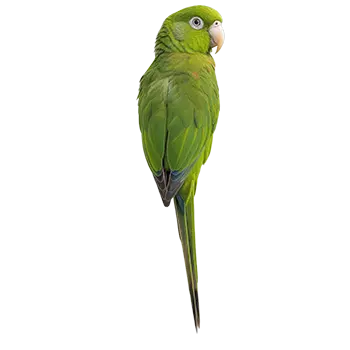
The overall plumage of the White-Eyed Conure is predominantly bright grass green, creating a vibrant appearance that helps these birds blend into the forest canopy in their natural habitat. The green coloration covers the head, back, wings, and most of the body, though the shade can vary slightly between individuals and in different lighting conditions. The breast and underparts are a slightly lighter, more yellowish-green compared to the deeper green of the back and wings.

The species' most distinctive and namesake feature is the prominent white periophthalmic ring—a bare patch of white skin that completely encircles each eye. This white eye-ring contrasts sharply against the green head feathers and the dark brown iris of the eye itself, creating a striking facial appearance that makes the White-Eyed Conure immediately recognizable even at a distance. The skin around the eyes and the bare cere at the base of the beak is also whitish or pale cream-colored.

The wings display additional color accents that become particularly visible during flight. The primary and secondary flight feathers show blue coloring on their outer webs, creating a blue wing patch that flashes when the bird flies. Many individuals also have scattered red feathers on the bend of the wing and along the leading edge, though the amount of red varies considerably between birds. Some specimens show extensive red markings while others have only a few red feathers or none at all.

The tail is long and tapered, predominantly green on top with yellowish undertones visible on the underside of the tail feathers. The beak is horn-colored or pinkish-beige, strong and hooked as is typical for parrots, perfectly adapted for cracking seeds and nuts. The legs and feet are gray with zygodactyl toe arrangement—two toes pointing forward and two backward—providing excellent grasping ability for climbing and perching.

Sexual dimorphism is minimal in White-Eyed Conures, making visual sex determination nearly impossible. Both males and females display the same coloration and patterns, though males may have slightly larger heads and beaks on average. Definitive sexing requires DNA testing or surgical sexing. Juvenile birds appear similar to adults but with slightly duller green plumage, darker irises, and less prominent white eye-rings that become more distinct as the bird matures over the first year.

Affection Level
White-Eyed Conures form deep bonds with their owners and display considerable affection once trust is established. They enjoy physical contact, cuddling sessions, and being near their favorite people. Hand-raised individuals become devoted companions who seek out interaction and can be quite demonstrative with head bobbing and gentle nuzzling behaviors.
Sociability
These conures are extremely social birds that thrive on interaction with humans and other birds. They naturally live in flocks in the wild and require significant daily social engagement in captivity. They do well in pairs or groups and enjoy being part of household activities, often becoming distressed if left alone for extended periods.
Vocalization
White-Eyed Conures are notably loud birds with piercing contact calls, especially during morning and evening hours. They can learn to mimic words and sounds with patient training. Their vocalizations include squawks, screeches, and chattering. While expressive and communicative, their noise level makes them unsuitable for apartments or noise-sensitive environments.
Intelligence
These parrots demonstrate high intelligence with excellent problem-solving abilities and quick learning capacity. They can master complex tricks, understand cause and effect, and remember routines and people for years. Their curiosity drives them to explore and investigate their environment, requiring mental stimulation through puzzles and interactive toys.
Exercise Needs
White-Eyed Conures are highly active birds requiring several hours of supervised out-of-cage time daily. They need space for flying, climbing, and playing to maintain physical health and prevent behavioral issues. These energetic parrots enjoy acrobatic play, swinging from perches, and exploring their environment with enthusiasm and vigor.
Maintenance Level
These conures require moderate maintenance with daily cage cleaning, fresh food and water, and regular toy rotation. They produce moderate mess from food scatter and droppings. Weekly thorough cage cleaning is necessary, along with periodic nail and wing trims. Their active nature means perches and toys need regular inspection and replacement.
Trainability
White-Eyed Conures respond exceptionally well to positive reinforcement training and can learn numerous tricks and behaviors. They master step-up commands, target training, and recall with consistency. Their intelligence and food motivation make them excellent candidates for training, though their energetic nature requires patient, consistent sessions to maintain focus.
Independence
These conures have relatively low independence and strongly prefer constant companionship. They become distressed when left alone for long periods and may develop behavioral problems like screaming or feather plucking. Best suited for owners who work from home or can provide a bird companion. They demand significant daily attention and interaction.

Natural Habitat & Range

The White-Eyed Conure is native to a vast region of South America, with a natural range extending from northern Argentina through Uruguay, Paraguay, eastern Bolivia, and much of Brazil, reaching into portions of Venezuela, Colombia, Ecuador, Peru, and the Guianas. This extensive distribution makes it one of the more widespread conure species on the continent, found across diverse habitats within its range.

In the wild, White-Eyed Conures primarily inhabit humid tropical and subtropical forests, including both lowland rainforests and montane cloud forests at elevations up to 2,500 meters. They show remarkable adaptability and are also found in forest edges, secondary growth forests, gallery forests along rivers, palm groves, and savanna woodlands with scattered trees. Their habitat flexibility has allowed them to persist even as some forest areas have been converted to agricultural use, and they readily utilize plantation areas, parks, and suburban gardens where large trees provide food and nesting sites.

These conures are highly social birds that live in flocks ranging from small family groups of 4-6 birds to large aggregations of 30 or more individuals, particularly at abundant food sources or communal roosting sites. In areas with plentiful resources, flocks of 100 or more birds have been observed. The social structure involves complex vocalizations and interactions, with birds maintaining contact through frequent calls even when foraging separately through the canopy.

Wild White-Eyed Conures are primarily arboreal, spending most of their time in the upper and middle canopy levels of forests. They are strong, direct fliers capable of covering considerable distances between feeding and roosting areas. Their daily routine typically involves early morning foraging sessions, a midday rest period during the hottest hours, and late afternoon feeding before returning to traditional roosting trees at dusk. They often travel the same routes daily and show strong site fidelity to preferred feeding and nesting locations.

The diet in nature consists primarily of seeds, fruits, nuts, berries, blossoms, and leaf buds. They are particularly fond of palm fruits and have been observed feeding on cultivated crops including corn, which sometimes brings them into conflict with farmers. Their strong beaks allow them to open hard-shelled nuts and extract seeds from tough fruits. They also visit clay licks along riverbanks to consume mineral-rich soil, a behavior thought to help neutralize toxins from certain foods and supplement their mineral intake.

Nesting occurs in natural tree cavities, often in dead palm trees or other hollow trunks. Breeding pairs defend their nesting territory vigorously, though multiple pairs may nest relatively close together in areas with suitable cavities. The conservation status of White-Eyed Conures is currently listed as Least Concern by the IUCN due to their large range and stable population numbers. However, some local populations face pressure from habitat loss and capture for the pet trade. The subspecies P. l. nicefori from Colombia is critically endangered with very few individuals remaining in the wild.

Temperament

White-Eyed Conures are known for their spirited, outgoing personalities and high energy levels that define their interactions with both their environment and their human companions. These birds exhibit a playful, sometimes mischievous nature that keeps their owners entertained but also requires understanding and appropriate management. They approach life with enthusiasm and curiosity, investigating new toys, foods, and situations with bold confidence once they feel secure in their environment.

One of the most notable aspects of White-Eyed Conure temperament is their strong social drive and need for interaction. These birds form deep, lasting bonds with their human family members and can become extremely devoted to one or two preferred individuals. They often display jealous behaviors toward others who interact with their chosen person and may nip or show aggressive body language when they feel their bond is threatened. This strong bonding tendency means they require significant daily attention and can become problematic if neglected or left alone for extended periods.

White-Eyed Conures are naturally gregarious birds that thrive on being part of the family's daily activities. They want to be where the action is, whether that means perching on a shoulder while their owner works, playing on a stand during meal times, or investigating household activities. Their social nature makes them poorly suited for owners who cannot dedicate several hours daily to interaction and out-of-cage time. Birds that don't receive adequate socialization may develop behavioral issues including excessive screaming, aggression, or self-destructive behaviors like feather plucking.

The vocalization level of White-Eyed Conures is one characteristic that potential owners must carefully consider. These birds are naturally loud, possessing powerful voices that they use liberally throughout the day. Their contact calls are particularly piercing and can carry considerable distances—a trait that serves them well in the wild but can be challenging in a home environment. They are most vocal during dawn and dusk, their natural calling times, but can also become noisy when excited, seeking attention, or when they hear other birds or triggering sounds. While they can learn to moderate their volume with training, prospective owners should expect a certain baseline of noise.

Despite their loudness, White-Eyed Conures can develop moderate talking ability with patient training. They are capable of learning and mimicking words, phrases, and household sounds. Males typically show more aptitude for talking than females, though individual variation exists. Their talking voice tends to be raspy and not always clearly enunciated, but many birds develop recognizable vocabularies of 10-20 words or phrases. They also excel at learning whistles and can mimic tunes accurately.

Playfulness is central to the White-Eyed Conure personality. These birds love toys and need a constantly rotating selection to keep their active minds engaged. They enjoy toys they can shred, chew, manipulate, and throw. Puzzle toys that hide treats are particularly engaging. Without adequate toys and enrichment, they may turn their destructive tendencies toward household items or develop stereotypic behaviors from boredom. Their playful nature extends to interaction with their owners, and many enjoy learning tricks, playing games, and participating in training sessions.

White-Eyed Conures can display some territorial and aggressive behaviors, particularly during breeding season or when protecting their cage space. They may lunge, bite, or chase away perceived threats to their territory or mate. Establishing clear boundaries and consistent handling from a young age helps minimize these behaviors, but potential owners should be prepared for occasional assertiveness. Their bites can be painful given their strong beaks, making bite pressure training essential, especially for households with children.

The activity level of White-Eyed Conures is very high. These are not birds that contentedly sit in one place for extended periods. They are constantly moving, climbing, hanging, swinging, and exploring. This athleticism requires both adequate cage space for movement and several hours of supervised out-of-cage time daily where they can fly, play, and exercise properly. Without sufficient physical activity, they may become frustrated, loud, and develop behavioral problems.

These conures show considerable intelligence and can be quite problem-solving oriented. They quickly figure out how cage latches work and may escape if locks aren't secure. They remember routines and can anticipate daily events, sometimes becoming anxious or loud if their expected schedule is disrupted. This intelligence makes them highly trainable but also means they need mental stimulation to prevent boredom.

Care Requirements

Proper housing for White-Eyed Conures requires careful attention to cage size, bar spacing, location, and furnishings to meet these active birds' physical and psychological needs. The minimum cage dimensions for a single White-Eyed Conure should be at least 24 inches wide by 24 inches deep by 30 inches high, though larger cages are always preferable for these energetic, active parrots. Birds spending more time in their cages require proportionally larger housing, while those receiving several hours of supervised out-of-cage time daily can manage in somewhat smaller spaces, though still no smaller than the recommended minimum.

Cage bar spacing is a critical safety consideration for White-Eyed Conures. Bars should be spaced no more than three-quarters of an inch apart to prevent the bird from squeezing through or getting its head trapped between bars. The cage should be constructed of durable, non-toxic metal—either stainless steel or powder-coated steel are excellent choices. Avoid cages made with zinc, lead, or other toxic materials that can poison birds if chewed or ingested. Horizontal bars on at least two sides of the cage facilitate climbing, which these acrobatic birds greatly enjoy.

Cage location significantly impacts the bird's sense of security and involvement with the household. Place the cage in a well-used room where the bird can observe family activities and feel included in the social group, but not in the kitchen where cooking fumes, particularly from non-stick cookware, pose serious health risks. The cage should be positioned against a wall rather than in the center of the room to provide a sense of security, with the top perches at approximately human eye level so the bird doesn't feel dominated or overly dominant. Avoid placing cages near windows with direct sunlight, heating vents, or air conditioning ducts, as temperature extremes and drafts compromise health.

Perch selection and placement create an enriching environment while supporting foot health. White-Eyed Conures need perches of varying diameters, from three-quarters of an inch to one and a half inches thick, to exercise different foot muscles and prevent pressure sores. Natural wood branches make excellent perches, providing varying thickness and texture that helps keep nails naturally trimmed. Manzanita, java wood, and dragon wood are durable, safe choices. Position perches at different heights and locations, ensuring the bird can't soil food or water dishes from above. Avoid sandpaper perch covers, which are uncomfortable and ineffective.

Toy selection and rotation are essential for mental stimulation and preventing boredom in these intelligent birds. White-Eyed Conures enjoy destructible toys made from wood, paper, palm leaves, and untreated natural materials they can shred. Puzzle toys that hide treats encourage natural foraging behaviors. Swinging toys, bells, and manipulative toys with moving parts provide entertainment. Rotate toys every few weeks to maintain novelty and interest. Ensure all toys are appropriately sized and made from bird-safe materials without small parts that could be swallowed or toxic components.

Out-of-cage time is non-negotiable for White-Eyed Conure wellbeing. These active parrots require a minimum of three to four hours daily outside their cage in a safe, bird-proofed area where they can fly, climb, and interact with their environment and human family. Establish a play gym or stand with perches, toys, and foraging opportunities where the bird can spend supervised time. Never leave White-Eyed Conures unsupervised outside their cage, as they are curious and may get into dangerous situations, chew inappropriate items, or injure themselves.

Bird-proofing the environment prevents tragic accidents and injuries. Remove or secure potential hazards including ceiling fans, open windows and doors, toxic plants, exposed electrical cords, standing water, hot surfaces, and other pets. Cover mirrors and windows to prevent collision injuries. Keep all cookware and appliances with non-stick coatings away from areas where birds spend time, as fumes from heated Teflon and similar coatings are rapidly fatal to birds. Be vigilant about small objects that could be swallowed and toxic substances including scented candles, air fresheners, and cleaning products.

Enrichment strategies extend beyond toys to include foraging opportunities that engage natural food-seeking behaviors. Hide treats inside crumpled paper, stuff vegetables through foraging balls, or wrap food in palm leaf bundles. Provide a varied environment with different textures, materials, and activities. Some White-Eyed Conures enjoy shallow water dishes for bathing, while others prefer being misted with a spray bottle. Regular bathing opportunities support feather health and provide enrichment.

Temperature and humidity requirements for White-Eyed Conures are moderate and generally comfortable for humans. Maintain ambient temperatures between 65-80°F, avoiding extremes and rapid fluctuations. These birds tolerate average household humidity levels but benefit from slightly elevated humidity around 50-60%, particularly during wing molts when new feathers are developing. Provide bathing opportunities or gentle misting several times weekly to support healthy feather condition.

Lighting requirements include both adequate daylight for activity and complete darkness for rest. White-Eyed Conures need approximately 10-12 hours of sleep nightly in a quiet, dark environment. Cover the cage with a breathable cage cover or move the bird to a separate sleeping cage in a quiet room if household activity continues late. Full-spectrum lighting that includes UVA and UVB wavelengths benefits birds without outdoor access, supporting vitamin D synthesis and natural behaviors. Maintain consistent light-dark cycles that mimic natural day-night patterns.

Cage maintenance involves daily spot cleaning to remove droppings and uneaten food, preventing bacterial growth and maintaining hygiene. Replace cage substrate or liner paper daily. Food and water dishes require daily cleaning with hot, soapy water followed by thorough rinsing. Perform weekly deep cleaning of the entire cage, including all perches, toys, and furnishings, using bird-safe disinfectant or a diluted bleach solution followed by complete rinsing and drying. Regular cleaning prevents disease transmission and maintains a healthy environment for your White-Eyed Conure.

Feeding & Nutrition

In their natural South American habitat, White-Eyed Conures consume a diverse diet consisting primarily of seeds, nuts, fruits, berries, blossoms, and fresh vegetation from forest and woodland environments. They feed opportunistically on seasonal foods, visiting clay licks for minerals, and sometimes raiding agricultural crops. Replicating this dietary variety in captivity is essential for maintaining optimal health, supporting immune function, and preventing nutritional deficiencies and diseases.

The foundation of a captive White-Eyed Conure's diet should be high-quality parrot pellets formulated specifically for medium-sized parrots. Pellets should comprise approximately 60-70% of the total daily food intake, as they are nutritionally complete and balanced, containing appropriate levels of vitamins, minerals, proteins, and other essential nutrients. Choose pellets from reputable manufacturers that avoid artificial colors, flavors, and preservatives. Both natural and colored pellets are acceptable, though some birds show preferences. Offer pellets in a clean dish, replacing uneaten portions daily to ensure freshness.

While high-quality seeds were once the staple of parrot diets, nutritionists now recognize that seed-only diets create serious health problems including obesity, fatty liver disease, cardiovascular issues, and nutritional deficiencies. Seeds are high in fat and deficient in many essential nutrients, particularly calcium, vitamin A, and certain amino acids. However, seeds aren't entirely prohibited—they can comprise 10-15% of the diet as part of a varied menu or serve as training rewards. When offering seeds, choose quality mixes containing canary seed, millet, oats, and limited amounts of sunflower and safflower seeds rather than cheap mixes dominated by high-fat sunflower seeds.

Fresh vegetables should constitute approximately 20-25% of the daily diet, providing essential vitamins, minerals, and dietary fiber while adding variety and interest to meals. Excellent vegetable choices for White-Eyed Conures include dark leafy greens like kale, collard greens, mustard greens, and dandelion greens; orange vegetables such as carrots, sweet potato, and butternut squash (rich in vitamin A); cruciferous vegetables including broccoli, cauliflower, and Brussels sprouts; bell peppers of all colors; snap peas; corn; and green beans. Wash all vegetables thoroughly and offer them raw or lightly steamed without salt, butter, or seasonings. Chop vegetables into appropriate sizes or present them whole for foraging enrichment.

Fresh fruits provide natural sugars, vitamins, and antioxidants but should be offered more sparingly than vegetables due to their high sugar content—approximately 5-10% of daily intake is appropriate. Safe, healthy fruits for White-Eyed Conures include berries (blueberries, strawberries, raspberries), apple slices (without seeds), grapes (cut in half to prevent choking), banana, mango, papaya, pomegranate, melon, oranges, and kiwi. Many conures especially enjoy tropical fruits like mango and papaya. Remove uneaten fresh foods within a few hours to prevent spoilage and bacterial growth.

Certain foods are toxic to White-Eyed Conures and must be strictly avoided to prevent serious illness or death. The most critical items to exclude include avocado in all forms (flesh, skin, and pit contain persin, which is highly toxic to birds); chocolate and anything containing caffeine; alcohol in any amount; onions and garlic (contain compounds that damage red blood cells); apple seeds, cherry pits, and other fruit pits (contain cyanide compounds); raw or dried beans (contain phytohemagglutinin toxin); salt and high-sodium foods; fatty, fried foods; and any moldy or spoiled foods. Never share seasoned human foods, as most contain excessive salt, sugar, or other inappropriate ingredients.

Healthy treat options for training rewards or occasional variety include small amounts of unsalted, unflavored, air-popped popcorn; whole grain pasta (cooked without sauce); unsweetened whole grain cereals; small bits of hard-boiled egg; unsalted, roasted almonds (crushed or slivered for medium birds); and occasionally tiny amounts of natural peanut butter. Treats should never exceed 10% of total daily intake and should be offered strategically for training or enrichment rather than as dietary staples.

Calcium and mineral supplementation requires careful attention, particularly for breeding females at risk for egg binding. While high-quality pellets contain adequate calcium for most birds, supplemental sources benefit many conures. Provide a cuttlebone or mineral block in the cage for birds to nibble as needed. Dark leafy greens are excellent dietary calcium sources. For breeding birds or those with demonstrated calcium deficiency, veterinarian-prescribed calcium supplements ensure adequate intake without over-supplementation, which creates its own health risks.

Vitamin supplementation is generally unnecessary when birds consume high-quality pelleted diets and adequate fresh foods, as over-supplementation can cause toxicity. However, birds eating primarily seeds or those with demonstrated deficiencies may benefit from veterinarian-recommended supplements. Never add vitamin supplements to water, as this promotes bacterial growth, alters water taste (potentially reducing consumption), and prevents accurate dosing. If supplementation is necessary, apply powdered vitamins directly to moist foods or give liquid supplements by mouth under veterinary guidance.

Water requirements are simple but critical—White-Eyed Conures must have access to fresh, clean water at all times. Change water daily, cleaning the dish thoroughly with hot, soapy water to prevent bacterial and algal growth. Some conures enjoy playing in water dishes, which necessitates more frequent changes. Use heavy ceramic or securely mounted dishes that can't be tipped. Avoid using water additives, supplements, or medications in drinking water unless specifically prescribed by an avian veterinarian, as most water additives are unnecessary and some are harmful.

Foraging opportunities transform feeding time into an enriching activity that engages natural food-seeking behaviors and provides mental stimulation. Rather than simply placing food in dishes, hide treats inside crumpled paper, stuff vegetables through cage bars, skewer produce on stainless steel skewers, or use commercially available foraging toys that require manipulation to access food. Scatter seeds or pellets among shredded paper for ground foraging. These activities keep intelligent White-Eyed Conures mentally engaged while extending eating time and preventing boredom.

White-Eyed Conure Health & Lifespan

White-Eyed Conures are generally hardy, robust birds when provided with proper care, nutrition, and environmental conditions. With appropriate husbandry, these parrots can live 20 to 30 years in captivity, though many factors including genetics, diet, and preventive care influence individual lifespan. Like all parrot species, they are susceptible to various health conditions that owners should recognize and monitor for throughout the bird's life. Psittacosis, also known as parrot fever or chlamydiosis, is a significant bacterial disease caused by Chlamydia psittaci that can affect White-Eyed Conures and is also transmissible to humans. This respiratory infection causes symptoms including lethargy, difficulty breathing, nasal discharge, and lime-green droppings. Affected birds require immediate veterinary treatment with appropriate antibiotics, and household members may need medical evaluation if exposure occurred. Maintaining good hygiene and obtaining birds from reputable sources helps reduce psittacosis risk.

UV lighting benefits White-Eyed Conures by enabling natural vitamin D synthesis, which is essential for proper calcium metabolism and bone health. Indoor birds without access to unfiltered natural sunlight benefit from full-spectrum avian lighting that includes UVA and UVB wavelengths. This lighting supports normal circadian rhythms, encourages natural behaviors, and contributes to overall physical health. Providing appropriate lighting on a consistent 12-hour cycle mimics natural day-night patterns and supports wellbeing. Quality of life considerations extend beyond preventing disease to ensuring White-Eyed Conures experience fulfilling, enriched lives. These social, intelligent birds need not just medical care but also environmental complexity, social bonds, mental challenges, and opportunities for natural behaviors like foraging, bathing, and playing. Birds receiving comprehensive care that addresses both physical health and psychological needs typically live longer, healthier lives while displaying more positive behaviors and stronger bonds with their human families. Preventive care, prompt attention to health concerns, and dedication to providing excellent daily care enable White-Eyed Conures to thrive throughout their potential 20-30 year lifespan.

Common Health Issues

  • Like all parrot species - They are susceptible to various health conditions that owners should recognize and monitor for throughout the bird's life.\n\nPsittacosis, also known as parrot fever or chlamydiosis, is a significant bacterial disease caused by Chlamydia psittaci that can affect White-Eyed Conures and is also transmissible to humans.
  • This respiratory infection causes symptoms including lethargy - Difficulty breathing, nasal discharge, and lime-green droppings.
  • Maintaining good hygiene and obtaining birds from reputable sources helps reduce psittacosis risk.\n\nRespiratory infections are relatively common health concerns in captive White-Eyed Conures - Particularly when birds are exposed to drafts, temperature fluctuations, or poor air quality.
  • These infections may be bacterial - Viral, or fungal in origin, with aspergillosis being a particularly serious fungal respiratory disease that affects many parrot species.
  • Aspergillosis occurs when birds inhale Aspergillus fungal spores - Which can colonize the respiratory system and cause chronic infection.
  • Prevention involves maintaining proper ventilation - Avoiding moldy substrates or food, and minimizing stress.\n\nPolyomavirus is a viral disease that primarily affects young birds but can occasionally cause problems in adult White-Eyed Conures with compromised immune systems.
  • Vaccination against polyomavirus is available and recommended - Particularly for breeding birds or those in environments with multiple birds.
  • Testing breeding stock and maintaining quarantine protocols for new birds helps prevent viral spread.\n\nPsittacine Beak and Feather Disease - Commonly abbreviated as PBFD, is a serious viral condition affecting parrots worldwide, including conures.

Preventive Care & Health Monitoring

  • White-Eyed Conures are generally hardy - Robust birds when provided with proper care, nutrition, and environmental conditions.
  • While sometimes purely psychological - Feather destructive behavior can also indicate allergies, skin infections, parasites, or nutritional deficiencies.
  • Treatment addresses both medical factors and environmental enrichment needs.\n\nFatty liver disease - Or hepatic lipidosis, results from diets too high in fat content, particularly seed-based diets without adequate pellets, fruits, and vegetables.
  • This dangerous situation can occur due to calcium deficiency - Obesity, young age, stress, or anatomical abnormalities.
  • Proper nutrition including adequate calcium and vitamin D3 - Appropriate lighting, and avoiding hormonal triggers helps prevent egg binding.\n\nBeak and nail overgrowth occurs when perches and chewing opportunities don't provide sufficient natural wear.
  • Regular veterinary checkups should include beak and nail examination - With trimming performed as needed to maintain proper length and prevent injury or difficulty perching.\n\nRegular veterinary checkups with an avian veterinarian are crucial for maintaining White-Eyed Conure health and catching problems early before they become serious.

Training & Vocalization

White-Eyed Conures possess considerable intelligence and trainability, making them excellent candidates for learning a wide variety of behaviors, tricks, and vocalizations through consistent, positive reinforcement-based training. Their high intelligence combined with strong food motivation and social drive creates ideal conditions for training success when approached with patience, consistency, and appropriate methods. Beginning training early, ideally during the bird's first year, establishes good habits and strengthens the human-bird bond, though adult birds can certainly learn new behaviors at any age.

The foundation of all parrot training is the step-up command, which teaches the bird to step onto a hand or perch on cue. This essential behavior facilitates handling, cage cleaning, veterinary visits, and moving the bird safely around the home. Train step-up by presenting a finger or perch just above the bird's feet at chest level while saying "step up" in a clear, consistent tone. When the bird steps onto the hand or perch, immediately provide verbal praise and a small food reward. Practice this command multiple times daily in short sessions until it becomes reliable in various situations and locations.

Target training, where the bird learns to touch a target stick with its beak, forms the basis for teaching numerous advanced behaviors and tricks. Once the bird understands targeting, you can use the target to guide the bird into new positions, around obstacles, through hoops, or to specific locations. Target training also facilitates stationing—teaching the bird to remain in a designated spot—which is useful for managing behavior and keeping the bird occupied during specific activities. Begin with a colorful stick or dowel, present it near the bird's beak, and reward any interaction. Gradually shape the behavior until the bird deliberately touches the target on command.

Recall training, teaching the bird to fly to you when called, is both practical and enriching for White-Eyed Conures. Start with very short distances—just a few inches—and gradually increase the distance as the bird gains confidence and reliability. Use a specific recall word or whistle, and always reward successful recalls with high-value treats and enthusiastic praise. Only practice recall in safe, enclosed areas free from hazards. Many conures enjoy the flying exercise and bonding aspect of recall training. This skill can potentially prevent escape situations if the bird accidentally gets outside, though recall should never substitute for proper flight safety precautions.

Trick training provides mental stimulation and strengthens the human-bird relationship while showcasing the White-Eyed Conure's intelligence and personality. These birds can learn to wave, turn around, play dead, retrieve small objects, navigate obstacle courses, identify colors and shapes, and perform complex behavior chains. Break tricks into small steps, reward incremental progress, and keep training sessions short—5 to 15 minutes—to maintain the bird's focus and enthusiasm. End sessions on a positive note with successful completion of a known behavior.

White-Eyed Conures possess moderate talking ability compared to species like African Greys or Amazons, but many individuals develop recognizable vocabularies with patient training. Males typically show more aptitude for speech than females, though exceptions exist. Their talking voices tend to be raspy and not always crystal clear, but enthusiastic owners can usually understand their bird's words. Start with simple, frequently repeated words in context—"hello," "goodbye," the bird's name, and names of favorite treats. Repeat target words enthusiastically when performing associated actions. Some conures learn 10-20 words or simple phrases, while others never talk but may learn to whistle tunes instead.

Vocalization management is crucial for White-Eyed Conure owners, as these birds naturally possess loud voices and use them liberally. They are most vocal during dawn and dusk, their natural calling times, and also vocalize when excited, seeking attention, hearing triggering sounds, or communicating with perceived flock members. While you cannot completely eliminate natural vocalizations—nor should you try, as this is natural communication—you can teach appropriate noise levels and reduce attention-seeking screaming through consistent behavior management.

Never reinforce screaming by responding with attention, even negative attention like yelling or appearing to investigate what's wrong. This teaches the bird that screaming produces results. Instead, ignore screaming completely, waiting for even brief pauses before giving attention or rewards. Proactively reward quiet behavior and appropriate vocalizations by providing attention, treats, and interaction when the bird vocalizes at acceptable volumes. This positive approach teaches the bird that quiet or moderate vocalizations earn rewards while screaming is ignored. Consistency from all household members is essential for success.

Socialization throughout the bird's life prevents many behavioral problems and helps create a well-adjusted companion comfortable with various people, situations, and experiences. Expose young birds to diverse positive experiences including different people (various ages, genders, appearances), novel environments, car rides, carrier training for veterinary visits, different rooms in the house, appropriate household sounds, and gentle handling. Always keep experiences positive and never force interactions that frighten the bird. Proper socialization prevents fear-based aggression, excessive screaming, and other stress-related behaviors.

Bonding techniques strengthen the relationship between White-Eyed Conure and owner, creating trust and mutual enjoyment. Spend quality time with your bird daily through training sessions, gentle handling, talking, and simply being present together. Learn to read your bird's body language and respect boundaries—approach when the bird is receptive rather than forcing interaction. Many conures enjoy head scratches, riding on shoulders, and cuddling with trusted companions. Consistency, patience, and positive experiences build strong bonds over time.

Behavioral challenges in White-Eyed Conures often stem from inadequate socialization, insufficient mental stimulation, improper handling, or unmet needs rather than maliciousness. Common issues include territorial aggression (particularly during breeding season), fear-based biting, attention-seeking screaming, and destructive behaviors. Address behavioral problems by identifying and resolving underlying causes, implementing consistent training protocols, increasing enrichment and exercise, and sometimes consulting with an avian behaviorist. Positive reinforcement methods consistently prove more effective than punishment, which typically worsens behavior problems.

Positive reinforcement training methods work by rewarding desired behaviors, making them more likely to occur again. This approach uses food treats, verbal praise, head scratches, or access to favorite toys as rewards immediately following good behaviors. The key is timing—rewards must occur within seconds of the desired behavior to create clear associations. Never use punishment, yelling, striking, or forceful handling, which damages the human-bird relationship, increases fear and aggression, and creates behavior problems rather than solving them. Training should always be a positive, enjoyable experience for both bird and trainer.

Children & Other Pets

White-Eyed Conures can be appropriate family pets for households with children, but this requires careful consideration of multiple factors including the children's ages, maturity levels, respect for boundaries, and the family's ability to supervise all interactions consistently. These medium-sized parrots possess strong beaks capable of delivering painful bites, especially when frightened, territorial, or mishandled, making proper education and supervision non-negotiable for child safety and bird welfare.

Families with children over 10 years old who demonstrate maturity, gentleness, and willingness to learn proper bird handling typically have the most success with White-Eyed Conures. Older children can participate meaningfully in bird care, training, and interaction when properly educated about bird body language, safe handling techniques, and the importance of respecting the bird's boundaries. Younger children, particularly those under 6 or 7 years old, generally lack the impulse control and understanding necessary for safe, unsupervised bird interaction, though they can still enjoy observing and learning about the family bird with constant adult supervision.

Teaching children appropriate interaction with White-Eyed Conures begins with education about bird body language and communication signals. Children must learn to recognize signs that a bird wants to interact (relaxed posture, stepping forward, soft vocalizations) versus signals indicating the bird wants space (pinned eyes, raised feathers, leaning away, aggressive lunging, or biting). Understanding these signals prevents misunderstandings that could result in bites or stressed birds. Children should learn that birds are not toys to be grabbed or played with roughly, but living beings deserving gentle respect and consideration.

Establishing clear household rules protects both children and birds. Children should understand they must always ask permission before approaching the bird, never wake a sleeping bird, avoid sudden movements or loud noises near the bird, keep their faces away from the bird's beak, and never put fingers through cage bars. Running, screaming, or chaotic play should not occur near the bird's cage, as this creates stress. Food sharing should be supervised to prevent children offering inappropriate foods. Children should participate in bird care tasks like changing water or offering vegetables only with adult supervision and after proper training.

Supervision requirements for child-bird interactions cannot be overstated—active adult supervision is mandatory 100% of the time children interact with White-Eyed Conures. Even responsible older children require adult oversight, as birds can become unpredictably territorial or frightened, and children may inadvertently do something that startles or annoys the bird. Never leave young children alone with birds, even briefly. This protection extends both directions—supervision prevents child injury and also protects birds from well-intentioned but potentially harmful child actions like feeding inappropriate items, rough handling, or releasing the bird.

White-Eyed Conures' compatibility with other household birds varies considerably based on individual personalities, species, introduction methods, and available space. Some White-Eyed Conures live peacefully alongside other medium to large parrots, cockatiels, or conure species, while others display aggression or territoriality toward avian companions. Conures can be particularly aggressive toward smaller birds like budgies, finches, or canaries, potentially injuring or killing them. Never house White-Eyed Conures with significantly smaller species, and always supervise interactions between different species during out-of-cage time.

Introducing a White-Eyed Conure to other household birds requires slow, careful steps with constant monitoring. Begin with quarantine—all new birds should spend 30-45 days in a separate room with no shared air space, separate equipment, and careful hygiene protocols to prevent disease transmission. After quarantine, position cages near each other (but not touching) in the same room, allowing birds to see and hear each other while remaining safely separated. Observe reactions carefully over several weeks. If both birds seem interested without aggression, you can eventually allow supervised interactions in neutral territory outside both cages. Some birds become bonded companions, others tolerate each other, and some never accept each other—respect individual preferences.

White-Eyed Conures and traditional companion mammals like dogs and cats present significant safety challenges requiring vigilant management. Dogs and cats are predators by nature, possessing hunting instincts that can activate around small animals despite training or domestication. Even the gentlest, best-trained dog or cat may seriously injure or kill a bird in seconds—faster than humans can intervene—through predatory drive, playful batting, or accidental roughness. Additionally, even minor bites or scratches from mammals can introduce deadly bacteria into birds, making veterinary intervention critical after any contact injury.

If keeping White-Eyed Conures in households with dogs or cats, strict protocols must be maintained without exception. Birds should only be out of secure cages when dogs or cats are completely separated in different rooms behind closed doors. Never assume your dog or cat will remain trustworthy—prey drive can activate unexpectedly. During cage time, ensure cages are secure and positioned where dogs and cats cannot reach through bars or knock over cages. Some birds react fearfully to dogs and cats nearby, experiencing chronic stress even when physically separated. Assess your bird's comfort level and individual situation carefully.

Smaller pets including rabbits, guinea pigs, hamsters, and ferrets should similarly be kept completely separated from White-Eyed Conures. While rabbits and guinea pigs aren't typical predators, their large size and potentially startling movements can frighten birds. Ferrets are predators and extremely dangerous to birds. Small rodents might seem harmless, but stressed birds may bite them if forced into proximity, and diseases can transmit between species. The safest approach keeps birds and other pets in separate spaces.

Teaching children responsibility for pet care provides valuable life lessons but must be age-appropriate and supervised. Older children and teenagers can take on significant bird care duties including preparing food, changing water, spot cleaning cages, supervising out-of-cage time (with adult backup), and participating in training sessions. Younger children can help with simple tasks like selecting vegetables at the grocery store or handing supplies to adults during cage cleaning. Make care routines educational opportunities, teaching children about nutrition, behavior, responsibility, and compassion for animals. However, remember that ultimate responsibility for bird welfare rests with adults—children's enthusiasm often wanes over time, and parents must be prepared to assume all care duties.