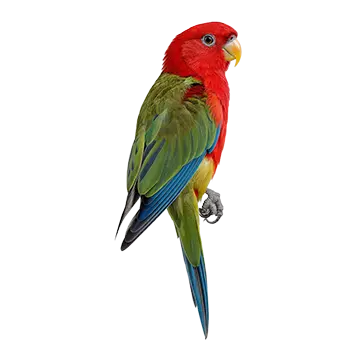

Space Requirements

Western Rosellas are active, flight-oriented birds that require substantially more space than their moderate body size might initially suggest. In the wild, this species ranges across open woodland and agricultural margins in southwestern Australia, spending much of the day in sustained, directional flight between foraging areas. Captive housing that restricts this natural flight behavior leads to a cascade of physical and psychological problems, including obesity, muscle atrophy, feather-destructive behavior, and chronic stress.

The absolute minimum cage size for a single Western Rosella kept indoors is thirty-six inches long by twenty-four inches wide by thirty-six inches tall, but this should be understood as a survival minimum rather than a welfare standard. A flight cage measuring at least four feet in length allows the bird to make short flights between perches, which is critical for maintaining pectoral muscle tone and cardiovascular health. Rosellas housed in standard parakeet cages that only allow hopping and climbing frequently develop fatty liver disease and compromised immune function within the first few years of captivity.

For keepers with the space and resources, a walk-in indoor flight enclosure or a dedicated bird room represents the gold standard in rosella housing. These setups provide enough horizontal distance for genuine flight, allow the keeper to furnish the space with natural branches and vegetation, and create an environment where the bird can express a much broader range of natural behaviors. The difference in demeanor between a rosella in a standard cage and one in a flight enclosure is immediately apparent in the bird's muscle tone, feather quality, and willingness to engage with its environment.

Pairs and small groups of Western Rosellas require proportionally more space, with the understanding that rosellas can be territorial and may become aggressive toward cage mates in confined quarters. A pair should have at minimum twice the floor space of a single bird, with multiple feeding stations and perching areas positioned so that a subordinate bird can retreat from an aggressive partner without being cornered. During breeding season, territorial behavior intensifies significantly, and housing arrangements should account for this seasonal shift.

Cage Design and Construction

The construction materials and design features of a cage or enclosure directly affect the safety, durability, and livability of the housing. Bar spacing is the first specification to verify. Western Rosellas require bar spacing of no more than half an inch to prevent the bird from wedging its head between the bars, which can cause injury or strangulation. Wider spacing designed for larger parrots is unsuitable regardless of how sturdy the cage otherwise appears.

Bar orientation influences how the bird navigates its enclosure. Cages with horizontal bars on at least two sides allow the rosella to climb the walls comfortably, which most parakeets enjoy and which provides additional exercise beyond perch-to-perch flight. All-vertical bar construction forces the bird to rely entirely on perches for resting and movement, reducing the usable space within the cage from the bird's perspective.

Metal composition is a safety-critical consideration. Cages must be constructed from non-toxic metals, with powder-coated steel and stainless steel being the two standard options. Stainless steel is the premium choice, offering superior corrosion resistance and eliminating any concern about coating degradation over time. Powder-coated cages are more affordable and perfectly safe when the coating is intact, but the coating should be inspected regularly for chips or flaking, which can expose bare metal that may contain zinc. Galvanized wire, brass, and any lead-containing solder are all toxic to birds and must be avoided entirely.

Door design affects both security and daily management. A cage for a Western Rosella should have doors large enough for the keeper's hand and forearm to enter comfortably for cleaning and perch adjustment. Doors should latch securely, as rosellas are intelligent enough to learn how to open simple slide-bolt and swing-open mechanisms. Spring-loaded latches or small padlocks provide reliable security. A dedicated food-door that allows bowls to be swapped without opening the main door reduces escape risk during daily feeding.

Indoor Housing Considerations

Placement of an indoor cage within the home has a significant impact on the Western Rosella's sense of security and overall stress level. Rosellas are naturally cautious birds that prefer to observe their environment from a position of relative safety. Placing the cage with one side against a solid wall gives the bird a sense of having its back protected, which reduces baseline anxiety. Cages positioned in the center of a room or in high-traffic thoroughfares expose the bird to stimulation from all directions simultaneously, which many rosellas find overwhelming.

The room chosen for the cage should offer natural light without prolonged direct sun exposure through glass. Ultraviolet light is important for vitamin D synthesis and calcium metabolism in birds, and standard window glass filters out most beneficial UV wavelengths. If the cage cannot be positioned near a window that opens or if natural UV exposure is limited, a full-spectrum avian light fixture mounted above the cage fills this gap. The light should operate on a timer that provides ten to twelve hours of illumination followed by twelve to fourteen hours of darkness, approximating the natural photoperiod of southwestern Australia.

Air quality is a housing factor that receives insufficient attention in many setups. Western Rosellas have highly efficient respiratory systems that make them acutely sensitive to airborne toxins. The cage should not be located in or near a kitchen, where cooking fumes, overheated nonstick coatings, and aerosolized oils present serious respiratory hazards. Scented candles, air fresheners, aerosol sprays, and tobacco smoke are all dangerous in any room where a bird is housed. An air purifier with a HEPA filter placed near the cage can help maintain air quality in homes where environmental control is challenging.

Temperature stability is important for a species adapted to the relatively mild climate of southwestern Australia. Western Rosellas are comfortable in a temperature range of approximately sixty-five to eighty degrees Fahrenheit. They tolerate moderate fluctuations well but should not be exposed to drafts from air conditioning vents, open windows, or exterior doors. Sudden temperature drops are more dangerous than gradual seasonal changes, as the bird cannot acclimate quickly enough to prevent cold stress.

Outdoor Aviary Options

An outdoor aviary represents the closest approximation to the Western Rosella's natural habitat that most keepers can provide, and birds housed in well-designed aviaries consistently demonstrate superior physical condition, plumage quality, and behavioral diversity compared to indoor-only birds. The aviary should be positioned to receive morning sunlight while offering shaded areas where the bird can retreat during the hottest part of the day. In climates with cold winters, a sheltered section or an attached indoor area that the bird can access freely allows year-round outdoor housing.

Aviary construction for Western Rosellas should use welded mesh with half-inch spacing, mounted on a frame of treated timber, aluminum, or galvanized steel. The mesh must be checked for any zinc coating that could be ingested during chewing, as many birds gnaw on wire habitually. PVC-coated welded wire eliminates this concern and also resists corrosion more effectively in outdoor settings. The aviary floor can be natural earth, concrete, or paving, with each option having trade-offs in terms of drainage, hygiene, and enrichment value.

A concrete or paved floor is the easiest to clean and disinfect and provides the best protection against burrowing predators and rodents. However, it eliminates the opportunity for the bird to forage on the ground in soil, which is a natural behavior that provides both enrichment and access to beneficial soil organisms and minerals. A compromise approach uses a concrete perimeter and floor with a central section of natural earth or sand that can be replaced periodically. This design maintains biosecurity along the aviary boundaries while preserving a zone of naturalistic substrate.

Predator protection is a non-negotiable element of outdoor aviary design. The aviary must be fully enclosed, including a solid or double-mesh roof, to prevent access by raptors, cats, snakes, and rats. Double-wiring, in which an inner and outer layer of mesh are separated by a gap of one to two inches, prevents predators from reaching through and injuring birds roosting against the wire. A concrete foundation or buried mesh skirt extending at least twelve inches below ground level deters digging predators. All access doors should be designed as a safety-porch or double-door system, creating an airlock that prevents the bird from escaping when the keeper enters.

Planting within the aviary adds enrichment, visual barriers for territorial management, and natural foraging opportunities. Non-toxic native plants, grasses, and shrubs provide cover, nesting material, and insect habitat. Eucalyptus branches, grevillea, and native grasses are particularly appropriate for an Australian species. Plants should be selected carefully to ensure none are toxic to birds, and pesticide-treated plants must never be introduced into the aviary.

Perches and Interior Layout

The interior arrangement of perches, dishes, and enrichment items determines how effectively the bird uses the available space. Perches should be positioned to maximize the flight distance within the cage or aviary, which typically means placing them at opposite ends rather than stacking them vertically in the center. A rosella that can fly horizontally between two well-spaced perches gets far more exercise than one climbing vertically between closely stacked perches in a tall, narrow cage.

Perch material and diameter directly affect foot health. Natural hardwood branches of varying diameter are the best perch choice for Western Rosellas, as the irregular surface exercises the foot muscles and prevents the pressure sores that develop when a bird stands on uniform-diameter dowels for extended periods. Branches from bird-safe trees such as eucalyptus, apple, willow, and manzanita provide appropriate hardness and texture. The diameter should range from roughly three-eighths of an inch to three-quarters of an inch, ensuring the bird's foot wraps about three-quarters of the way around the perch without the toes overlapping.

Concrete and sand-coated perches are marketed as nail-conditioning aids and can serve that function when used correctly. However, these abrasive perches should be placed only in low-traffic areas of the cage, such as near a food dish where the bird stands briefly, rather than as sleeping or primary resting perches. Prolonged contact with rough surfaces causes sole irritation and can contribute to the development of bumblefoot, a painful bacterial infection of the foot pad.

Food and water dishes should be positioned at a comfortable height, typically at perch level or slightly below, and away from directly beneath other perches where droppings would contaminate them. Stainless steel dishes are preferred for their durability, ease of cleaning, and resistance to bacterial biofilm. Dishes that attach to the cage bars with a bracket or holder are more hygienic and harder to tip than freestanding bowls placed on the cage floor. A minimum of three dishes allows separation of seed, pellets, and fresh food, with water provided in a separate container or a bottle-style dispenser.

Climate and Placement

The Western Rosella's native range experiences a Mediterranean climate with warm, dry summers and cool, wet winters. This background makes the species reasonably adaptable to a range of captive conditions, but it also establishes boundaries that keepers should respect. The bird tolerates cooler temperatures better than many tropical parrot species and can be housed in unheated outdoor aviaries in temperate climates provided it has access to a draft-free, dry shelter. Prolonged exposure to temperatures below forty degrees Fahrenheit, however, risks hypothermia, particularly in birds that are not fully acclimatized or that are in compromised health.

Humidity levels affect both the bird and its housing infrastructure. Western Rosellas thrive in moderate humidity ranging from forty to sixty percent. Excessively dry environments, common in heated indoor spaces during winter, can cause dry, flaky skin and brittle feathers. A room humidifier set to maintain humidity within the target range benefits both the bird and the keeper's own comfort. Conversely, excessively humid conditions promote mold growth in cage substrate, food dishes, and the aviary structure itself, creating respiratory hazards.

Noise and household activity levels influence placement decisions. Western Rosellas are less boisterous than many parrot species but are also more easily startled. A room that experiences sudden loud noises, such as a home theater or a child's playroom, can cause chronic stress in a bird that does not have the option to fly away from the disturbance. A quieter living area, home office, or dedicated bird room provides a more stable acoustic environment. The bird should still have visual contact with household activity for socialization purposes, but the intensity of that stimulation should be manageable.

Seasonal adjustments to housing placement may be necessary in climates with significant temperature variation. An indoor cage positioned near a window for natural light in spring and autumn may need to be moved away from the window during summer to avoid overheating or during winter to avoid cold drafts from poorly insulated glass. Keepers with outdoor aviaries should monitor nighttime temperatures closely during transitional seasons and be prepared to bring the bird indoors or activate supplemental heating if an unexpected cold front arrives.

Cleaning and Maintenance

A consistent cleaning routine is fundamental to maintaining a healthy housing environment for the Western Rosella. Daily tasks include removing uneaten fresh food, wiping down food and water dishes, and spot-cleaning any heavily soiled areas of the cage floor. Paper-based cage liners, whether plain newsprint, butcher paper, or commercially produced cage paper, should be replaced daily. These liners serve a dual purpose: they simplify cleaning and provide a visual record of the bird's droppings, which is one of the most accessible indicators of digestive health available to the keeper.

Weekly cleaning should involve a thorough wash of the cage tray, grate, and all food and water containers with hot water and a bird-safe disinfectant. Perches should be scrubbed to remove accumulated droppings and food debris, and natural wood perches that have become excessively soiled or degraded should be replaced. Toys and enrichment items should be inspected for damage and cleaned or rotated as needed. This weekly deep clean is also a good time to check all cage hardware, including latches, hinges, and bar connections, for signs of wear or corrosion.

Monthly or quarterly maintenance includes a full cage disinfection, where the bird is temporarily relocated while the entire cage is scrubbed, disinfected, rinsed thoroughly, and allowed to dry completely before reassembly. For outdoor aviaries, this schedule extends to inspecting the mesh for rust or damage, checking the structural integrity of the frame, and clearing any vegetation overgrowth that could compromise the enclosure's security. Drainage systems should be flushed, and any standing water that could serve as a mosquito breeding site should be eliminated.

The choice of cleaning products is not trivial. Many common household cleaners contain chemicals that are dangerous to birds, including bleach at high concentrations, ammonia, phenol-based disinfectants, and anything with strong fragrance. Bird-safe enzyme cleaners and dilute veterinary-grade disinfectants are the safest options. If dilute bleach is used, a concentration of no more than one part bleach to thirty parts water is appropriate, and the surface must be rinsed exhaustively and dried completely before the bird is returned. The bird should never be present in the room while cleaning products are in use, as even mild fumes can irritate the avian respiratory system.

Always consult a qualified professional before making any health-related decisions. This content is provided for informational reference only and should not replace professional guidance specific to your animal.