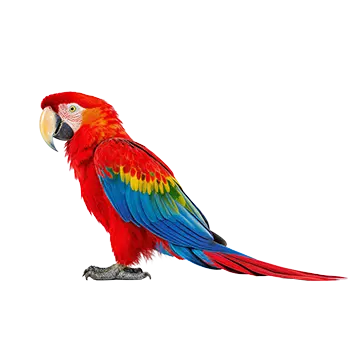

Scarlet Macaws are among the most cognitively advanced animals on earth, with problem-solving abilities, memory, and social intelligence that rival those of great apes in many experimental contexts. In the wild, a Scarlet Macaw spends the vast majority of its waking hours engaged in complex, goal-directed behaviors: navigating forest canopies, locating and extracting food from tough seed pods and unripe fruit, negotiating social hierarchies within the flock, evading predators, and exploring its territory. The cognitive load of a wild day is enormous, and the macaw brain evolved to expect and require that level of stimulation.
Captivity removes nearly all of these demands. Food appears reliably in a dish, predators are absent, social interactions are limited to a few humans and perhaps one or two other birds, and the physical environment changes little from day to day. Without deliberate intervention, a captive Scarlet Macaw faces a cognitive vacuum that its brain is not equipped to handle gracefully. The result is a constellation of behavioral pathologies that avian behaviorists collectively refer to as deprivation syndrome: feather destruction, self-mutilation, stereotypic behaviors like bar chewing and repetitive swaying, excessive screaming, and aggression.
Toys and enrichment devices are the primary tools available to owners for filling this cognitive vacuum. A well-designed enrichment program does not simply give the bird objects to chew. It creates opportunities for the bird to make choices, solve problems, exercise its body, and engage in species-typical behaviors such as foraging, shredding, manipulating, and exploring. The goal is to approximate the mental demands of a wild day within the constraints of a domestic environment, and achieving that goal requires ongoing investment of thought, creativity, and resources on the owner's part.
The financial commitment to toys is a recurring expense that many new macaw owners underestimate. A Scarlet Macaw can destroy a well-made wooden toy in a single afternoon, and a robust enrichment program requires a continuous supply of fresh items to maintain novelty and engagement. Budgeting for toys as a regular monthly expense alongside food and veterinary care, rather than treating them as occasional indulgences, reflects the true cost structure of responsible macaw ownership.