
Play Style & Drive

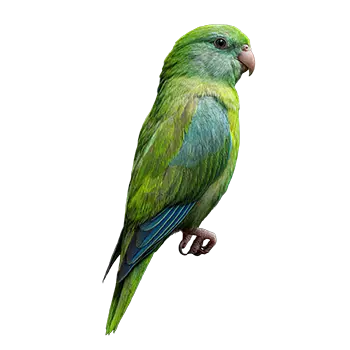
Green-rumped Parrotlets are spirited, curious birds with an intensity of personality that far exceeds their tiny frame. They are natural explorers who investigate every object in their environment with their beaks, feet, and tongues. Understanding your parrotlet's individual play style is key to selecting toys that will actually be used rather than ignored. Some parrotlets are aggressive chewers who demolish wood and leather toys with relentless enthusiasm, while others prefer manipulative puzzles that challenge their problem-solving abilities.

These birds are highly intelligent for their size and can become bored quickly if their environment remains static. Boredom in parrotlets manifests as feather plucking, excessive screaming, repetitive behaviors, and even aggression. A well-enriched cage with a rotating selection of toys is one of the most effective preventive measures against behavioral problems. Plan to rotate toys every one to two weeks, swapping out familiar items for new or rested ones to maintain novelty.

Parrotlets also have strong territorial instincts that influence how they interact with toys. Many parrotlets will claim a favorite toy and guard it aggressively, especially if housed with a companion bird. This possessiveness is normal behavior but should be monitored to ensure it does not escalate into stress or conflict. Providing multiple toys distributed throughout the cage prevents resource guarding and encourages the bird to explore different areas of its enclosure.

Out-of-cage playtime is equally important for enrichment. A tabletop play gym or play stand gives your parrotlet a designated area to explore toys, practice climbing, and interact with you outside the confines of the cage. Supervise all out-of-cage time carefully, as parrotlets are small enough to get into tight spaces and bold enough to investigate hazards like open water, hot surfaces, or other pets.

Foraging & Puzzle Toys

Foraging toys are arguably the single most important enrichment category for captive parrotlets. In the wild, Green-rumped Parrotlets spend a significant portion of their day searching for food — flying between feeding sites, cracking open seed pods, and peeling back bark to find hidden insects. Foraging toys replicate this natural behavior by requiring the bird to work for its food, which provides both mental stimulation and physical exercise.

Simple foraging toys for beginners include paper cups or small paper bags filled with treats and crumpled shut, small wiffle balls stuffed with millet, and foraging wheels that the bird must spin to release seeds. As your parrotlet masters these basic challenges, graduate to more complex options like acrylic puzzle boxes with sliding doors, stacking cups that must be lifted or moved, and foraging walls with multiple compartments at different difficulty levels.

The key to successful foraging enrichment is matching the difficulty to your bird's current skill level. A toy that is too difficult will be abandoned in frustration, while one that is too easy will be solved instantly and lose its enrichment value. Start simple and progressively increase complexity. You can also adjust difficulty by how deeply you hide the food reward — placing a treat in plain sight within a foraging toy is easier than wrapping it in paper and then placing it inside the toy.

Homemade foraging toys are just as effective as commercial ones and can be made from bird-safe household materials. Thread pieces of vegetable through a stainless steel skewer, wrap treats in unbleached paper and tuck them into a clean cardboard tube, or poke holes in a small cardboard box and fill it with shredded paper and hidden seeds. The goal is simply to make the bird think and work before it eats.

Chew Toys & Shredding

Chewing is a fundamental behavior for all parrots, and parrotlets are no exception. Their beaks grow continuously throughout their lives and need regular wear to maintain proper length and alignment. Providing appropriate chew toys satisfies this biological need while also serving as a stress reliever and boredom buster. Parrotlets prefer chew toys made from soft to medium-density materials that give satisfying resistance without being impossibly hard.

Balsa wood, yucca, sola, cork, and palm leaf are all excellent chew toy materials for parrotlets. These materials shred and splinter in a way that parrotlets find deeply satisfying, and they are soft enough that a small parrotlet beak can make meaningful progress. Harder woods like manzanita or java wood are better suited as perches than chew toys, as most parrotlets lack the beak strength to chip away at them effectively.

Shredding toys made from palm fronds, corn husks, coconut fiber, seagrass, and sisal provide a different tactile experience that many parrotlets enjoy. These materials can be woven, braided, or bundled into toys that the bird systematically dismantles strip by strip. Shredding is a particularly important outlet for birds that might otherwise redirect their chewing behavior toward feathers, cage bars, or household items during out-of-cage time.

Safety is paramount when selecting chew toys. Avoid toys with small metal parts like jingle bells or chains with links small enough to trap a toe. Zinc and lead are toxic metals that sometimes appear in cheap toy hardware — look for toys with stainless steel or nickel-plated hardware instead. Dyed wood and leather should use bird-safe vegetable-based dyes, and any toy that becomes heavily soiled or reduced to small fragments that could be swallowed should be replaced immediately.

Climbing & Physical Toys

Parrotlets are athletic little birds that enjoy climbing, swinging, and navigating their environment from multiple angles. Ladders made from natural wood or rope provide excellent climbing exercise and can be positioned diagonally or vertically within the cage to create varied terrain. Small bird ladders with rungs spaced closely enough for parrotlet feet work best — avoid large-rung ladders designed for cockatiels or larger parrots, as the spacing can cause foot strain.

Rope boings and spiral rope perches add a dynamic element to the cage by bouncing and swaying as the bird moves along them. These flexible accessories encourage balance and coordination while providing a different sensory experience from rigid perches and ladders. Choose cotton or sisal rope boings and trim any frayed fibers regularly to prevent toe entanglement. Replace rope items as soon as they show significant wear or loose threading.

Small bird-safe mirrors and reflective toys are controversial in the parrotlet community. Some parrotlets enjoy interacting with their reflection and will chatter, display, and play beside a mirror for extended periods. Others may become obsessively bonded to the perceived companion in the mirror, leading to behavioral issues including aggression toward their owner and regurgitation toward the mirror. Introduce mirrors cautiously and remove them if obsessive behavior develops.

Play gyms and tabletop stands designed for small birds extend enrichment opportunities beyond the cage. Look for compact stands with multiple perch levels, toy hooks, and food cup holders. A good play gym becomes the centerpiece of out-of-cage time and gives your parrotlet a home base where it feels comfortable exploring and playing. Position the gym in a well-lit area where you can supervise and interact with your bird during playtime.

Sound & Sensory Toys

Parrotlets are less vocal than many parrot species, but they are still highly responsive to sounds and enjoy toys that produce auditory feedback. Small wooden or acrylic beads threaded on a stainless steel chain create a gentle clicking and rattling sound when manipulated, which many parrotlets find engaging. Avoid toys with loud bells that could startle a small bird or create stress in a shared living space — smaller, softer-sounding bells or chimes are more appropriate.

Texture variety is an underappreciated aspect of toy enrichment. Parrotlets explore their world primarily through their beaks and feet, and toys that combine multiple textures provide richer sensory experiences. A single toy that incorporates wood beads, leather strips, cotton rope, and natural fiber provides more engagement than a toy made entirely of one material. This multi-textured approach keeps the bird interested longer and encourages more thorough exploration.

Color can influence a parrotlet's interest in toys, though preferences vary between individual birds. Some parrotlets are drawn to brightly colored objects and will preferentially play with toys in specific hues, while others show no color preference at all. If you notice your bird consistently gravitating toward toys of a particular color, you can use this knowledge to make new or unfamiliar toys more appealing by choosing them in the preferred shade.

Water-based enrichment is another sensory option that many parrotlets enjoy. A shallow dish of lukewarm water placed on the cage floor or a flat surface during supervised playtime allows the bird to bathe, splash, and play. Some parrotlets prefer misting from a spray bottle to standing water. Bathing is not only enriching but also important for feather health, and most parrotlets will vocalize excitedly during and after a bath.

DIY & Budget Options

Creating your own parrotlet toys is a rewarding and cost-effective way to keep your bird's environment fresh and stimulating. Many of the most effective enrichment items can be assembled from bird-safe materials found around the house or purchased inexpensively. Unbleached paper, plain cardboard, popsicle sticks, wooden clothespins, stainless steel hardware, and untreated leather lace form the foundation of a versatile DIY toy kit.

One of the simplest and most popular DIY toys is the paper roll forager. Take a clean cardboard tube, flatten one end and fold it closed, fill the tube with a small amount of seeds or dried herbs, then fold the other end shut. Your parrotlet will spend considerable time chewing through the cardboard to reach the reward inside. You can increase the difficulty by wrapping the tube in additional layers of paper or nesting it inside a larger tube.

Natural materials gathered from your yard can also serve as excellent toy components, provided they come from bird-safe, pesticide-free trees and plants. Willow, apple, elm, and birch branches can be washed, baked at a low temperature to eliminate parasites, and then woven into the cage bars or hung with stainless steel quick links. Pine cones treated the same way make durable chew toys that can be smeared with a thin layer of mashed sweet potato or rolled in small seeds for added foraging appeal.

Rotating between store-bought and homemade toys is the most practical approach for most owners. Commercial toys often feature more complex hardware and durable construction, while DIY toys excel at providing frequent novelty at minimal cost. Budget approximately two to four new or refreshed toys per month to maintain an engaging rotation, and always have a few backups ready so you can swap items out as soon as they are destroyed or lose their appeal.

Always consult a qualified professional before making any health-related decisions. This content is provided for informational reference only and should not replace professional guidance specific to your animal.