
Space Requirements

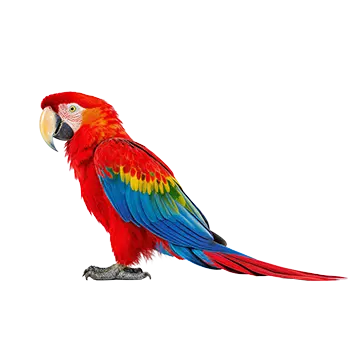
Scarlet Macaws are among the largest parrots commonly kept in captivity, and their enclosure needs reflect that impressive size. With a wingspan that can exceed three feet and a tail that adds another eighteen inches or more, these birds require enclosures that allow full wing extension and comfortable movement without tail feather damage. The absolute minimum cage dimensions for a Scarlet Macaw are 36 inches wide by 48 inches deep by 60 inches tall, but experienced keepers universally recommend going significantly larger — ideally a walk-in flight cage or dedicated bird room.

Beyond raw square footage, the orientation of the enclosure matters. Horizontal space is more valuable than vertical space for macaws, as their natural flight pattern involves long, sweeping horizontal movements rather than vertical climbing. A cage that is wider and deeper will be used more effectively than one that is simply tall. Flight cages that measure six feet or more in length allow short flight bursts that are essential for cardiovascular health and muscle maintenance.

Placement within your home is a critical but often overlooked aspect of housing. Scarlet Macaws are social creatures that become distressed when isolated, so the enclosure should be situated in a common area where the family gathers — typically a living room or family room. However, the cage should be positioned against at least one wall to provide a sense of security, avoiding placement in the center of a room where the bird feels exposed from all sides. Direct sunlight for part of the day is beneficial, but the bird must always have access to shaded areas within the cage to prevent overheating.

Noise is a significant practical consideration when planning cage placement. Scarlet Macaws are one of the loudest parrot species, capable of producing calls that exceed 100 decibels. Placing the enclosure near shared walls in apartments or condominiums can create serious neighbor conflicts. Consider acoustic factors when choosing a location, and be aware that kitchens are categorically unsuitable due to the danger of overheated cookware fumes, particularly from nonstick coatings that release polytetrafluoroethylene, which is lethal to birds even in trace amounts.

Cage Construction and Materials

The construction quality of a macaw cage is not an area where cost-cutting pays off. Scarlet Macaws possess one of the strongest bite forces among parrots, generating enough pressure to bend lightweight wire and snap thin welds. Cage construction should feature heavy-gauge stainless steel or wrought iron with reinforced welds at all joints. Bar thickness should be at minimum 3/16 inch, and bar spacing must fall between one inch and one and a half inches — wide enough to prevent the bird from getting its head caught, narrow enough to prevent escape.

Stainless steel cages represent the top tier in terms of durability, safety, and longevity. They resist rust, do not chip, and are impervious to the corrosive effects of acidic foods and droppings. The initial investment is substantial, but given that a Scarlet Macaw can live for decades, the cost amortizes into a surprisingly reasonable annual figure. Powder-coated wrought iron is a more affordable alternative, though the coating will eventually chip under persistent beak attention and will need recoating or replacement.

Avoid cages made with zinc-coated or galvanized wire, as zinc ingestion causes heavy metal poisoning in birds — a serious and sometimes fatal condition. Similarly, cages with lead-based solder or paint should be rejected entirely. When evaluating any cage, run your fingers along all interior surfaces, joints, and welds feeling for sharp edges, exposed wire ends, or rough spots that could injure feet or feathers.

Door mechanisms deserve special attention. Scarlet Macaws are intelligent escape artists that can learn to manipulate simple slide-bolt and swing-arm latches. Look for cages with locking mechanisms that require two distinct motions to open, or plan to add aftermarket padlocks or carabiner clips to all access points. Food door access should be designed so bowls can be serviced without opening the main cage door, reducing escape opportunities during routine feeding.

Perches and Interior Setup

Perch selection directly impacts a Scarlet Macaw's foot health, comfort, and overall wellbeing. Natural hardwood branches are the gold standard, providing variable diameters that exercise different foot muscles and prevent the pressure sores that develop from standing on uniform dowels. Safe wood species include manzanita, java wood, dragonwood, and untreated fruit tree branches like apple or pear. Avoid cedar, redwood, and any chemically treated lumber, as these can cause respiratory irritation or toxicity.

Perch diameter for a Scarlet Macaw should range between one and a half to two and a half inches, with variation across different perches within the cage. The bird's foot should wrap approximately three-quarters of the way around the perch — if the toes meet or overlap completely, the perch is too small; if the foot sits flat, it is too large. Rope perches made from natural cotton or sisal add textural variety and are gentler on feet, though they require regular inspection for fraying that could entangle toes.

Concrete and mineral-coated perches serve a conditioning function by naturally filing down nails and beak edges, reducing the frequency of manual grooming. These should be placed in lower-traffic areas of the cage — near food or water stations rather than primary sleeping spots — as extended standing on abrasive surfaces can cause foot irritation. One or two conditioning perches per enclosure is sufficient.

The arrangement of perches within the cage should create a logical flow that encourages movement. Place perches at varying heights and angles, ensuring the bird can move between them without its tail dragging through food or water dishes. The highest perch typically becomes the preferred sleeping spot, so position it in a quieter corner of the cage away from drafts. Leave the center of the cage relatively open to allow wing stretching and short flutter movements, resisting the temptation to fill every available space with perches and accessories.

Outdoor Aviaries and Flight Enclosures

An outdoor aviary or flight enclosure is one of the greatest enrichment investments a Scarlet Macaw owner can make. Access to natural sunlight provides unfiltered UV-B radiation essential for vitamin D3 synthesis and calcium metabolism, benefits that cannot be fully replicated by indoor lighting. Even a modest outdoor enclosure used for a few supervised hours on suitable weather days significantly improves a macaw's physical and psychological health.

Construction standards for outdoor aviaries must account for predators, weather, and escape prevention simultaneously. Double-wired panels with a gap between inner and outer mesh prevent predators like raccoons, hawks, and snakes from reaching through to the bird. The wire gauge should be at least 12-gauge welded mesh, and the enclosure should include a solid roof section for rain and sun shelter alongside an open-wire section for sunlight exposure. A concrete or paver foundation prevents digging predators from tunneling underneath.

Climate considerations are particularly important for Scarlet Macaws, which evolved in tropical environments. These birds tolerate heat reasonably well but are sensitive to cold, damp conditions. Outdoor time should be restricted when temperatures drop below 50 degrees Fahrenheit or during wet, windy weather. In regions with hot summers, ensure the aviary provides ample shade and misting capability. Some keepers install thermostat-controlled heating elements for transitional seasons, extending the usable period of the outdoor space.

The aviary should include natural perching from weather-resistant hardwood branches, ideally arranged to provide both exposed sunning spots and sheltered retreats. Live, non-toxic plants can be incorporated but will require protection or frequent replacement, as macaws will systematically destroy vegetation. A secure double-door entry system — an airlock-style vestibule — prevents the bird from flying past you during entry and exit, which is the most common escape scenario with outdoor flight enclosures.

Climate Control and Environmental Quality

Indoor climate management for a Scarlet Macaw involves balancing temperature, humidity, air quality, and lighting — all of which directly affect health and behavior. The ideal ambient temperature range is 65 to 85 degrees Fahrenheit, with relative humidity between 50 and 70 percent. Most centrally heated homes fall well below optimal humidity levels during winter months, making supplemental humidification essential. Dry air contributes to feather dryness, itchy skin, respiratory irritation, and the dusty conditions that exacerbate avian respiratory disease.

Air quality is a critical and frequently underestimated factor in avian housing. Birds have extremely efficient respiratory systems with air sacs that make them hypersensitive to airborne toxins, particulates, and irritants. Air purifiers with HEPA filtration placed near the bird area help control feather dust and dander. Avoid ionizing air purifiers, which produce ozone — a respiratory irritant for birds. Never use aerosol sprays, scented candles, air fresheners, or cleaning products with volatile organic compounds anywhere near the bird's living space.

Lighting plays a profound role in a Scarlet Macaw's hormonal regulation, mood, and feather health. Birds require a consistent photoperiod of approximately 12 hours of light and 12 hours of darkness, mimicking equatorial day length cycles. Full-spectrum lighting that includes UV-A and UV-B wavelengths should be provided for birds without regular access to unfiltered natural sunlight. Standard window glass blocks most UV-B radiation, so proximity to windows alone is insufficient. Mount full-spectrum bulbs within 12 to 18 inches of the primary perching area and replace them according to manufacturer specifications, as UV output degrades long before the visible light dims.

Nighttime conditions matter as much as daytime ones. Scarlet Macaws need genuine darkness for restful sleep — covering the cage with a breathable, opaque cover helps block ambient light from screens, streetlights, and household activity. Persistent sleep disruption leads to hormonal imbalances, irritability, increased aggression, and chronic stress behaviors. Aim for ten to twelve hours of uninterrupted darkness, maintaining a consistent bedtime routine that signals the transition from active to rest periods.

Multi-Bird and Shared Living Spaces

Housing multiple Scarlet Macaws or mixing species in a shared space introduces complexities that require careful planning. Macaws are not inherently flock-oriented in the way that smaller parrots like cockatiels or budgies are — they tend to form intense pair bonds rather than broad social groups. Two macaws that are bonded can share an enclosure successfully, but the cage must be large enough that each bird can retreat to its own space. Fighting over territory, perches, and food access is common when space is insufficient.

Introducing a new macaw to an existing bird should always begin with separate cages placed within visual range but beyond biting distance. This quarantine and acclimation period serves dual purposes: it allows a veterinary observation window to ensure the new bird is healthy, and it lets both birds adjust to each other's presence without the pressure of shared territory. Supervised out-of-cage interactions on neutral ground — a play stand neither bird claims as its own — should precede any attempt at cohabitation.

Mixing Scarlet Macaws with smaller parrot species is generally inadvisable. The size differential creates a genuine safety risk, as a macaw's beak can inflict severe or fatal injuries on smaller birds even during what appears to be play behavior. If multiple species share a bird room, each should have its own enclosed cage with supervised out-of-cage time managed so that species of vastly different sizes are not loose simultaneously.

Shared living spaces with other household pets — particularly cats and dogs — require rigid safety protocols. Even well-trained dogs and cats retain predatory instincts that can activate unpredictably, and a single moment of unsupervised interaction can result in fatal injury to the bird. The macaw's enclosure should be positioned where other pets cannot reach it, and out-of-cage time should occur only in rooms where other animals are physically excluded. Macaws themselves can be aggressive toward other pets, and a Scarlet Macaw's bite can cause serious injury to a curious dog or cat.

Always consult a qualified professional before making any health-related decisions. This content is provided for informational reference only and should not replace professional guidance specific to your animal.