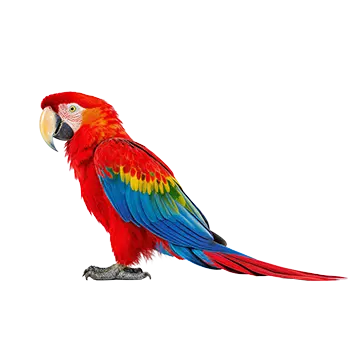

Harnesses designed for large parrots offer the remarkable possibility of safely taking your Scarlet Macaw outdoors without the risk of escape or predator encounters that come with unrestrained outdoor time. A well-fitted avian harness allows the bird to perch on your arm or shoulder while tethered securely, opening up opportunities for walks, park visits, and socialization experiences that dramatically enrich a captive macaw's life. The key is selecting a harness specifically engineered for macaw-sized birds, as designs intended for smaller parrots will not withstand the strength and bite force of a large macaw.
The two primary harness designs on the market take fundamentally different approaches. Vest-style harnesses wrap around the bird's body with a leash attachment point between the wings, distributing pressure across the torso. Strap-style harnesses use minimal material with a figure-eight configuration around the neck and under the wings. Each has trade-offs — vest styles are more secure and harder to escape but take longer to apply, while strap styles are quicker to put on but may not restrain a determined escape artist as reliably.
Harness training must begin gradually and with extraordinary patience. Most Scarlet Macaws initially reject the sensation of wearing a harness, and forcing the issue creates lasting negative associations that make future training exponentially harder. Begin by simply leaving the harness near the bird's play area so it becomes a familiar object. Progress to draping it over the bird during positive interactions, then to brief wearing sessions paired with high-value treats, gradually increasing duration over weeks or months. Many experienced macaw keepers report that harness acceptance takes anywhere from two weeks to several months.
Flight lines and aviator leashes extend the harness concept by providing a longer tether that allows limited flight while preventing escape. These are particularly useful in open outdoor areas where the bird can make short flights between perches or to your hand. The line should be lightweight enough not to impede flight but strong enough to withstand a sudden burst of panicked flight energy. Always maintain control of the line and never tie it to a stationary object, as a startled bird hitting the end of a fixed tether at full flight speed can suffer serious spinal or keel bone injuries.