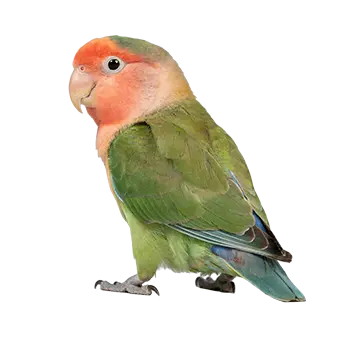

Play Style & Personality

Peach-faced Lovebirds are among the most playful and physically active small parrots kept as companions. Their play style combines vigorous chewing, acrobatic climbing, and curious manipulation of objects — they want to grab, shred, shake, and investigate anything within reach. Understanding this natural behavioral profile is essential for selecting toys that will actually engage your bird rather than being ignored in a corner of the cage.

These birds are also notable for their paper-shredding instinct. Peach-faced Lovebirds will strip paper, palm fronds, and other fibrous materials into long strips and tuck them into their rump feathers — a nesting behavior unique to this species among the lovebird family. This behavior is instinctive and provides genuine satisfaction for the bird, so offering safe shredding materials is one of the easiest and most rewarding forms of enrichment you can provide.

Social play is another hallmark of the species. Lovebirds that are well bonded to their owners will engage in interactive games — rolling small balls back and forth, playing peek-a-boo, or wrestling gently with fingers. For birds kept in pairs, mutual preening and synchronized play with shared toys are common. Enrichment planning should account for both independent play when you are away and interactive play during your time together.

Foraging & Puzzle Toys

Foraging toys replicate the mental challenge of finding food in the wild and are among the most valuable enrichment tools for captive lovebirds. These toys require the bird to solve a problem — lifting a lid, pulling a string, turning a wheel, or navigating a maze — to access a food reward hidden inside. Start with simple foraging challenges and increase complexity as your bird masters each level, building confidence and cognitive skills over time.

Small acrylic foraging boxes with rotating compartments are well-sized for lovebirds and provide a satisfying challenge. Stainless steel foraging cups that bolt to the cage bars and require the bird to remove a cover are another durable option. Avoid foraging toys designed for large parrots, as the mechanisms may be too heavy or difficult for a lovebird to operate, leading to frustration rather than enrichment.

DIY foraging setups are simple and effective. Wrapping a treat in a small piece of unbleached paper, threading food through a clean cardboard tube, or hiding seeds beneath crumpled paper in a shallow dish all create foraging opportunities at minimal cost. Rotate these homemade challenges regularly to prevent the bird from losing interest once the novelty fades.

The key principle behind successful foraging enrichment is graduated difficulty. A bird that has never encountered a foraging toy needs to see the food initially — perhaps a partially open container — before it understands the concept. Jumping to complex puzzles too quickly can cause the bird to give up entirely. Patience in this progression pays off with a bird that is more engaged, calmer, and less prone to behavioral problems like feather plucking.

Chew Toys & Shredders

Chewing is not a behavioral problem in lovebirds — it is a biological necessity. Their beaks grow continuously and require regular wear to maintain proper shape and length. Providing appropriate chew toys saves your furniture, clothing, and cage accessories from becoming unintended targets. Look for toys made from bird-safe materials such as untreated softwood, yucca, balsa, sola, and vegetable-tanned leather.

Shredding toys are particularly satisfying for Peach-faced Lovebirds given their strong natural inclination to strip fibrous materials. Toys made from layered palm leaves, corn husks, seagrass, and crinkle paper give the bird hours of focused, purposeful activity. These toys are meant to be destroyed — that is their entire purpose — so expect to replace them regularly. A toy that lasts forever is likely too hard or uninteresting for a lovebird to engage with.

Wood block toys strung on stainless steel wire or vegetable-tanned leather strips offer a combination of chewing and manipulation. The bird can grip, twist, and gnaw on individual blocks while the overall structure provides swinging motion and physical challenge. Select blocks sized appropriately for a small parrot — pieces that are too large will be ignored, while pieces small enough to be swallowed whole present a choking hazard.

Safety inspection should be a regular habit with chew toys. Check for sharp edges created by chewing, loose hardware that could be ingested, and small fragments that could cause impaction. Quick-link connectors made from stainless steel are safer than split rings or key rings, which can trap toes and beaks. Remove and replace any toy that has been chewed down to its hardware components.

Climbing & Physical Toys

Lovebirds are natural climbers and benefit enormously from toys that encourage physical movement throughout their cage. Ladders made from natural wood or rope provide vertical and angled pathways that exercise the bird's feet and legs. A cargo net or rope climbing wall attached to the inside of the cage creates an interactive surface that lovebirds will spend significant time navigating and hanging from.

Swings and boings — spiral rope perches that bounce when the bird lands on them — add dynamic movement to the cage environment. These items engage the bird's balance and coordination in a way that static perches cannot. Most lovebirds develop a strong attachment to their swing and will use it as both a play station and a preferred sleeping perch. Ensure that swings are hung securely and positioned so the bird cannot swing into cage walls or other obstacles.

Playground tops and tabletop play gyms provide an out-of-cage enrichment station for supervised playtime. These freestanding structures typically include perches, ladders, swings, and toy hooks, giving the bird a dedicated space to explore during daily out-of-cage time. Choose a play gym sized for small parrots — structures designed for cockatiels work well for lovebirds — and position it in a social area of the home where the bird can interact with the family.

Bells, rings, and hanging toys that produce noise and movement when manipulated are endlessly entertaining for many lovebirds. Some birds develop elaborate routines with bell toys, batting them repeatedly and responding to the sound. Stainless steel bells are safer than those made from coated metals, and cowbell-style designs are preferred over jingle bells, which have small openings that can trap toes or beaks.

Comfort & Companion Toys

Single lovebirds sometimes benefit from comfort toys that serve as surrogate companions. Small mirrors, soft fabric birds, and preening toys with fabric strips or leather fringes can provide comfort to a bird housed alone. However, mirrors should be used with caution — some birds become obsessively bonded to their reflection, leading to behavioral problems including aggression toward their owner and refusal to eat away from the mirror. Monitor your bird's response and remove the mirror if obsessive behavior develops.

Preening toys made from cotton rope, leather strips, or coconut fiber give the bird an outlet for the mutual grooming behavior that is central to lovebird social life. A bird that can preen and manipulate a textured toy is less likely to redirect preening behavior into feather destruction. These toys are especially valuable for single birds that lack a feathered companion to preen with.

Snuggle huts and fabric tents are marketed as comfort items for small parrots, but they carry risks that owners should understand before purchasing. Birds can become hormonally stimulated by enclosed dark spaces, leading to increased aggression and egg-laying in females. The fabric threads can also be ingested or entangle toes. If you choose to offer a snuggle hut, monitor its condition closely, replace it at the first sign of fraying, and remove it if hormonal behavior escalates.

Ultimately, the best companion for a Peach-faced Lovebird is another lovebird. No toy can fully substitute for the social interaction, mutual preening, and companionship that a bonded partner provides. If your lifestyle allows it, consider adding a second bird rather than relying on comfort toys to fill the social gap — though this decision should be made thoughtfully with consideration for the increased space, food, and veterinary costs involved.

DIY & Budget Options

Some of the most engaging lovebird toys cost little or nothing to make. Untreated popsicle sticks threaded onto a piece of vegetable-tanned leather create a simple chew toy that most lovebirds will attack with enthusiasm. Paper cupcake liners crumpled into balls and placed in a foraging dish provide both shredding satisfaction and a treasure hunt when small seeds are hidden inside. Clean cardboard tubes from paper towels or toilet paper rolls can be stuffed with shredded paper and treats for a quick foraging challenge.

Strips of untreated, unbleached paper are the simplest enrichment item you can offer a Peach-faced Lovebird. Place a few strips near the bird's perch and watch as it instinctively begins shredding and tucking them into its feathers. This activity is deeply satisfying for the bird and provides genuine behavioral enrichment at virtually zero cost. Avoid glossy, printed, or dyed paper, as inks and coatings may contain chemicals that are harmful if ingested.

Natural materials foraged from your yard can supplement commercial toys, provided they come from bird-safe trees and have not been treated with pesticides or herbicides. Clean branches from apple, willow, elm, or birch trees make excellent perches and chew sticks. Pine cones — thoroughly cleaned, baked at a low temperature to kill any insects or mold, and cooled completely — can be stuffed with seeds and hung in the cage as a natural foraging toy.

Rotation is the secret to keeping enrichment fresh without constantly buying new toys. Keep a collection of five to ten toys and swap three or four into the cage each week while the others rest out of sight. When a previously removed toy reappears, it often generates renewed interest as if it were brand new. This approach maximizes the value of every toy you own and prevents the cage from becoming cluttered with items the bird has lost interest in.

Always consult a qualified professional before making any health-related decisions. This content is provided for informational reference only and should not replace professional guidance specific to your animal.