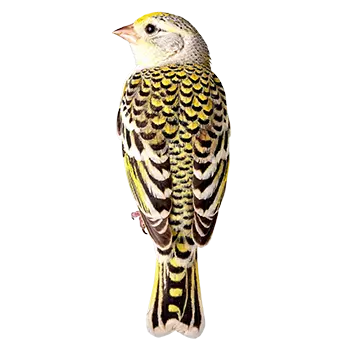

Maintaining precise environmental conditions is fundamental to the health and breeding success of Lizard Canaries, and modern sensor technology makes it possible to monitor the bird room with an accuracy and consistency that manual observation alone cannot achieve. Temperature and humidity are the two most critical environmental variables for canary health, and both fluctuate more widely within a typical home than most keepers realize without instrumented measurement. A digital thermometer-hygrometer positioned at cage level — not on a distant wall — provides real-time data on the conditions the bird is actually experiencing.
The optimal temperature range for Lizard Canaries falls between sixty and seventy-five degrees Fahrenheit, with breeding pairs doing best toward the upper end of this range. Humidity should be maintained between forty and sixty percent for general health, with higher humidity beneficial during the molt and incubation periods when feather growth and egg viability are sensitive to dry air. A thermometer-hygrometer with a maximum-minimum memory function records the highest and lowest readings over a given period, revealing overnight temperature drops, midday spikes, and humidity fluctuations that occur when the keeper is absent.
Wireless sensor systems take environmental monitoring further by transmitting data to a base station, smartphone app, or cloud dashboard in real time. Multi-sensor systems allow the keeper to place individual sensors in different locations — near the cage, in the bird room, and outdoors — and compare conditions across all three simultaneously. Alerts can be configured to notify the keeper via push notification if temperature or humidity falls outside a predefined range, providing an early warning system that can prevent cold stress, overheating, or respiratory problems before they become clinically apparent.
Air quality monitoring is an emerging category of avian technology that is particularly relevant for birds housed in enclosed rooms. Small, affordable particulate matter sensors measure airborne dust and dander levels, which accumulate rapidly in a room containing multiple birds with active feather growth. Elevated particulate levels increase the risk of respiratory disease and degrade the air quality for both the birds and the keeper. Pairing an air quality monitor with a quality air purifier equipped with a HEPA filter creates a feedback loop where the monitor validates the purifier's effectiveness and alerts the keeper when filter replacement or increased ventilation is needed.