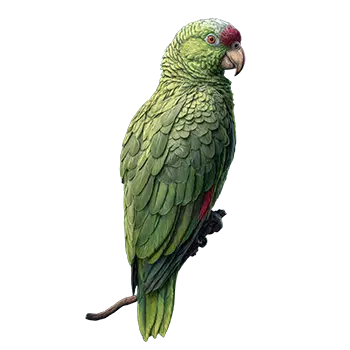

Perches & Stands

Perches and playstands are the surfaces on which a Lilac-Crowned Amazon spends virtually all of its time, making them the single most important accessory category for this species. The bird's feet are in continuous contact with perching surfaces for every waking and sleeping hour, and the quality, variety, and placement of these surfaces directly determine foot health, joint comfort, and overall physical condition over the bird's multi-decade lifespan.

Natural wood perches are the foundation of a healthy perching setup. Branches from bird-safe hardwoods such as manzanita, java wood, and dragonwood provide irregular surfaces that exercise the full range of foot muscles and tendons with every grip adjustment. The natural variation in diameter along a single branch means the bird's toes are constantly adapting to different circumferences, preventing the repetitive stress that uniform-diameter perches produce. Perch diameters for the Lilac-Crowned Amazon should range from approximately three-quarters of an inch at the narrowest points to one and a half inches at the widest, with the majority of perching surface falling in the one-inch range.

Playstands serve as the bird's primary out-of-cage living space and should be chosen with the same care as the cage itself. A quality playstand for a medium Amazon should have a stable, weighted base that the bird cannot tip by climbing to one side, multiple perching levels connected by ladders or branches, dedicated food and water cup holders, and a tray beneath the perching area to catch droppings and discarded food. Tabletop playstands work well for owners who want the bird at a comfortable interaction height during desk work or meals, while floor-standing playstands are appropriate for rooms where the bird will be spending extended unsupervised periods.

Conditioning perches made from textite, concrete, or sandy-textured materials serve a specific grooming function by gently filing the bird's nails and beak during normal perching activity. These should be positioned as secondary perches rather than as the bird's primary resting spot, as prolonged contact with abrasive surfaces can cause sole irritation and calluses. Placing a conditioning perch near a food station, where the bird stands for relatively brief periods during meals, delivers the grooming benefit without overexposing the foot pads. A single conditioning perch per cage or playstand is sufficient.

Food & Water Dishes

The food and water delivery system affects nutrition, hygiene, and daily maintenance workload. Stainless steel dishes are the unambiguous best choice for Amazon parrots. They are non-porous, resistant to bacterial biofilm formation, dishwasher safe, and completely immune to the beak damage that destroys plastic and ceramic alternatives over time. A Lilac-Crowned Amazon's beak can crack lightweight ceramic dishes, and plastic dishes develop scratches and crevices that harbor bacteria despite regular washing. Stainless steel bowls with a rolled edge resist deformation from beak pressure and provide a smooth rim that does not chip or roughen with use.

Bowl mounting hardware must be secure against the bird's persistent manipulation. Amazons are notorious for unbolting dishes from cage walls and dumping their contents, both as play behavior and as a protest against foods they find objectionable. Bolt-on brackets with wing nuts that the bird cannot grip effectively, or locking crocks that twist into a permanently mounted bracket, prevent this behavior. Quick-release brackets that allow the owner to remove the dish for filling and cleaning without tools are more convenient than bolt-on systems for daily use, provided the release mechanism is beyond the bird's ability to operate.

Water delivery can be accomplished through an open dish, a water bottle, or both. Open water dishes allow the bird to drink naturally and to dip food items, which is normal Amazon behavior. However, open dishes are quickly contaminated with food debris, droppings, and feather dust, and must be cleaned and refilled at least twice daily. Water bottles with stainless steel sipper tubes prevent contamination and maintain cleaner water between changes, but not all birds will learn to use them, and the sipper tube must be checked daily to confirm it has not clogged. Many experienced Amazon owners offer both a water bottle and a small open dish, ensuring the bird always has access to clean water regardless of its drinking preference.

Dish placement within the cage matters more than most owners realize. Food dishes positioned at different locations encourage the bird to move through the cage to access different items, which increases physical activity. Water should not be placed directly below any perch, as droppings will contaminate it. Dishes should be accessible from a stable perching position where the bird can eat comfortably without stretching awkwardly or balancing on one foot. Placing fresh food and pellet dishes at slightly different heights creates a natural foraging circuit that the bird must navigate throughout the day.

Bathing Accessories

Regular bathing is essential for the Lilac-Crowned Amazon's feather condition, skin health, and behavioral well-being. Amazons produce moderate amounts of feather dust compared to cockatoos and African Greys, but they still benefit significantly from regular wetting that supports the natural preening process. Water dissolves dried preen oil, removes accumulated dust and dander from the feather surfaces, and stimulates the bird to engage in thorough preening sessions that distribute fresh preen oil evenly across the plumage. Most Amazons enjoy bathing and will vocalize enthusiastically during and after the experience.

Mist bathing with a clean spray bottle is the simplest and most widely accepted bathing method. A spray bottle set to produce a fine mist rather than a direct stream allows the owner to simulate rainfall, which is the bathing method that most closely matches the bird's wild experience. The water should be lukewarm, not hot or cold, and should be free of any soap, detergent, or additives. Spraying upward above the bird and allowing the mist to fall onto the plumage is better received by most Amazons than spraying directly at the bird, which can feel confrontational. Dedicated spray bottles labeled and reserved exclusively for bird bathing prevent accidental contamination from cleaning products.

Shower perches allow the bird to bathe in the household shower, which many Amazons learn to enjoy thoroughly. A suction-cup-mounted perch designed for parrots attaches to the shower wall or glass enclosure at a height that keeps the bird within the spray zone while allowing it to choose how much water it receives by moving along the perch. The shower spray should be directed primarily at the wall near the bird rather than directly at it, and the temperature should be slightly cooler than what a human would use. Shower bathing produces the most thorough feather soaking and often triggers intense preening sessions that can last an hour afterward.

Birdbath dishes designed for in-cage or tabletop use offer a third option for birds that prefer to wade and splash. These shallow dishes should be wide enough for the bird to stand in and flap its wings without tipping the dish, typically requiring a diameter of at least ten to twelve inches and a depth of two to three inches. Some birds bathe enthusiastically in their water dish, which is natural behavior but creates a hygiene problem when the drinking water doubles as bathwater. Providing a separate, larger bathing dish at specific times removes this conflict and gives the bird dedicated bathing opportunities without compromising its drinking water supply.

Grooming Tools

Basic grooming for the Lilac-Crowned Amazon includes nail maintenance, beak monitoring, and feather care. While much of the grooming process can be managed through appropriate environmental provisions such as conditioning perches and chewing toys, most owners will eventually need to perform direct grooming interventions, and having the right tools on hand makes these necessary procedures safer and less stressful for both the bird and the handler.

Nail trimming tools fall into two categories: clippers and rotary grinders. Guillotine-style nail clippers designed for small animals or birds provide a quick, clean cut and are the most common choice for home nail maintenance. The critical technique point with clippers is identifying the quick, the blood vessel visible as a darker line within the translucent nail. Cutting into the quick causes pain and bleeding. For birds with dark nails where the quick is not visible, trimming only the sharp tip reduces the risk of cutting too short. Rotary grinders, such as small Dremel tools with a fine sanding drum, remove nail material gradually rather than in a single cut, which gives the operator more control and makes it easier to approach the quick without cutting into it. Some birds tolerate the grinding sensation better than the pressure of clippers, while others find the vibration and noise of the tool more distressing.

Styptic powder is an absolute necessity in any bird owner's grooming kit. This clotting agent, typically containing ferric subsulfate, stops nail bleeding almost immediately when applied to a cut quick. Cornstarch or flour can serve as an emergency substitute, but they are less effective and do not provide the same rapid hemostasis. A small container of styptic powder should be open and within reach before any nail trimming begins, so that treatment can be applied within seconds if bleeding occurs. For birds with beak injuries or broken blood feathers, styptic powder is equally essential.

Beak maintenance in healthy Amazons is largely self-managing. A bird with access to appropriate chewing surfaces, conditioning perches, and a balanced diet will maintain normal beak shape and length through natural use. However, beak abnormalities do occur, including overgrowth due to liver disease, lateral deviation from injury, and flaking or peeling that may indicate nutritional deficiency or viral infection. A grooming kit should include a small flashlight for inspecting the beak and cere, and any observed abnormalities should be evaluated by an avian veterinarian rather than addressed with home filing or trimming, as the beak contains a blood supply and nerve endings that make amateur correction risky.

Harnesses & Outdoor Gear

Taking a Lilac-Crowned Amazon outdoors provides exposure to natural sunlight, fresh air, and environmental stimulation that no indoor setup can fully replicate. However, outdoor excursions with an unrestrained parrot carry extreme risk. A startled bird can take flight in an instant, and even birds with clipped wings can gain enough lift in a wind gust to travel distances from which they cannot navigate home. The Lilac-Crowned Amazon's endangered conservation status makes every lost pet bird a compounding loss for the species. A properly fitted flight harness is the only safe method for uncontained outdoor access.

Bird harnesses designed for medium parrots typically use a figure-eight or vest-style design that wraps around the bird's body, passing across the chest and between or over the wings without restricting breathing or wing movement. The harness attaches to a leash that the owner holds or clips to a belt. Fitting is critical: a harness that is too loose can be slipped or chewed off, while one that is too tight restricts breathing and causes skin irritation under the wings. Most harness manufacturers provide sizing guides based on species and body weight, and adjustable designs accommodate the slight weight fluctuations that occur with diet changes and seasonal cycles.

Harness training requires patience and must begin long before the first outdoor outing. The process involves gradual desensitization: first allowing the bird to see and investigate the harness as an object, then touching the bird with the harness without putting it on, then briefly placing it on the bird for seconds at a time with immediate reward, and progressively increasing the duration of wear over days or weeks. Forcing a harness onto an untrained bird produces panic, beak injuries, and a lasting aversion that makes future training far more difficult. Most Lilac-Crowned Amazons can be harness-trained with consistent, positive sessions of five to ten minutes daily over two to four weeks.

Bird backpack carriers with perch-style interiors and mesh ventilation panels offer an alternative to harness walking for owners who want outdoor access without direct handling during transit. These carriers allow the bird to perch inside a transparent or mesh-sided enclosure while the owner carries it like a backpack, providing visual access to the outdoor environment without any escape risk. They are particularly useful for trips to parks, markets, or other environments where a leashed bird on a hand or shoulder might be startled by dogs, children, or sudden noises. The carrier should be well-ventilated, escape-proof, and include a shaded section the bird can retreat to if overstimulated.

Cage Covers & Lighting

Light management is one of the most consequential and most frequently mismanaged aspects of Amazon parrot care. The Lilac-Crowned Amazon requires ten to twelve hours of uninterrupted darkness each night to maintain healthy hormonal cycles, sleep quality, and behavioral stability. Amazons that are chronically sleep-deprived through late-night household activity and light exposure develop irritability, aggression, chronic hormonal behavior, and immune suppression. Cage covers and lighting systems are the tools through which owners regulate the bird's photoperiod.

A quality cage cover should block all light, including the flickering light from screens and the ambient glow of standby LEDs on electronic devices. Heavy, opaque fabric in a dark color is essential. Lightweight or translucent covers that allow light penetration fail to create the darkness the bird needs, even though the bird may appear to settle for the night. The cover should fit the cage snugly enough to block light from the sides and bottom while leaving adequate ventilation at the base or through strategically placed gaps that do not admit light. Commercially made cage covers sized to standard cage dimensions are available, but a custom cover sewn from blackout fabric often provides a better fit for non-standard cage shapes.

Full-spectrum lighting addresses the opposite end of the photoperiod equation by providing quality light during the bird's active hours. Natural sunlight filtered through window glass loses the UVB wavelengths that enable vitamin D3 synthesis, and indoor artificial lighting lacks the spectral range that supports natural color vision and circadian rhythm regulation in birds. Full-spectrum avian bulbs that emit light in the UVA and UVB range should be positioned above or beside the cage at a distance recommended by the manufacturer, typically twelve to eighteen inches from the nearest perch. These bulbs lose their UV output over time even when they continue to produce visible light, so they should be replaced on the schedule specified by the manufacturer, usually every six to twelve months.

Lighting timers eliminate the human inconsistency that is the most common cause of irregular photoperiods. A simple plug-in timer set to turn the full-spectrum light on at the same time each morning and off at the same time each evening, with the cage cover applied shortly before the light turns off, creates a consistent day-night cycle that the bird can entrain to. Consistency is more important than the specific hours chosen, though aligning the bird's active period roughly with the household's waking hours reduces behavioral conflict. Seasonal adjustment of the photoperiod, shortening the daylight hours slightly in winter and lengthening them slightly in summer, mimics the bird's natural experience and can reduce chronic hormonal behavior in species prone to it.

First Aid & Emergency Supplies

A dedicated avian first aid kit is a non-negotiable item for every parrot owner, and its importance increases with the bird's value and rarity. The Lilac-Crowned Amazon's endangered status and the difficulty of replacing a bonded companion of a long-lived species make emergency preparedness particularly critical. A well-stocked first aid kit allows the owner to stabilize the bird during the interval between an injury or sudden illness and the arrival of veterinary care, which in the case of avian veterinary specialists may require travel to a distant clinic.

The core contents of an avian first aid kit should include styptic powder for bleeding nails or beak, gauze pads and self-adhesive bandage wrap for wound management, blunt-tipped scissors for cutting bandage material or removing tangled fibers, a pair of hemostats for pulling broken blood feathers when necessary, a small flashlight for oral and external examination, and a digital thermometer. Cornstarch serves as a backup clotting agent if styptic powder is not available. A heating pad or a commercially available avian warming panel provides supplemental heat for a bird in shock, as maintaining body temperature is one of the most critical first aid interventions for an injured or acutely ill bird.

Broken blood feathers represent the most common emergency that bird owners encounter at home. A blood feather is a developing feather still supplied by a blood vessel through the shaft. If the shaft is broken, the exposed blood vessel bleeds continuously because the open feather shaft prevents the blood from clotting naturally. Direct pressure with styptic powder applied to the broken shaft end stops most blood feather bleeds. If pressure and styptic powder do not control the bleeding, the feather must be pulled from its follicle using hemostats, which allows the follicle to contract and seal the vessel. This procedure is stressful for both the bird and the handler, and practicing the grip technique on a shed feather before an emergency occurs builds familiarity with the tool.

An emergency information card should be included in the first aid kit and posted visibly in the bird's living area. This card should list the avian veterinarian's name, clinic address, phone number, and after-hours emergency contact, as well as the address and phone number of the nearest emergency veterinary hospital that accepts avian patients. In a crisis, the stress of the situation can make it difficult to recall information that is normally easily accessible. Having it written down and immediately visible eliminates that delay. The kit should also contain a towel for safely restraining the bird during first aid procedures, as an injured bird will bite defensively and an unsecured bird is impossible to treat effectively.

Always consult a qualified professional before making any health-related decisions. This content is provided for informational reference only and should not replace professional guidance specific to your animal.