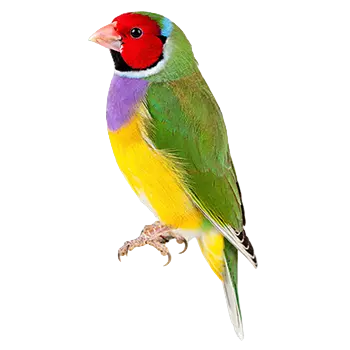

Enrichment Needs

Gouldian Finches are not toy-oriented birds in the way that parrots and some larger softbills are, and this distinction fundamentally shapes how enrichment should be approached for the species. Gouldians do not manipulate objects with their feet, shred materials with their beaks for recreation, or engage in the kind of problem-solving play that defines enrichment for psittacines. Their enrichment needs center instead on opportunities for flight, social interaction, bathing, foraging, and environmental variety. Understanding this difference prevents the common mistake of filling a Gouldian cage with parrot-style toys that the birds ignore entirely.

Flight itself is the most important form of enrichment for any Gouldian Finch. A cage or aviary that provides adequate horizontal space for sustained flying delivers more behavioral benefit than any purchasable toy. Enrichment products for Gouldians should be evaluated through the lens of whether they encourage movement and natural behaviors rather than whether they provide intellectual puzzles. A well-placed swing, a spray millet hung at the far end of the cage, or a bath dish that motivates the bird to fly down from its perch all serve as enrichment by prompting physical activity.

Social enrichment is equally vital. Gouldians are flock birds that communicate through soft calls, postural displays, and proximity. A lone Gouldian deprived of conspecific interaction will display reduced activity, subdued vocalizations, and in some cases feather-damaging behaviors driven by stress. Providing at least one companion of the same species is the most effective single enrichment intervention available. In multi-bird setups, the social dynamics themselves generate continuous behavioral stimulation that no product can replicate.

Environmental novelty, presented gradually and without causing alarm, rounds out the enrichment picture. Rearranging perch positions periodically, introducing a new branch from a bird-safe tree species, rotating the location of food dishes, or placing fresh greens in an unfamiliar spot within the cage all encourage exploratory behavior. Gouldians are somewhat more cautious about novel objects than zebra finches or society finches, so changes should be introduced one at a time with observation for signs of stress.

What to Look For

Safety is the primary criterion for any item placed inside a Gouldian Finch enclosure. These birds are small enough that hazards often overlooked in parrot housing become serious threats. Toys or accessories with loops, rings, or enclosed spaces sized between one-quarter and three-quarters of an inch in diameter can trap a Gouldian head or foot, leading to panic, injury, or strangulation. Any product with chain links, split rings, or dangling components should be inspected with this risk in mind before installation.

Material toxicity requires careful attention. Items made from lead, zinc, or copper are hazardous. Painted or dyed products must use bird-safe, non-toxic finishes. Many toys marketed for birds are manufactured overseas with inconsistent quality control, and the paints or dyes used may not meet the safety standards assumed by the buyer. Purchasing from established avian product manufacturers with transparent sourcing and material disclosures reduces this risk. When in doubt, unpainted natural materials are the safest choice.

Size appropriateness matters more for finch enrichment than for parrot enrichment. Products designed for budgerigars are often suitable for Gouldians, but toys sized for cockatiels or larger parrots are typically too bulky, too heavy, and too cumbersome for a small finch to interact with. Finch-specific product lines exist and should be the first place to look, though the selection is admittedly narrower than the vast range available for hookbill species.

Ease of cleaning influences both practicality and hygiene. Enrichment items that cannot be thoroughly cleaned will accumulate droppings, food residue, and potentially harmful bacteria or mold over time. Products made from stainless steel, hard plastic, or natural materials that can be replaced regularly are preferable to those with complex textures, hidden crevices, or absorbent surfaces that resist sanitization. Items that are inexpensive enough to be discarded and replaced when they become soiled offer a practical approach to maintaining hygiene without labor-intensive cleaning.

Swings and Perch Toys

Swings are among the few traditional toy types that Gouldian Finches consistently use and enjoy. A simple wooden or bamboo perch suspended from the cage roof on short chains or cords creates gentle motion when the bird lands, and many Gouldians develop a clear preference for roosting on a swing rather than a fixed perch. The rocking movement appears to be soothing, and dominant birds in a flock will often claim the swing as their primary perch, suggesting it is perceived as a desirable resource.

When selecting a swing for Gouldians, perch diameter is the key specification. The perching bar should be approximately three-eighths to one-half inch in diameter, allowing the bird's foot to wrap roughly three-quarters of the way around it. A perch that is too thin provides insufficient grip and forces the bird to clench uncomfortably, while one that is too thick prevents adequate toe wrap and increases the risk of falls, particularly during sleep when the grip reflex relaxes. Natural wood perches with slight irregularity in diameter are preferable to perfectly uniform dowels, as the variation exercises different foot muscles and reduces the risk of pressure sores.

Multi-perch swings and ladder-style hanging toys add complexity without overwhelming the bird. A hanging ladder with three or four rungs spaced at comfortable intervals offers multiple perching options in a compact footprint and introduces mild instability that encourages balance and coordination. These items are most effective when hung near the center of the cage where they have room to sway freely rather than against a wall where their movement is restricted.

Perch toys that combine a perching surface with a secondary element, such as a small bell, a cluster of wooden beads, or a section of seagrass matting, can attract initial curiosity even from reserved birds. Gouldians rarely interact with the secondary elements in the way a parrot would, but the presence of visually interesting features near their perching spot contributes to environmental complexity. The key is selecting items where the decorative elements are securely attached, non-toxic, and free of entanglement hazards.

Foraging Enrichment

Foraging is the behavioral domain where commercial enrichment products can make the greatest impact on Gouldian Finch welfare. In the wild, Gouldians spend a substantial portion of their active hours searching for, selecting, and processing grass seeds from the ground and from seed heads. In captivity, food delivered in an open dish requires no searching, no selection, and minimal processing, eliminating hours of natural activity and leaving the bird with unoccupied time that contributes to behavioral stagnation.

The simplest and most effective foraging enrichment involves scattering seed on the cage floor or on a shallow tray rather than concentrating it in a single dish. This forces the bird to move along the ground, turning over substrate, and selecting individual seeds, a behavior pattern closely resembling wild foraging. Clean butcher paper, dried grass, or a thin layer of orchard grass hay on the cage floor provides a foraging substrate that the bird must sift through to find scattered seeds. The time investment required for feeding increases from seconds to minutes, which is the entire point.

Spray millet and seeding grass stalks serve double duty as foraging enrichment and nutrition. Clipping a half-spray of millet to the cage bars at a position that requires the bird to fly to it and then work to extract individual seeds transforms a simple treat into an activity that occupies a Gouldian for extended periods. Freshly cut heads of common lawn grasses such as timothy, orchard grass, or meadow fescue, provided they have not been treated with pesticides or herbicides, offer the closest approximation to natural foraging available in captivity. Birds that have never encountered seeding grasses may need repeated exposure before they begin to feed from them.

Commercial foraging toys designed for finches are relatively scarce compared to the parrot market, but some effective options exist. Small acrylic foraging wheels that require the bird to turn a cylinder to access seed, shallow foraging trays with removable covers that hide food beneath lightweight lids, and hanging seed balls made from natural fibers that release seeds gradually as the bird picks at them all provide meaningful foraging challenges appropriate for the Gouldian Finch's physical capabilities and cognitive style.

Bathing and Water Play

Bathing is one of the most enthusiastic and visible behaviors in the Gouldian Finch behavioral repertoire, and providing appropriate bathing opportunities constitutes a significant form of enrichment. Most Gouldians will bathe daily if given the chance, and the activity clearly produces a state of heightened energy and apparent pleasure. Birds that have just bathed engage in vigorous preening, wing-spreading, and feather-fluffing displays that promote feather maintenance and oil distribution, making bathing functionally important for plumage health as well as behaviorally enriching.

A wide, shallow dish with no more than one inch of lukewarm water is the classic finch bathing setup. The dish should be heavy enough or secured well enough that it does not tip when a bird lands on its rim, and it should be wide enough that the bird can hop in and flutter without immediately spilling all the water. Ceramic or stoneware dishes with a flat base and low sides work well and are easy to clean. Dedicated bird bath dishes with textured floors that provide secure footing are available from avian product suppliers and are worth the modest investment.

Enclosed bird baths that attach to the cage door offer an alternative that contains the inevitable splashing within a covered chamber, keeping the cage floor and surrounding area drier. These bath houses are popular among keepers who find open-dish bathing too messy for their setup. Most Gouldians adapt readily to enclosed baths, though some individuals show a preference for the openness and light of an uncovered dish. Offering both options initially and then retaining whichever the birds prefer is a practical approach.

Misting with a fine spray bottle provides bathing stimulation for birds that are reluctant to use a dish, and it can be used as a supplemental bathing method alongside dish bathing. A gentle mist of lukewarm water from a clean spray bottle, directed above the bird so the droplets fall like light rain, mimics the rainfall bathing that wild Gouldians experience during the wet season. Some birds respond to misting with immediate wing-spreading and feather-ruffling, while others simply tolerate it. Misting should be done during the warmer part of the day so the bird has ample time to dry completely before temperatures drop in the evening.

Natural Materials and Botanicals

Incorporating natural materials into the Gouldian enclosure provides visual complexity, textural variety, and sensory stimulation that manufactured products struggle to match. Branches from bird-safe tree species such as eucalyptus, apple, willow, and bottlebrush make excellent perching surfaces whose irregular diameters and natural bark textures benefit foot health while creating a more visually naturalistic environment. Natural branches should be sourced from trees that have not been treated with pesticides, fungicides, or herbicides, and they should be cleaned and baked at low temperature or oven-dried before installation to eliminate any insects, mold spores, or bacteria.

Dried grasses and seed heads placed inside the cage create a micro-habitat that Gouldians can explore, pick through, and shelter within. Bundles of dried meadow grass tied to the cage bars or placed upright in a small pot simulate the grassland environment that defines the species' natural habitat. During the breeding season, dried grass also serves as nesting material, and observing the birds selecting and carrying individual strands to a nest box or corner is one of the more engaging behaviors finch keeping offers.

Coconut fiber, sisal rope, and untreated jute twine can be used to create simple enrichment items that Gouldians will pick at and pull apart. A short length of sisal rope tied in a loose knot and hung from the cage ceiling attracts exploratory pecking from many finches and can be replaced inexpensively when it becomes soiled or frayed. Avoid cotton fibers and synthetic threads, which can entangle toes, and never use fibers treated with dyes, oils, or preservatives.

Live plants placed outside the cage but within visual range, or safe species placed inside large aviaries, add greenery that Gouldians respond to positively. Spider plants, Boston ferns, and pothos are non-toxic to birds and tolerate the indoor conditions typical of bird rooms. In walk-in aviaries, live plants provide cover, perching surfaces, and a microclimate with slightly elevated humidity that benefits both the birds and the plants. Any plant placed inside the enclosure must be verified as non-toxic and free of pesticide residue, and the soil should be covered or enclosed to prevent the birds from ingesting potting medium.

Rotation and Safety

Rotating enrichment items on a regular schedule prevents habituation and maintains the novelty value that makes enrichment effective. A practical rotation system involves dividing the available enrichment items into two or three sets and cycling between them every one to two weeks. Items that have been out of the cage for a period are perceived as partially novel when reintroduced, reigniting exploratory interest without requiring a constant stream of new purchases. This approach also simplifies cleaning, as items not currently in use can be thoroughly sanitized during their off-rotation.

When introducing any new item into a Gouldian enclosure, observe the birds' reaction carefully for the first several hours. Gouldians are not among the most neophobic finch species, but they can be startled by objects that are brightly colored, unusually shaped, or that move unexpectedly. A bird that is startled may thrash against cage walls in a panic flight, risking feather damage, wing injuries, or collision trauma. New items should be placed near the cage exterior first so the birds can observe them for a day, then moved inside to a peripheral location before being positioned in the main living space.

Regular safety audits of all enrichment items prevent accidents. Check swings for frayed suspension cords, loose hardware, and cracked perch bars. Inspect foraging toys for sharp edges created by bird activity, accumulated food residue in hidden cavities, and any openings that have been enlarged by use to the point where they could trap a foot or head. Natural materials like branches and grass bundles should be replaced when they become brittle, moldy, or heavily soiled, as the porous structure of organic materials makes thorough disinfection impractical after a certain point.

Avoid enrichment items that generate fine particulate matter, strong scents, or loud noises. Gouldians have sensitive respiratory systems, and dusty materials like certain softwoods, scented products, and items treated with volatile compounds can cause irritation. Bells are a frequently cited enrichment item, but those with clappers small enough to be removed by a determined beak pose an ingestion hazard, and the sound level of a metal bell in an enclosed space can cause stress in nearby birds. If bells are used, they should be welded-clapper designs specifically manufactured for bird use.

Always consult a qualified professional before making any health-related decisions. This content is provided for informational reference only and should not replace professional guidance specific to your animal.